Kenya is in crisis-mode after a wave of anti-government protests turned violent, leading to at least 16 deaths, hundreds of injuries, and unimaginable destruction across the country’s urban centers.
This conveys the tragic escalation of a movement fueled by deep public anger, extreme police brutality, and a demand for government accountability and justice.
A Nation in Mourning and Anger
The most recent round of protests kicked off a few days ago as Kenyans remembered exactly one year since the storming of parliament in June 2024, when security services opened fire on protestors, killing more than 60 and injuring hundreds more.
The anniversary protests were energized by the ongoing outrage over police violence generally, the lack of existing economic opportunity, and the recent death of the teacher and blogger, Albert Ojwang, in police custody. Thousands of young protestors were again in the streets of cities across Kenya, including Nairobi, Mombasa, Kisii, and Machakos.
Albert Ojwang’s death had become a rallying cry for justice, expressing the youth’s frustrations with police impunity regarding security forces’ abuses, and the state’s lack of accountability to address the abuses of the past. The day before the protests, six people, including three law enforcement officers, were charged with Albert Ojwang’s murder, though all pleaded not guilty.
The combination of ongoing outrage over police impunity for last year’s killings, and new outrage over Ojwang’s death galvanized the youth-led protest movement, now using the informal label “Gen Z,” as a sign of generational identity and frustration with the status quo.
Violence and Destruction: The Loss of Lives
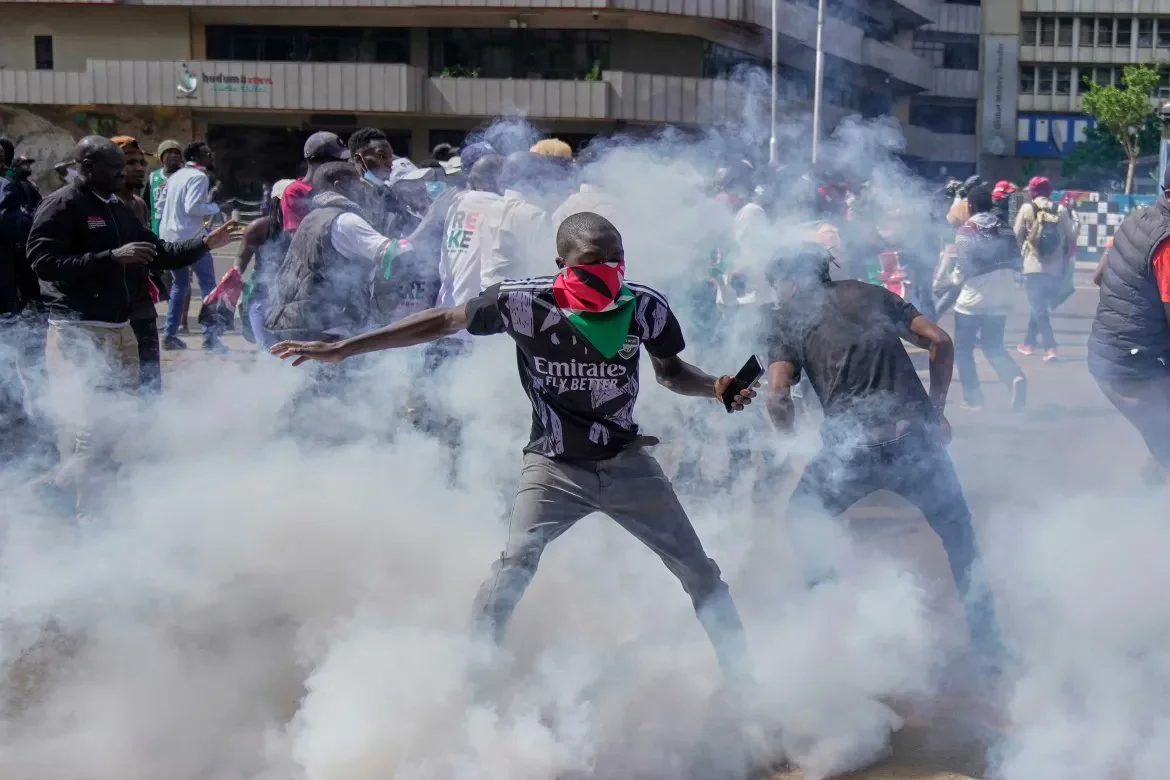
What started as peaceful protests soon turned into violent antagonisms. Police blocked crowds with tear gas, water cannons, rubber bullets, and live ammunition, while in certain locations, protesters began to respond by burning buildings, vandalizing shops, and attacking government buildings. In business-dense Nairobi, smoke rushed skyward from at least ten burned buildings as business owners returned to find their shops vandalized or looted.
Protesters burned down several government buildings in Kikuyu town, including police stations and a courtroom.
There have been conflicting accounts of the fatalities, with government-linked sources stating at least eight deaths reported, versus human rights groups Amnesty Kenya and the Kenya National Commission on Human Rights, who confirmed 16 deaths – mostly from gunshot wounds fired by police.
Over 400 people were injured, comprising of both protesters, police, and ordinary bystanders. In the list of fatalities was Fred Wamale Wanyonyi, a security guard working at a central Nairobi mall – which highlighted the arbitrary harm caused by the violent encounters.
Government Response and Public Distrust
President William Ruto’s government has faced increasing criticism over its violent response to protests. Although it has since rescinded the tax bill that caused protests last year, societal outrage has continued, compounded by a belief in corruption, a sense of economic hardship, and police impunity.
Ahead of the anniversary protests, authorities deployed heavy security in downtown Nairobi, fencing off public space with barricades around state buildings, and warning against attempts to break that secured space.
The interior ministry’s warnings on social media advised protesters not to “provoke police,” and not to make an attempt to enter restricted space. When the government resorted to a barricaded form of protest preparation, it did not stem the anger of demonstrators who see themselves demanding reforms and justice that the government has ignored.
Where to From Here: Unknowns, but Calls for Justice
With the smoke settling, Kenya stands on the verge of a reckoning. A Finance Bill has been signed into law that ensures no further increases in tax liabilities, but includes other more contentious provisions that give the Kenya Revenue Authority access to taxpayers’ personal data and private information.
Only time will tell whether the Finance Bill and the government will be able to deal with the issues raised by the protesters, or if there is going to be more unrest.
Many human rights organizations strongly condemned the police’s excessive use of force and called for independent investigations into those killed and injured with police violence. Furthermore, the Kenya Medical Association and other organizations have noted that quality medical care should be given immediately to the hundreds of individuals injured, some with very serious injuries, including gunshot wounds.
The headline reads “Kenya protests turn deadly: 16 killed, homes and shops torched on anniversary of storming of parliament“, this sad report speaks to a country at a tipping point. The youth-led uprising with a demand for accountability and economic relief has uncovered deep divides and the pressing need for reform for a country and people, that has been broken by the ruling elite.
The world is watching, and there is hope that accountability and dialogue will take precedence over violence and oppression, and that the voices of Kenya’s youth will be heard.