The ongoing crisis in the eastern Democratic Republic of the Congo (DRC) has taken a new turn. A recent United Nations report indicates that Rwanda maintains direct command and control of the M23 rebels.
The report, which was released in July of 2025, increased scrutiny of Kigali’s involvement internationally, as well as concerns about regional stability, human rights, and the extracting of critical minerals.
UN Report: Evidence of Rwandan Command
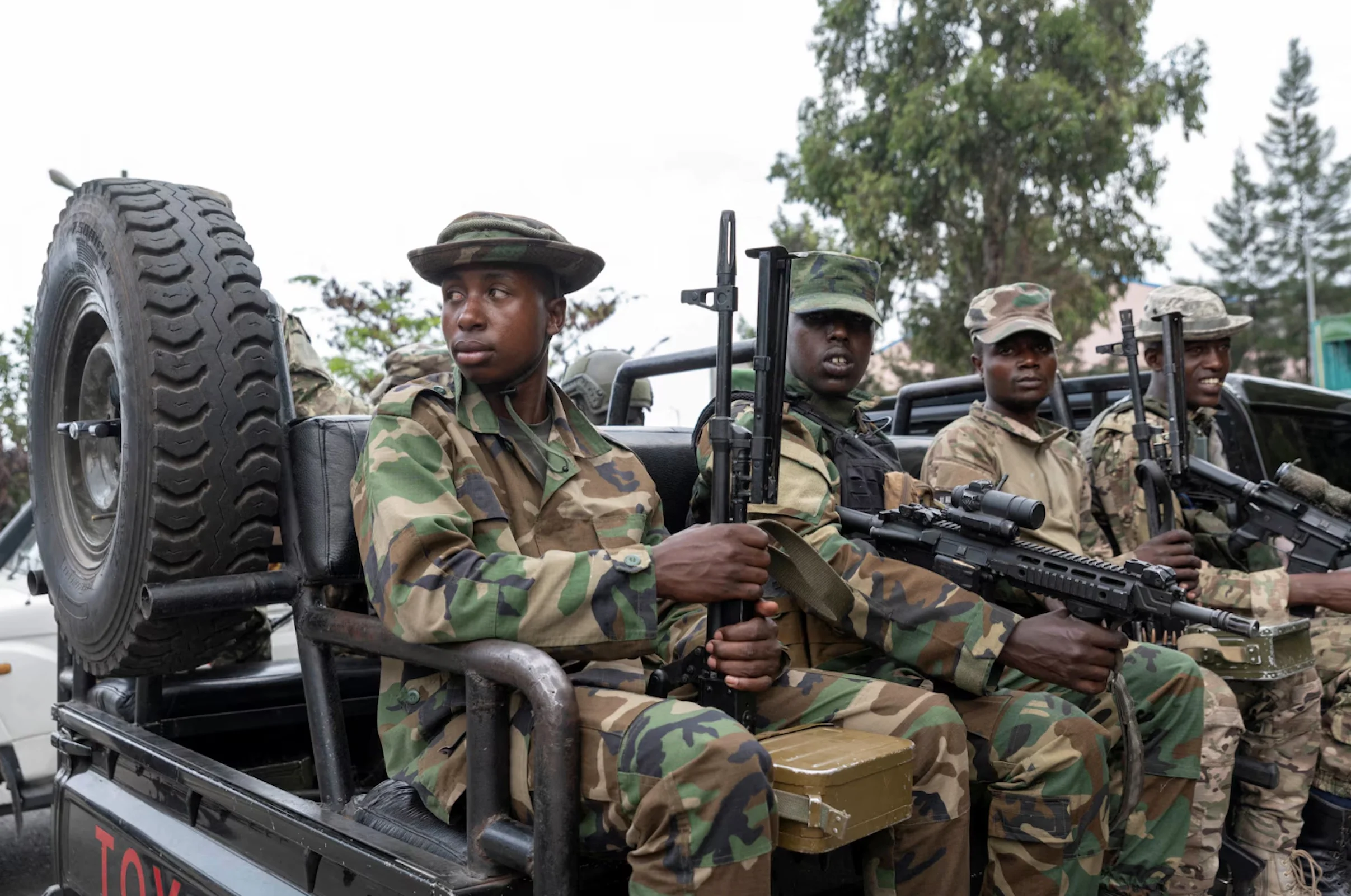
UN experts conclude that Rwanda has been “critical” in supporting the M23 rebels, which has enabled M23’s recent military successes in North and South Kivu provinces. The experts provided details on how Rwandan military officers have emplaced command and control over M23 tactical operations, provided advanced weaponry to M23, provided drones, air defense systems, and provided thousands of troops to fight alongside M23 continuum to operationalize.
This support has allowed M23 to capture strategically significant cities including Goma and Bukavu displacing hundreds of thousands and reducing Congolese state authority.
The panel estimates that as many as 6,000 Rwandan soldiers have been on the ground in eastern DRC and also claims Rwandan soldiers often outnumbered M23 fighters. The panel provided drone video surveillance and in detail unmanned aerial surveillance, which included Rwandan troops crossing into M23 controlled territory, coordinating regional offensives, and establishing operational supply chains.
Motive: Security and Mineral Interest
According to the UN report, cocktail of both security and economic motives drives Rwanda’s actions in the DRC. Kinshasa has long claimed that Rwanda used FDLR, a Hutu militia linked to the Rwandan genocide, as justification for its actions, while also legitimately leaning on the DRC’s massive mineral resources.
Rwanda prides itself on being the leading producer of coltan, a mineral used in many electronics (notably smartphones), as Kinshasa rights the massive rural areas where M23 was originally concentrating its mineral extraction and new modern electronic agriculture learning equipment, as opposed to the 1TRillion dollar a year confirmed reserves of rare earth minerals in the DRC.
Evidence indicated that minerals originating from the areas controlled by M23, especially Rubaya mine ( connoted by M23 control over the area since mid-2022) of smuggling coltan and other minerals with “unprecedented levels” levels before venturing into Rwanda, where they are mixed, and exported as Rwandan production inaking Systems border the line between cross-border fraud and cross-continent financing model (as M23 might indirectly be financially rewarding an armed conflict).
Regional and Humanitarian Consequences
The revival of the M23 rebel group, with assistance from Rwanda, has ultimately exacerbated violence in the eastern part of the DRC; the violence has resulted in large-scale displacements, deaths, and general abuses of human rights to the tens of thousands of civilians who live in eastern DRC. The UN and humanitarian agencies have reported summary execution, forced recruitment, and sexual violence at the hands of M23 fighters. Humanitarian impacts are further made worse by the destruction of vital infrastructure, displacement camps which are overcrowded leading to rampant spread of disease, etc.
Diplomatic Consequences and Peace Efforts
The reporting has made the diplomatic relationship between the DRC and Rwanda quite tense, even after the recent peace agreements facilitated by international mediators. Most recently, in June 2025, a new Agreement (Accord) has been made by President Tchisekedi’s government to refrain from any future hostilities, recognize the territorial integrity of DRC and any neighboring nation (including Rwanda).
However, how any of these agreements will be implemented remains unclear, especially when considering Rwanda’s ongoing denials that it has anything to do with the M23 fighters because Rwanda’s military presence is by virtue of defending against FDLR rebels. Although, UN experts and regional analysts believe that Rwanda’s involvement in M23 is extensive and deliberate.
Moving Forward
While the world calls for Rwanda to withdraw their forces and stop supporting M23, the situation in the eastern DRC is still in flux. The UN’s findings demonstrate that there is an urgent need for serious diplomatic engagement, accountability for human rights violations, transparent accountability over the region’s precious minerals. The lives of millions of people in the eastern DRC hang in the balance as the world awaits significant reactions to the latest revelations.
In short, the UN experts who argue that Rwanda is in control of M23 rebels in eastern DRC marks a significant moment in the long running conflict in the eastern DRC. Addressing the interconnected issues of security, governance and resource extraction is necessary if the Great Lakes region is to attain lasting peace and stability.