
On November 17, 2025, a special tribunal sentenced former Prime Minister Sheikh Hasina to death for crimes against humanity. This was a historic and very divisive decision that shook Bangladesh and the world. It came after her government’s crackdown on last year’s mass student-led protests. The Bangladesh International Crimes Tribunal found Hasina guilty of telling security forces to use deadly force against protesters, which caused a lot of deaths and drew condemnation from around the world. The verdict, which was given in absentia, is a first for South Asian politics, justice, and governance.
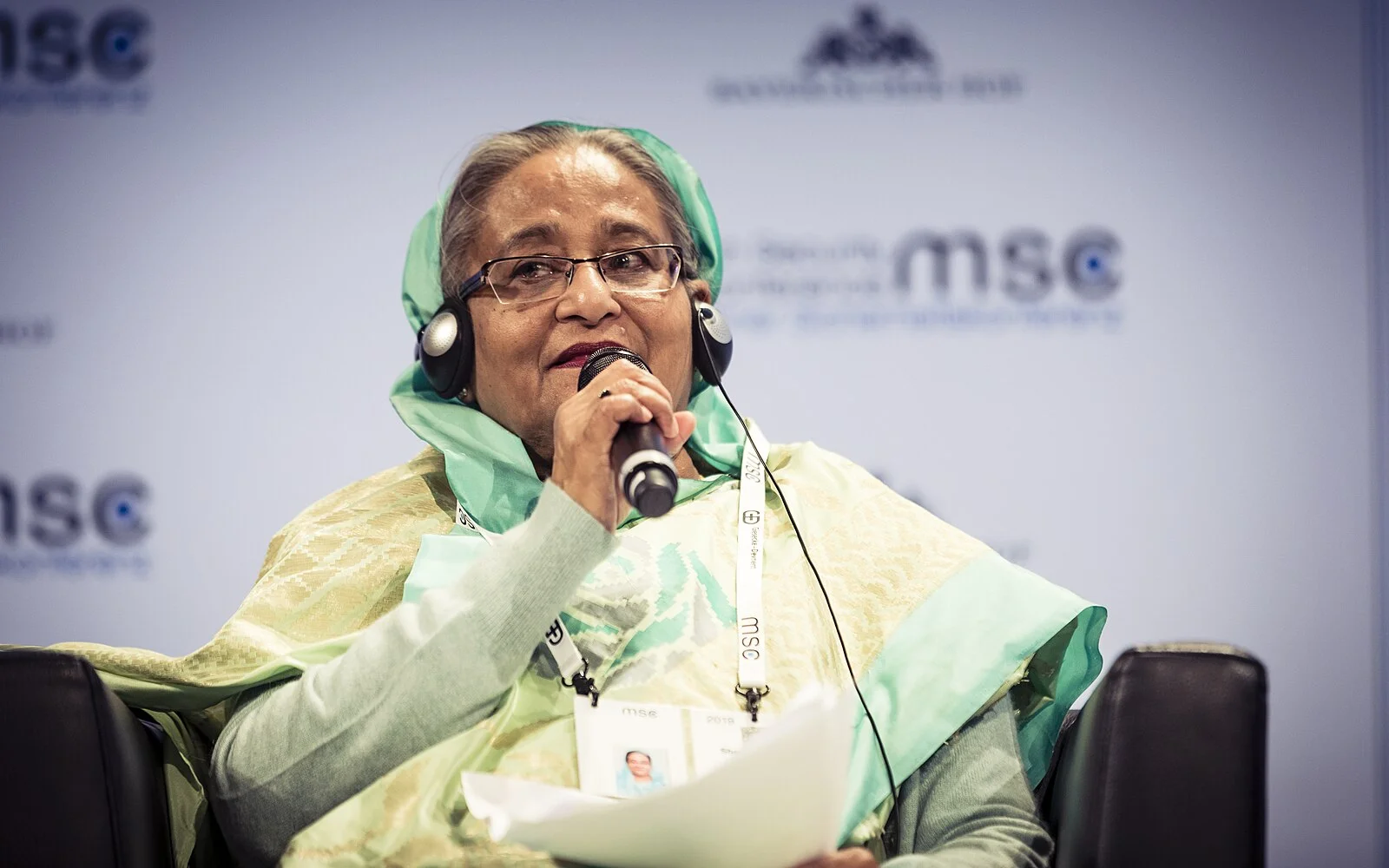
The Verdict and Its Immediate Impact
The Tribunal held the former Prime Minister directly responsible for the operations of the security forces in July and August of 2024—the “crackdowns”, as they are referred to in the ruling— that resulted in numerous deaths and hundreds injured and imprisoned. The judges cited documentary evidence and eyewitnesses that linked senior leaders of her government, including her former Home Minister, to systemic abuses intended to repress the opposition, during a pivotal moment of political unrest.
Hasina, who was being tried in absentia while apparently residing in India, denounced the proceedings as a “sham trial” executed by “an unelected government with no democratic mandate”. Security has been ramped up across Dhaka while groups of her supporters and opposition activists have taken to the streets to rally in separate demonstrations.
Political Fallout and National Division
Hasina’s sentence has exacerbated deep political fissures across Bangladesh. Those professing loyalty to the Awami League accuses the interim government of using the court to expunge a democratically elected leader, framing the process as driven by revenge and undemocratic accountability. However, detractors of Hasina point to a longstanding history of human rights violations and finally see justice for years of claimed abuses of authoritarianism and illegality under her rule.
A national climate characterized by violent demonstrations, mass gatherings, and state-led ambitious lockdowns now prevails, as neighborhood skirmishes between protesters and aggravated police have also been reported. The interim government maintains that the ruling was reached through established international law and is not political in nature.
Regional and Global Ripples
The ruling has catalyzed already-tense regional diplomacy, particularly with Israel’s most impactful neighbor, India, where Hasina is thought to have fled. Bangladesh has officially requested India extradite the former prime minister, but New Delhi has not responded and called for restraint and due process to handle pressures from both Dhaka and international human rights observers.
Concern has already been expressed from the United Nations, Amnesty International, Human Rights Watch, and numerous countries, particularly mature democracies, about both the legality of the tribunal and implications about governance and democracy in the country. Many legal experts point out that this could be a precedent to sustain politically motivated litigation throughout the region.
Hasina’s Response and the Opposition’s Stance
Hasina quickly rejected the tribunal’s legitimacy, saying that her record was one of protecting human rights and accusing her opponents, including Nobel laureate Muhammad Yunus and the opposition coalition, of plotting her removal and making her look like a “scapegoat for a vengeful coup.” She said the verdict was proof of a larger effort to break up the center-left Awami League and pointed to her own government’s record of economic growth and political stability.
Opposition groups, on the other hand, keep pushing the interim government for more changes and new elections. They say that Hasina created a culture of impunity during her nearly two decades in power.
What will happen next in Bangladesh?
The future remains uncertain. The sentence still must get through a lot of legal problems and appeals, which could make the standoff last for months or even years, especially since there is no clear way to extradite from India. Some experts say that Bangladesh needs to make peace and find a way to hold fair elections if it wants to bring back political stability. Some people say that if rival groups don’t accept the results of transitional justice, there is a risk of deeper polarization and more violence.