
(TOKYO, Oct. 2025) – Japan witnessed a momentous day as 64-year-old lawmaker Sanae Takaichi became the first ever female prime minister of Japan, after being elected as the country’s first female leader. The event represents a significant departure from Japan’s staid, old-fashioned patriarchal politics, although the ascendance of Takaichi also suggests that Japan is firmly on the political right.
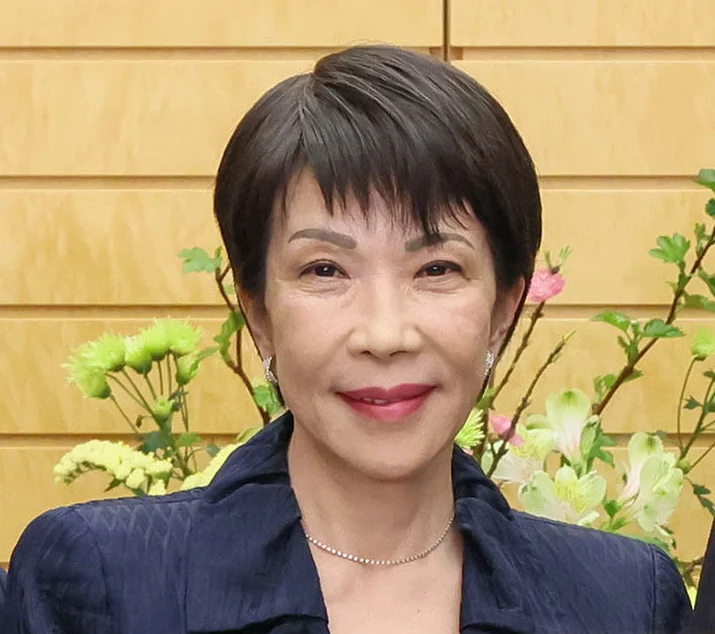
Takaichi, also often referred to as Japan’s “Iron Lady”, received 237 votes in the Lower House of Parliament, three votes more than the number needed to claim the position, and decisively beat opposition leader Yoshiko Noda of the Constitutional Democratic Party. Takaichi’s election came after a turbulent three months of political maneuvering following the resignation of former Prime Minister Shigeru Ishiba after the disappointing performance of his party in national elections in July.
Breaking Japan’s Glass Ceiling
While the election of Sanae Takaichi on [insert date,] is an omen in a country whose leadership had historically been composed only of older male politicians. In her speech to Parliament, Takaichi spoke eloquently about what this vote means beyond an individual, saying,
“Today’s vote is not about one person; it is about hope for inclusion, our democracy, and the advancement of Japanese women everywhere.”
This sentiment resonated for an audience that has watched as Japan tries to reconcile cultural and national values with place as a leading party in a national community for American values for decades. With this, Takaichi’s claim to prime minister status makes Japan the last G7 country to have a woman as a head of government; or is it.
Later day Emperor Naruhito gave formal approval to her duties in an Imperial ceremony at the Imperial Palace, finishing her official transfer emission as Japan’s fifth Prime Minister in five years collapsing into one of the most broken political regimes in Japan in its history.
From Nara to Nagatacho: A Political Journey
Takaichi’s political trajectory began much farther from the centers of power in Tokyo, in 1961, in Nara Prefecture. Born the daughter of small business owners, Takaichi studied political science at Kobe University, worked in journalism, and entered politics with the support of the late Japanese Prime Minister Shinzo Abe, for whom she has been a steadfast supporter of his broader conservative agenda.
Takaichi has emerged as a skilled communicator, with a knack for self-marketing around the aesthetics of heavy metal drumming and motorcycles—an absolutely unconventional presentation in Japan’s overly formal and stiff political culture. Nonetheless, underneath a personality lies an ideology that has an anchor in nationalism, a social traditionalism, and defense assertiveness.
During her time as Minister of Economic Security and Minister of Internal Affairs and Communications, she developed a reputation as a careful policymaker and strong advocate for the prime minister’s flagship Abenomics policies. Takaichi has continued to be described as a political hawk, most notably indication an effort to amend Japan’s pacifist constitution and, clearly favoring connections to the Yasukuni Shrine—with a practice that regularly enrages China and South Korea over its memorialization of war criminals.
Coalition Building and Political Realignment
Takaichi’s ascent to the position of prime minister has not been a smooth journey. After serving as party of the LDP which has morphed over the last several months with instability after the centrist coalition partner Komeito broke its coalition with a large corruption scandal involving campaign funds until the July elections, Takaichi made a late announcement of an overnight coalition with its competitor, the right-wing Japan Innovation Party (Ishin no Kai), just a few hours before the parliament and his important public expectations publicly announced was a success after announcing and approving the coalition to pass that vote.
While giving Takaichi a plausible governing number of bodies for representation, the coalition also lacks the positive benefit of stability. The success of Takaichi will depend on the Ishin’s continued cooperation to behave as a partner again. The collective also announced its headed to be partnered in support of Takaichi’s initiatives as “outside the Cabinet.” Therefore, Takaichi’s government will not have as firm majority in the Upper House from what many analysts have laid out could be a majority to minority in years future.
“This is both a success and a challenge,” said political analyst Tobias Harris on CNBC’s Squawk Box Asia. “Takaichi is inheriting a respectful government from a party that is in a weaker state than Ceptum Its view of a historic extension of the vote. As a speaking point, Takaichi enters a leadership to prove certainly that a divided parliament’s action can change with a conservative agenda across the floor.”
A Feminist Milestone with Conservative Implications
Although her appointment is historic, Takaichi’s social and policy positions are extremely conservative, raising questions about what her leadership actually means for women’s rights and social inclusion.
She has voiced opposition to same-sex marriage and to allowing married couples to keep different surnames (something supported by most Japanese voters under 40), and she has pushed back against gender quotas for government boards by saying, “leadership should be defined by merit, not by identity.”
Nonetheless, some women view Takaichi’s elevation to the top as a transformative symbol. “Her policies might not be based on feminist principles but her being at the top is breaking an invisible glass ceiling,” said Professor Yuko Nakano from the Institute for Gender Studies at Tokyo University. “The very fact of representation has power.”
The Economic Outlook: Abenomics Redux
The expectation is for Takaichi to continue expansionary fiscal policies aimed at stimulating Japan’s stagnant economy. Following her election, stock markets moved higher, with the Nikkei 225 Index leaps 49,930 points following the vote, viewed as a sign of investor confidence in the M.P.’s promises to keep interest rates low and government expenditures high.
By pledging to a deliver more populist economic measures, such as a temporary suspension of Japan’s food consumption tax and free high school education, Takaichi secured her relationship with Ishin no Kai. But critics warn the measures could pile on more debt to Japan’s rising public debt—which exceeds 250% of the GDP and thus leading the advanced economies in this area.
Finance Minister-Designate Satsuki Katayama is likely to focus more on setting stable currencies, given recent volatility of the yen, and how to keep Japan’s exports competitive. The appointment is significant as it’s the first time two women will occupy these significant executive and finance positions simultaneously.
Regional and Diplomatic Challenges
Expect Takaichi’s nationalist focused economic policy to play a major role in local foreign policy. Analysts believe Tokyo will adopt a more aggressive stance against China while aligning closely with Washington.
She is in favor of strengthening military ties under the U.S.-Japan Alliance framework and is also supportive of increasing military spending to bracket threats, perceived or real, from China and North Korea. She will likely keep sanctions on Russia in place in its invasion of Ukraine and will begin building security partnerships with Taiwan and this measure will likely provoke Beijing.
The first challenge Takaichi will face will be coming up quickly: US President Donald Trump is scheduled to travel to Tokyo on 27 October for trilateral work on trade, defense, and the Indo-Pacific. Washington insiders expect that NATO outreach to Asia and semiconductor cooperation will be topics discussed by the two leaders—two of Japan’s strategic concerns that are well intertwined with the economy and regional aspirations.
Critics Warn of Polarization
Critics of Takaichi expressed fear that her presidency would increase polarization, even as many conservative voters recognize her strengths and qualities.
“She represents old-school nationalism packaged in nice new language,” said one opposition member, Yoshiko Noda. “Her presidency is a win for symbolism, but it is a loss for progress.”
Public trust in the LDP has held steady at about 34% approval, and in some surveys, the majority of Japanese citizens appear to have a cautious, not very excited, response. The lingering question, as The Washington Post suggested, is if she would modernize the economy of Japan, while holding back social modernization at home.
Historic, but Uncertain
Sanae Takaichi will take office as Japan’s first female prime minister. While her nomination signals a break from several decades of male-dominated Japan, a rupture and growth in gender representativeness, her conservative nature may also inhibit broader social change.
Takaichi’s regard for Margaret Thatcher, as well as her straightforward leadership style, will be especially challenged by her complicated role as both reformer and traditionalist, while Japan seeks the best of both change and continuity.
Her rise serves to break a clear yet symbolic ceiling, which isn’t only a personal transition, but it represents a potential transition in Japanese governance. What she becomes in life or legacy, as a synthesizer or divisive force, will perhaps define her legacy but also the future of a transforming and regional democracy in Japan.