
Lionel Jospin, the Socialist former prime minister who steered France through a rare stretch of robust growth, sweeping social reform and painful political defeat at the hands of the far right, has died at the age of 88, his family announced on Monday. Jospin, who led a left‑wing government from 1997 to 2002 and introduced the 35‑hour work week and civil unions for same‑sex couples, died on Sunday after what he had described in January as a “serious operation,” relatives told Agence France‑Presse.
A Socialist who governed in cohabitation
Born in 1937 and long a discreet but influential figure of the French left, Jospin rose through the ranks of the Socialist Party after joining it in 1971 and became one of President François Mitterrand’s most trusted lieutenants. He served twice as first secretary of the party, from 1981 to 1988 and again from 1995 to 1997, mentoring a new generation that included a future president, François Hollande.
In 1995, Jospin lost the presidential election to conservative Jacques Chirac in the second round, but two years later he led the left to victory in parliamentary elections, forcing Chirac into “cohabitation” with a Socialist government. As prime minister from 1997 to 2002, he presided over five years of relatively strong growth and falling unemployment, while navigating tensions inside a coalition that stretched from moderate Socialists to Communists and Greens.
Landmark reforms: 35‑hour week, CMU and PACS
Jospin’s government is best remembered for a cluster of flagship social reforms that left a deep imprint on French society.
Between 1998 and 2000, his labor minister, Martine Aubry, implemented laws that reduced the legal working week from 39 to 35 hours, a measure meant to share work and create jobs. The reform, fiercely opposed by employers but cherished by unions, became a symbol of the French left’s belief in legislating work‑life balance.
His government also created Universal Health Coverage (Couverture maladie universelle, CMU), extending public health insurance to millions who had fallen through the cracks of the system. In 1999, it introduced the Pacte civil de solidarité (PACS), a civil union open to both heterosexual and same‑sex couples that offered many of the rights of marriage in areas such as taxation, inheritance, and residency.
To fight youth unemployment, Jospin’s team launched a program that created roughly 300,000 “emplois‑jeunes”—state‑supported jobs in schools, associations and local governments for young people entering the labor market. Together, these measures fed a narrative, captured by Le Monde in 2002, that he had briefly “re‑energized reformist politics,” marrying economic modernization with social progress after a turbulent era.
“Yes to the market economy, no to the market society”
If his social agenda was firmly left‑wing, Jospin also became the face of a distinctive French version of the “Third Way” between state planning and unfettered capitalism.
A former Trotskyist who later acknowledged his radical past, he surprised many on the left by embracing economic liberalization in the name of European integration. His government privatized more state‑owned enterprises than any of his predecessors, selling stakes in companies such as France Télécom, Air France and Crédit Lyonnais to help cut deficits and prepare France for the euro.
He summed up his approach with a line that became his trademark: “Yes to the market economy, no to the market society”, a declaration that markets were useful tools but should not dictate social values. Another formula he liked to repeat was “firm on ends, flexible on means,” signaling pragmatic methods in pursuit of egalitarian goals.
The balancing act won him praise from centrist commentators and some business leaders but fueled unease among parts of his own camp, who accused him of drifting too close to social‑liberalism. Still, during his term, France enjoyed an economic upswing and a measurable decline in unemployment, aided by global conditions but also by domestic hiring schemes and shorter hours.
The 2002 shock: eliminated by Le Pen
For all his legislative achievements, Jospin’s political legacy is inseparable from the trauma of 21 April 2002, when he was eliminated in the first round of the presidential election.
Running again for the Élysée, he campaigned on his record as a competent, scandal‑free head of government against Chirac and a fragmented field on both left and right. Polls and pundits widely predicted a Chirac‑Jospin runoff. Instead, a divided left and a low‑energy campaign opened the way for far‑right National Front leader Jean‑Marie Le Pen, who edged Jospin by a fraction, 16.86% of the vote to the prime minister’s 16.18%.
The result stunned France and Europe, sending Le Pen into a second round he ultimately lost in a landslide to Chirac but shattering the assumption that the far right was destined to remain a protest force.
That evening, facing dismayed supporters, a pale but composed Jospin took full responsibility and announced his immediate withdrawal from political life, vowing never again to seek elected office. Years later, he reflected that he had “overestimated the rejection of Jacques Chirac” and “overestimated the credit given to my record,” while underestimating left‑wing divisions and the importance of the first round.
A reserved, “old‑school” republican
Unlike some of his contemporaries, Jospin largely avoided personal scandal and cultivated an image of upright austerity.
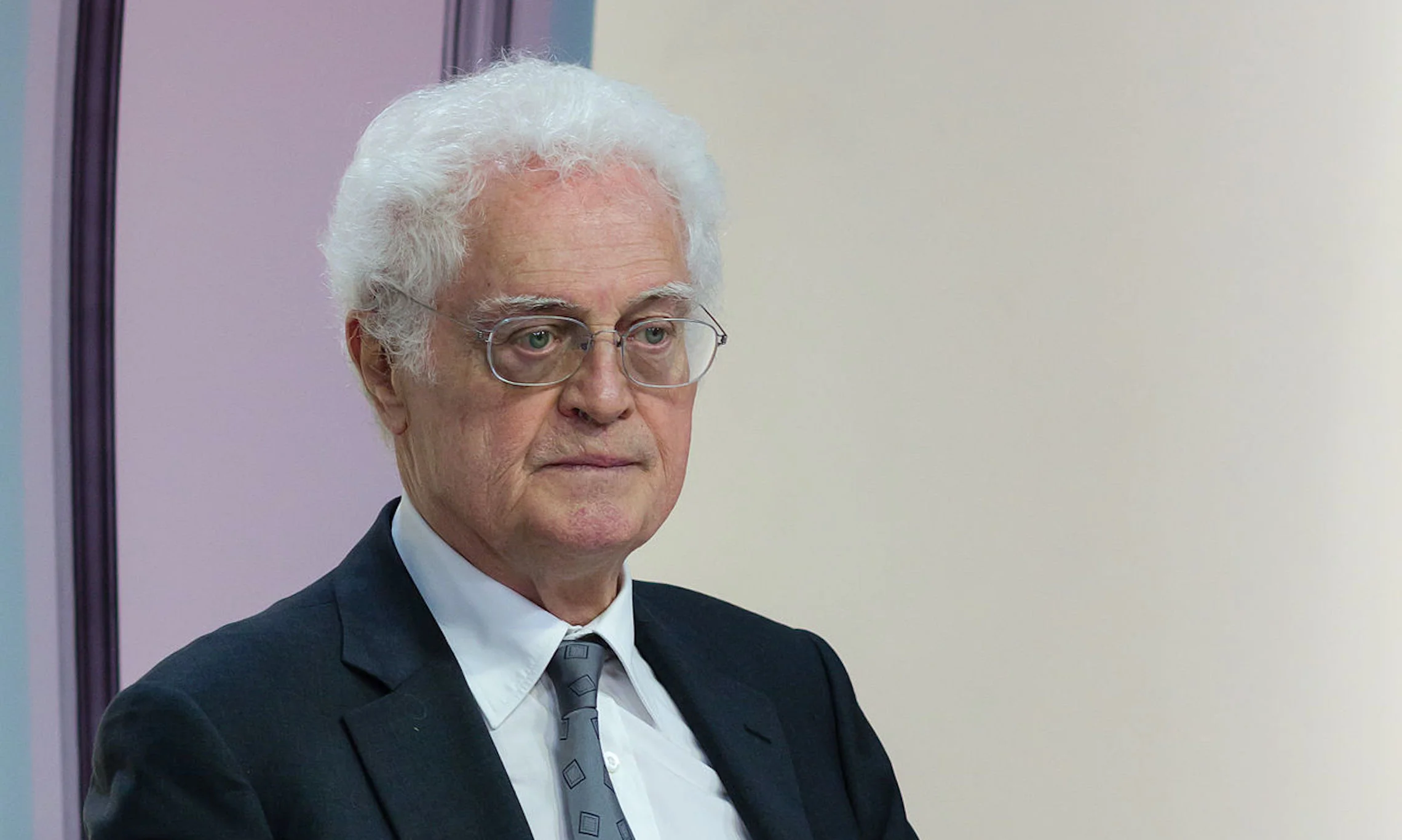
Bespectacled, white‑haired, and often serious in demeanor, he was married to the philosopher Sylviane Agacinski and preferred policy papers to populist theatrics, reinforcing a perception of distance from ordinary voters. He prided himself on leading a government that “worked well for five years and avoided every scandal,” as he told a filmmaker in 2010.
He frequently presented himself as a republican above reproach, noting that he had “simply tried in politics to respect the rules, respect the principles of the Republic, be honest and keep [his] word,” a pointed contrast with Chirac, later convicted for misuse of public funds as mayor of Paris.
In a media era that would soon elevate hyper‑personalized, social‑media‑savvy leaders, Jospin remained very much a product of an older French political culture: cerebral, disciplined, and more at ease in closed‑door negotiations than in television spectacles.
Later years and tributes
After 2002, Jospin largely honored his vow to stay out of electoral politics, though he occasionally resurfaced as a voice of experience on the left.
In 2012, President François Hollande asked him to chair a commission on renewing public life and ethics, tasked with proposing measures to curb conflicts of interest and restore trust in politics. He also published books reflecting on socialism, Europe, and his own career, and was sometimes mentioned, without success, as a possible elder‑statesman candidate in later presidential races.
News of his death prompted a wave of reactions from across the French spectrum. Early tributes described him as a “towering figure in French politics” who had left an “enduring mark on our social model” by combining market reforms with new protections for workers and minorities. Leaders of the Socialist Party hailed him as a “rigorous, honest, demanding” statesman who had modernized the left without abandoning its core ideals.
Jospin is survived by Agacinski and his two children from a previous marriage, composer Hugo Jospin and visual artist Eva Jospin. His passing closes a chapter in the history of the French left, one that spanned the Mitterrand years, the euro’s birth and the first great shock of the far right’s ascent, an era in which he tried, with mixed success, to prove that a country could embrace global markets without surrendering its social soul.