Eight people were killed when a U.S. Air Force B‑52 Stratofortress crashed shortly after takeoff during a test mission at Edwards Air Force Base in California, in what officials say is the deadliest crash involving the long‑range bomber in decades.
Deadly crash on a routine test mission
The B‑52 Stratofortress went down at about 11:20 a.m. local time Monday shortly after departing Edwards Air Force Base, in the Mojave Desert northeast of Los Angeles, base officials said in a statement.
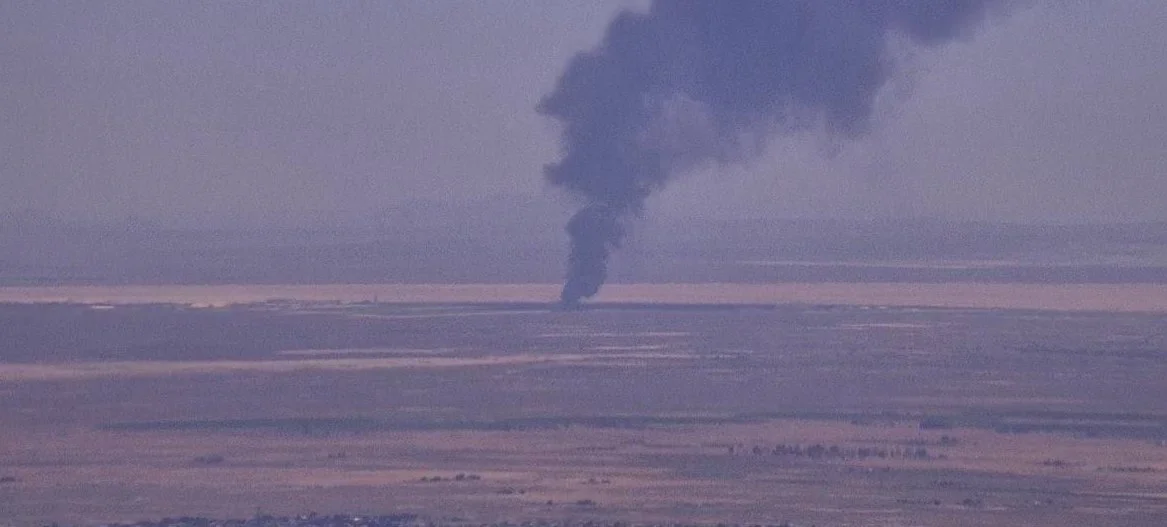
The aircraft was flying what the Air Force described as a “routine test mission” in support of the Radar Modernization Program when it crashed and erupted in flames on or near the installation, sending a column of thick black smoke visible for miles.
Emergency crews rushed to the scene and quickly shut down portions of the airfield, but officials said initial assessments made from video and the impact site indicated the crash was “not survivable.”
By Monday afternoon, Air Force and base leaders confirmed that all eight people on board were dead.
Victims: a mixed crew of military and civilians
At a news conference, Col. James Hayes, deputy commander of the 412th Test Wing at Edwards, said the bomber carried a mixed crew of uniformed Air Force personnel, government civilians and government contractors.
He said their identities would be released only after next‑of‑kin notifications were complete, a process that can take at least 24 hours.
“We lost eight great Americans,” Hayes told reporters, calling the crash a “horrible tragedy” for the base and the wider Air Force test community.
Boeing, the prime contractor on the B‑52, later confirmed that two of its employees were among the dead and said it was in contact with their families and offering support.
What is known about the flight
Officials said the aircraft crashed just minutes after takeoff as it climbed out from Edwards, though they did not immediately specify whether it attempted to return to the runway or declared an emergency.
Witnesses reported hearing a loud explosion and seeing debris and fire in the desert area near the base as the bomber went down.
The B‑52 was participating in the Radar Modernization Program, a long‑running effort to upgrade the bomber’s radar and avionics as part of plans to keep the fleet flying into the 2050s.
Hayes described Monday’s sortie as a local test mission, typical of the high‑risk work that takes place at Edwards, a storied site for experimental flight and weapons testing since the dawn of the jet age.
Cause under investigation
The cause of the crash remains unknown and is now the subject of a formal safety investigation, a process that Hayes said could take months.
An Air Force accident investigation board will examine flight data, maintenance records, test instrumentation, crew training and environmental conditions, as well as wreckage patterns at the scene.
Officials have not publicly discussed any early suspicions, emphasizing that it is too soon to say whether mechanical failure, human factors, test equipment, or a combination of issues led to the disaster.
Aerial images from the crash site show little remaining of the airframe beyond scorched fragments, underscoring the violence of the impact and complicating the recovery work.
A rare but haunting loss for the B‑52 community
The B‑52, first flown in the 1950s, has an extensive safety record for a bomber in continuous service, but Monday’s crash is one of the deadliest involving the type in more than 40 years.
CNN and other outlets noted it is the worst B‑52 accident since 1982, when nine crew members died in a training crash at Mather Air Force Base near Sacramento.
The Stratofortress typically flies with a crew of five, but test flights, especially those involving new radar or systems, can carry additional specialists and engineers, helping explain the unusually high number of people on board.
Edwards, which sits within a vast swath of restricted airspace, has seen some of the U.S. military’s most consequential and riskiest test programs, from early supersonic flights to stealth prototypes, leaving a long institutional memory of both breakthroughs and tragedies.
Local impact and community response
Residents in nearby communities such as Lancaster and other parts of Kern County reported seeing smoke and emergency vehicles racing toward the base after the crash.
Local television images showed fire crews working around blackened wreckage in the desert as base officials cordoned off access roads and urged the public to stay clear.
California Gov. Gavin Newsom issued a statement offering condolences to the families of the dead and praising first responders, while members of Congress with oversight of the Air Force signaled, they would seek briefings on the incident.
On social media, veterans and test pilots shared memories of Edwards as a place where “risk is part of the mission,” even as they called the loss of eight lives “an unbearable price” for routine testing.
Broader questions for Air Force safety
The crash comes at a time when the Air Force is juggling aging fleets, modernization programs and an intense operational tempo, raising fresh questions about how it manages risk in test environments.
Safety experts say test flights, by definition, push aircraft and systems into unfamiliar regimes, but rely on rigorous procedures, redundancy and clear go/no‑go criteria to minimize danger to crews and people on the ground.
In recent years, the service has stressed a “no‑blame” culture in accident investigations, seeking to identify systemic shortcomings rather than pin incidents solely on individuals.
The Edwards crash is likely to prompt an internal review not only of the Radar Modernization Program but also of broader protocols for mixed military‑civilian test crews and contractor involvement on board high‑risk flights.
US and global angles
For U.S. audiences, the crash is a stark reminder of the hazards faced by service members and civilians working far from combat zones but at the front line of military technology.
It also comes against a backdrop of debates over defense spending and modernization, spotlighting the costs, human as well as financial, of extending the life of legacy aircraft such as the B‑52.
Internationally, the incident will be watched by allies and rivals who track U.S. bomber readiness as a key indicator of strategic capability.
While the Air Force has emphasized that operations continue, the loss of a test aircraft and crew underscores the complexities of keeping a Cold War‑era bomber relevant in an era of hypersonic threats and advanced air defenses.
As investigators sift through debris on the Mojave Desert floor, officials say the priority remains caring for the families and colleagues of those lost, a shared mourning that, at Edwards Air Force Base, stretches from hangars and test ranges to the surrounding high‑desert towns that have lived with the risks of flight for generations.