With extreme weather events coming faster and heavier, New York flooding is just another example of the nation’s largest city, along with its nearby suburbs, navigating through unprecedented territory. Just before the end of July 2025 when July 31st brought torrential rains to New York City and the Tri-State area, flooding New York City streets, crippling transit lines, and prompting renewed demands for speeding up climate resiliency efforts.
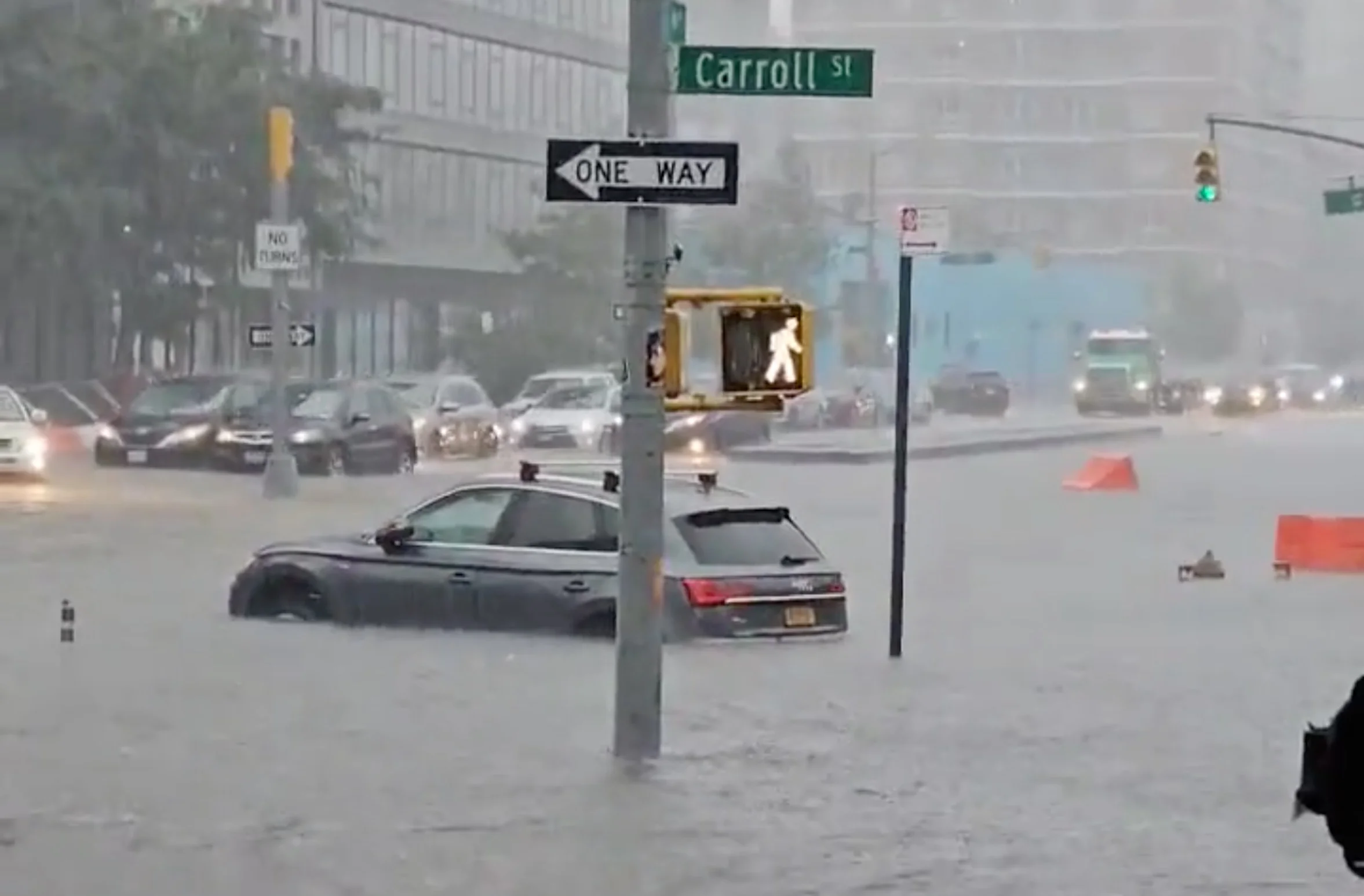
According to the New York Times portions of certain neighborhoods received more than six inches of rain in only two days, which has been the latest example of these types of 100-year floods that have occurred recently multiple times. Meteorologists at the National Weather Service referred to the rain as a “once-in-a-generation event” overwhelming the aging drainage systems of New York City and inspired severe flash flood warnings from Brooklyn and Queens to the Hudson Valley.
A City Submerged: Effects on Infrastructure and Residents
The impacts of New York flooding were swift and staggering. By early morning, images surfaced on social media showing city buses in Astoria struggling through chest-high water, highways that now looked like menacing lakes, and subway stations under water that caused officials to close critical corridors of transit.
The Metropolitan Transportation Authority (MTA) announced that over a dozen subway lines were temporarily suspended and water penetrated diffusion services, with many commuters stranded and others suffering at least hours of delays. Streets in lower Manhattan, the Bronx, and areas of Brooklyn were comprised of abandoned vehicles and emergency crews responded to residents who were stuck in basements. In Queens, schools dismissed early, and hundreds took refuge in community centers after ground floors were flooded and power was selectively lost.
Governor Kathy Hochul declared a state of emergency for New York City, Westchester, and Nassau counties. At a press conference she warned,
“The magnitude and the rapidity of this flooding should serve as a wakeup call about the consequences of climate change to urban areas like New York City. We must act and make big changes—not only for recovery but also work in ways that support adaptability.”
Human Stories: Lives Upended
For many, the downpour was a reminder of last year’s Hurricane Ida, and the relentless storms that impacted residents in 2023 and 2024. Local resident Miriam Rodriguez was interviewed by ABC7 New York and described being trapped in her basement apartment in the Bronx:
“Water rose so quickly it was terrifying. My son and I had barely enough time to scoop up a bag before the fire department came barging into our apartment.”
In a Brooklyn Red Cross shelter, families displaced from flooded public housing were still coming to terms with their situation. As they stood trying to keep up to date with news and city apps about when it would be safe to go home, volunteers worked tirelessly to hand out blankets, hot meals, and phone chargers.
Emergency Response and Resilience Plans
Emergency services across New York City wasted no time, conducting over 200 rescues in 12 hours and redirecting traffic from impassable streets. City Hall announced an immediate inspection of public infrastructure and the sanitation departments activated to clean storm drains that were blocked with the urban debris caused by the flooding.
In his address broadcasted by NY1, Mayor Eric Adams remarked:
“This is the new normal, and New York should be at the forefront of resilience. First is public safety, second restoration of services, and third long-term improvements for the protection of our most disadvantaged communities.”
The mayor also announced broadened investments in “green infrastructure”– including permeable pavements, rain gardens, and new stormwater detention systems– to mitigate the impacts from the next deluge.
The Broader Context: Climate Change and Urban Flooding
Environmental scientists have concluded the floods experienced in New York are a microcosm of far-reaching planetary impacts. Elevated ocean and air temperatures fuel precipitation events, with storms becoming more frequent and intense. As Dr. Samantha Greene, a climate scientist at Columbia University, told Reuters:
“Cities designed for last century’s weather are now experiencing the most dangerous climate risk. Barring adaptation, infrastructure will continue to fail and at the end of the day it is every vulnerable population who will pay the price.”
Calls for urgent adaptation resounded from public housing advocates to business owners experiencing tens of thousands in water damage to their storefronts.
Recovery and Preparedness
As the waters receded, city officials began tabulating damaged property, loss of business, and health concerns associated with contaminated floodwaters—especially in older neighborhoods with combined sewer overflows. The city urged residents to notify damages via 311 and reminded residents not to wade through residual standing water, which may conceal open manholes and hazardous debris.
Schools promised make-up days and free meals to students affected by the flooding. Meanwhile, state and federal agencies were preparing to roll out disaster relief assistance to the most impacted zip codes. Environmental groups renewed calls for regional “climate bonds” that fund a more comprehensive approach towards mitigation in New York’s five boroughs and suburban neighbors.
A Wake-Up Call For Urban America This most recent bout of flooding in New York is not just another tale of hardship, it is a wake-up call. As storms intensify and oceans rise in conjunction with climate change, cities like New York need to acknowledge climate realities. Recovery is in motion; however, long-term adaptation will be harder to achieve – enabling American cities to adapt so that the same history is not repeated each season.