
(WASHINGTON, Oct. 2025) – Washington is preparing for one of the most significant diplomatic meetings of the year, as US President Donald Trump hosts Ukrainian President Volodymyr Zelenskyy at the White House on Friday, with the horrendous war in Ukraine and Kyiv’s request for Tomahawk cruise missiles foremost among the discussion topics.
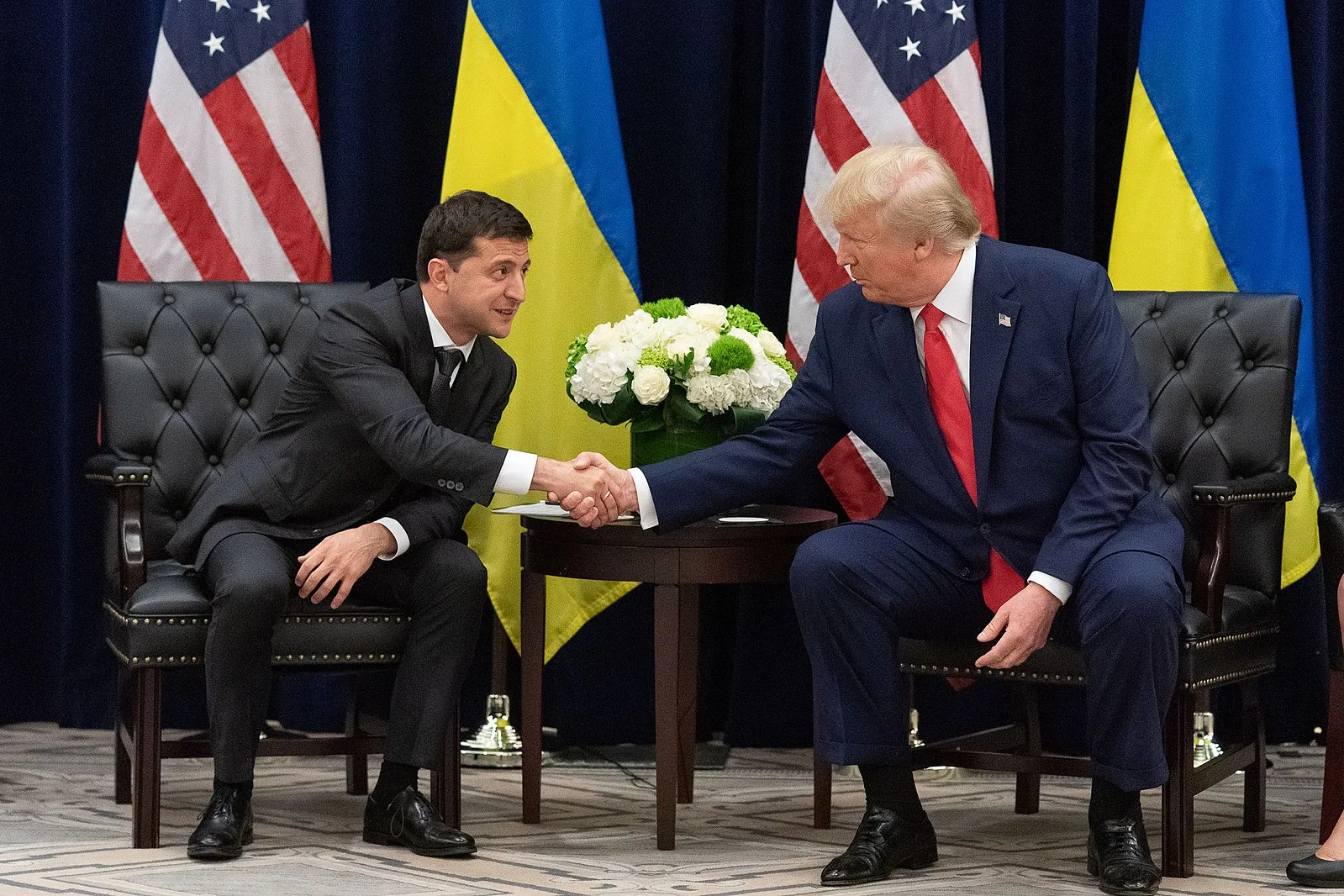
Their meeting–which comes after a protracted call between Trump and Russian President Vladimir Putin on Thursday–has given rise to a renewed flurry of speculation regarding Washington’s role in a resolution to the conflict and NATO’s long-term plans in Eastern Europe.
The important meeting showcases changing dynamics of Trump’s second term foreign policy, in that, he strives to balance his self-admitted peacemaking ambitions with tough domestic and military factors. Although Trump is publicly presenting the meeting as a way to “move towards ending a terrible war,” US officials have signaled that the possible delivery, or non-delivery, of Tomahawk missiles could either cause a new escalation to hostilities, or lead to some leverage in the negotiations for peace.
A Meeting Shadowed by the Putin Call
The Biden-era chill between Trump, Zelenskyy, and Putin has, instead, created a nuanced diplomatic triangle. Mere hours before the meeting, Trump had stated that he had spoken with Putin, for nearly two hours about the war and, according to the White House, the “prospective sale of Tomahawk to Ukraine.”
“I asked him [Putin] what he thought,” Trump said in an impromptu press conference Thursday evening. “He didn’t like it, but he shouldn’t have… I told him that we’re looking at every option. We do not want to see escalation, but Ukraine wants to go on the counter-offensive.”
These comments by Trump suggested a tactical shift in thinking in as much as he did not definitively reject providing Tomahawks of any kind, he simply said, as is surfaced here, “we can’t deplete our own noteworthy inventory.” Accordingly, his nuanced statements suggest the dual agenda the administration has been attempting to demonstrate–to communicate some form of support for Ukraine through talking up Tomahawks, with regard, to Ukraine, without crossing any “red lines” for Russia.
The Kremlin responded sharply: a statement from the Russian foreign ministry warned that the transfer of a Tomahawk, which can strike a target, up to 1,600 km away, would be seen as “a serious and ultimate provocation.” Moscow has consistently warned that sending arms would draw the US deeper into the war, possibly leading to “direct confrontation” of US and Russian forces.
Kyiv’s Plea for Firepower
The determination of Washington on Tomahawk missiles is existential for President Zelenskyy. Kyiv considers these systems—as accurate as they are deadly—important to disrupting Russia’s entrenched positions and performing subsequent strikes against other urgent Russian strategic targets, including logistical nodes and command sites, well into Russian substrate territory.
“Tomahawks will be the equalizer,” Zelenskyy said to reporters just before leaving for Washington. “We are not asking for endless supplies, but for the necessary tools to end this war on our terms.”
Simply put, Ukraine’s request indicates there is increased frustration regarding the extended duration of combat without long-range capabilities. The U.S. has previously supplied other systems, more minor platforms, including HIMARS and ATACMS missiles, both of which have proved effective at the fronts; however, they failed to meet the limits of range—less than 300 kilometers—for engaging targets to significantly degrade the Russian supply chain.
Zelenskyy is expected to utilize his visit to show that Ukraine’s armed forces are capable and sufficiently disciplined to use advanced weaponry for defense objectives and not for reckless means. It has been reported he will be prepared to offer more significant battlefield plans indicating how Tomahawks strike while guaranteeing U.S. supervision of target selection and the panel of proposed targets.
The Tomahawk Debate: Power, Politics, and Risk
The Tomahawk Land Attack Missile (TLAM) was first produced in the 1980s and has become one of the U.S. Navy Primary long-range precision weapons, carrying both conventional and nuclear warheads. Each missile costs between $1.2 million to $1.9 million and travels nearly 600 mph, flying low to the ground in an attempt to evade detection.
Providing Ukraine with access to this technology would mark the largest increase in U.S. arms to Ukraine since the beginning of the war. Some in the Pentagon want it in Ukraine to shift battlefield momentum. “When you take away or deny an adversary the ability to resupply or command their forces with any effectiveness you will end wars faster,” said one senior defense official, who cannot be named to maintain their anonymity.
But there is a significant amount of risk. Defense analysts warn that any attacks using Tomahawks, when struck on the territory of Russia, could be perceived by Moscow as an armed attack, therefore providing a reaction from Moscow; these could include retaliatory strikes on the battlefield or increase nuclear alert levels.
“Supplying Tomahawks would change the psychological and strategic balance of this war,” said Fiona Hill, former National Security Council adviser on Russia. “It’s not just hardware, it’s escalation management through symbolism.”
Trump’s Balancing Act
On Friday, Trump will meet with Zelenskyy for their second in-person meeting in under a month and their fourth, since taking office in January. Each meeting has provided a glimpse into Trump’s unpredictable diplomatic style, which essentially combines a personal reluctance to provide foreign aid with a boast about the “the deal of the century” that will end the war.
Trump has tried to cast himself as the world’s best negotiator following his October success negotiating a ceasefire between Israel and Hamas. “My goal is simple – stop the killing,” he wrote on social media on Thursday. “Ukraine has to be strong enough to talk, and Russia has to be smart enough to listen.”
White House advisors suggest Trump is familiarizing himself with the decision to sell missiles to Ukraine to use as a lure for Putin to join his proposed Budapest Summit, which Trump announced last night. The Summer, slated tentatively for the end of October was said to counter Trump’s ambitions to provide a missile defense project to Ukraine since it was in the initiation stages of negotiating with its delegation, who were meeting with Trumo and Putin.
But international analysts are skeptical over any real movement. “I think the notion that Trump can link missile sales with any notion of a peace talk is imaginative but dangerous,” said Former Ambassador Daniel Fried, Atlantic Council. “For his unpredictability generates key uncertainty among both allies and adversaries over how to utilize define some degree of compromise.”
Diverging Agendas in Washington
At home, Trump is also juggling more and more divisions within his administration and party. Senate Republicans seem to be split with hawks such as Lindsey Graham and Tom Cotton wanting Turkey to arm Ukraine with Tomahawks while the isolationists sounding the alarm against “forging World War III.”
Democrats label Trump’s behavior confused and dangerously impulsive. “I think the president is playing roulette with global security,” Senate Majority Leader Chuck Schumer said, likely in reference to the well-timed Putin call just 24-hours before meeting Zelenskyy.
Across the table from Trump is national security term led by Secretary of State Marco Rubio, and National Security Adviser Tulsi Gabbard who have pushed for some restraint. Both contend rather than new arms sales, there should be the focus on diplomatic off-ramps.
“The President sees leverage…Rubio sees red lines,” said one senior official insider. “They are trying to thread a needle that comes with very high stakes.”
Global Reactions and Market Response
Allied capitals are closely watching. The EU has encouraged restraint and NATO Secretary General Jens Stoltenberg said, confirming the alliance, “Any decisions around long-range U.S. weapons takes caution, coordination and some work with the alliance,”
Financial markets sped off under another reported Trump engaged in activity such as investor confidence priced Davidson defense stocks 6% higher, while Raytheon Technologoies—who makes the Tomahawk—spiked early in trading. Energy prices settled – a relief to speculators that negotiation may take risk supply off the table.
Finally in Kyiv their public sentiment has stayed softly optimistic. “Whatever his reasons, if this leads to one system that can stop missiles and preclude our air space, we’ll call that a success,” said Oksana Markarova, Ukraine’s ambassador to Washington.
The Stakes of the Meeting
The upcoming discussions on Friday are most likely to determine not just the near-term direction of the conflict but also the larger contours of the global security policy framework during Trump’s second presidency. Analysts share a consensus that Friday’s meeting represents a significant test of the administration’s ability to balance power projection, alliance management, and geopolitical bargaining.
By late Thursday evening, the White House confirmed that conversations will center not just on munitions, but also on frameworks of reconstruction of Ukraine once the war concluded, and control of the minerals on Ukraine’s territory—a subject that has attracted scrutiny regarding Trump’s transactional view of foreign relations.
However, the Tomahawk question is still the main pivot. Whether framed as a show of strength or a tactical restraint, Trump’s decision will shape how allies and adversaries will perceive America’s strategic posture for years to come.
For Zelenskyy, the stakes could not be higher. Short of artillery, desperate for leverage, and worried about Moscow’s next moves, he arrives in Washington needing more than guarantees—he needs power.
As the two leaders meet privately, the world waits to see if America’s munitions will remain siloed—or be airborne over Eastern Europe, reshaping the course of war that has permanently reshaped a generation.





