
As the United States experiences its third week of the 2025 federal government shutdown, over 1.6 million federal employees and contractors are left wondering when their next paycheck will arrive, government services have ground to a halt, and economists are warning there will be a ripple effect that costs billions more if this remains unresolved for much longer. This government shutdown, the fifth longest closure in U.S. history and the third during the Trump administration began in the early hours of October 1, 2025, when Congress failed to pass a spending bill for the 2025 fiscal year.
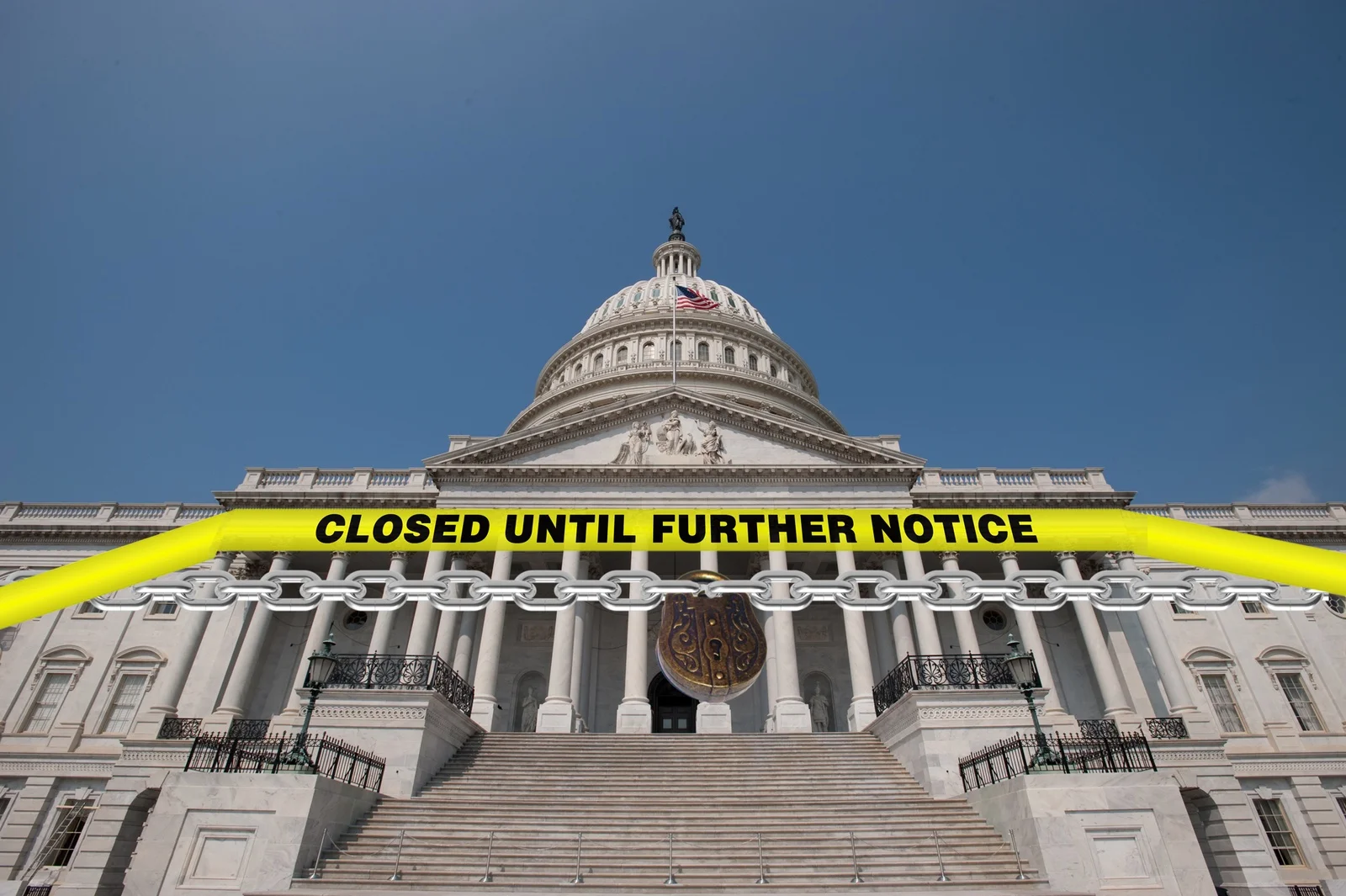
The impasse is caused by a bitter dispute over health care spending and budget priorities between the Republican-controlled House and a Democratic-controlled Senate. It represents an escalation of long-standing political resentments around fiscal responsibility, public health policy, and executive power and, in the end, has left millions of Americans to deal with the economic fallout.
Why Did the Government Shut Down?
The shutdown happened because House and Senate lawmakers failed to find an agreement on a continuing resolution (CR)—an emergency funding bill that would have kept agencies operational beyond September 30, 2025, the deadline for the federal fiscal year.
The House bill the Republican majority passed on September 19 sought—among other things—to reduce government spending to the levels set in 2022 as well as to reduce or eliminate funding for several other health-care initiatives such as Affordable Care Act (ACA) subsidies and a Medicaid expansion implemented earlier in the year.
Although the Senate Majority Leader Chuck Schumer, representing the Democratic Party, expressed willingness to negotiate with the Republican party on changing ACA legislation, he rejected the overall plan which he described as “fiscally irresponsible and cruel.” In fact, Schumer offered his own proposal to amend only ACA subsidies and add 1 trillion dollars in more funding for health-care agencies.
Meanwhile, President Trump, supporting his party’s strategy, blamed Democrats for “weaponizing healthcare to hurt taxpayers.” Democrats went on to blame Trump for “manufacturing a crisis” in order to gain budget concessions from them.
Regardless of the squabbling, by midnight on October 1 Republicans and Democrats did not find a compromise, leading to an order from the Office of Management and Budget (OMB) to suspend normal federal operations, e.g., furloughing nonessential federal employees and suspending spending contracts.
Who Is Affected: Furloughs and Layoffs
According to the Office of Personnel Management, nearly 900,000 federal employees have been placed on furlough without pay, and 700,000 are “essential personnel” who continue to work, including air traffic controllers, border patrol agents, active duty military, and health inspectors.
Agencies that have been hardest hit:
- The National Institutes of Health (NIH) has put most non-emergency medical trials on hold.
- The Centers for Disease Control and Prevention (CDC) has canceled parts of disease surveillance and flu monitoring.
- The Department of Education has stopped disbursement of some student aid programs.
National parks and museums across the country have closed to visitors, which start to take a toll on local economies.
Federal contractors-an often overlooked workforce-are also being harmed by furloughs. Unlike civil servants, many government contractors will not receive retroactive pay as a result of the closure. Advocacy groups estimate that as many as 2.4 million private-sector employees connected to federal contracts could be experiencing lost income or altered timelines on federal projects.
Economic costs: Billions and counting
The U.S. economy is losing hundreds of millions of dollars in lost productivity and consumer spending every day the government is closed. Economists at Moody’s Analytics estimate that if the government continues to close by the end of October, it could mean -0.2 percent off GDP Growth in the last quarter of fiscal year 2025.
What is causing the slowdown?
- Consumer confidence: Diminished confidence by government workers—many of whom are unpaid—will mean lower spending in retail and services.
- Delayed federal payments to contractors, local governments, and social programs that rely on federal checks.
- Losses in travel: National parks are closed, and travel is limited due to TSA and FAA staff reductions, which mean losses in travel and tourism.
- Small business contracts: Thousands of small business that depend on increasing orders from government procurement programs would have stalled their operations.
Any time the government is closed beyond four weeks, some forecasters project the damage would be similar to the 2018-2019 shutdown that permanently deducted $11 billion from U.S. GDP.
Public Frustration and Political Fallout
With mounting public frustration at the government serving as the 16th day of on-going shutdown, workers are rallying at the Capitol and in cities like Washington, Denver, and Seattle to AWINC their public. The workers have attached words such as **#WeNeedOurMoney and `#TheShutdown to social media outlets and have also shared stories about the impacts that unpaid workers are facing in “how to navigate mortgages, rent, childcare etc.
Trump claimed services still were operational for essential personnel of work when the federal government was closed and issued an executive order on 15 October so that members of the United States military remained “at work” regardless. Federal employees are still waiting for congress to pass something on their behalf.
Republicans accused Democrats of “obstructing” passage. Democrats that the administration had “not tried to negotiate to pass healthcare funding” and “are governing crisis to crisis’ cooperatively.
“The president could fix shut down today if he cared more about working Americans than he does about political theater,” consolidated Elizabeth Warren. Meanwhile, House Speaker Mike Johnson stated his chamber “already did their job” and “Senate Democrats will have to face reality and pass the swapping bill!”
Senate Vote and Ongoing Negotiations
As of Thursday morning, the Senate is gearing up for its tenth-floor vote on the possibility of stopgap measures. According to political analysts, the effort will probably fail again since this will be the tenth unsuccessful attempt to close the funding gap.
Moderate Republicans, including Lisa Murkowski from Alaska and Mitt Romney from Utah, are beginning to propose a bipartisan compromise—potentially a two-month temporary funding measure to end the impasse as broader budget discussions resume.
Trump, meanwhile, has vocally opposed what he has termed “half-measures” and in a statement hinted he would veto “any bill that increases government spending under a bipartisan cover.”
If the Senate fails to pass legislation today, both chambers are poised to recess over the weekend, meaning potentially a government shutdown until at least October 20.
The Broader Impact on U.S. Citizens
Outside of the drama on Capitol Hill, millions of average Americans are now feeling the effects of the shutdown:
- Veteran Services: New claim processing for disability benefits are held up.
- Housing Assistance: Thousands of households are at increased risk for eviction as rental and housing subsidies lapse (indicative of over a hundreds year history of housing support).
- Food Security: WIC programs (Women, infants, and children) are halting operations in several states.
- Air Travel Safety: Reduced FAA oversight has had pilots and controllers raising the prospect of increasing strain across the nation’s major airports.
- Healthcare related research: While researchers at the NIH state that pauses in cancer and Alzheimer trials in existing studies may actually cost lives on the long-term loan.
The current government shutdown highlights how intertwined the operations of the federal government are in the average American’s life – whether its securing airways, supporting small towns, maintaining healthcare research, and supporting local economies.
Long-Term Political and Economic Implications
Experts say the 2025 government shutdown reflects both short term dysfunction, and deeper systemic risks. Extended government shutdowns undermine global confidence in the U.S. government, thereby raising borrowing costs, on and undermining market stability. Crediting agencies like Fitch have already flagged the government shutdown as risk factor in upcoming U.S. debt credibility assessments.
Historically, extended government shutdowns introduced an agency to potential attrition — continued to lose highly experienced civil servants to private sector jobs, decreased institutional knowledge, and citizens eroded trust in government reliability. Non-partisan analysis from the Congressional Office estimates the same degree of government operations may take months to restore.
What happens next?
If congress does not act this week, the shutdown is poised to eclipse the record of 35 days during the 2018-2019 government shutdown and become the longest shutdown in U.S. history. Economists are recommending policy makers take short-range action to restore at least some funding to stabilize essential agencies, to balance consensus for a more costly long term budget plan.
For the time being furloughed employees wait, legislators remain in gridlock, and the world’s most important economy faces increasing uncertainty. As one furloughed Environmental Protection Agency analyst put it, “Every day the government stays closed is another day America falls behind.”





