
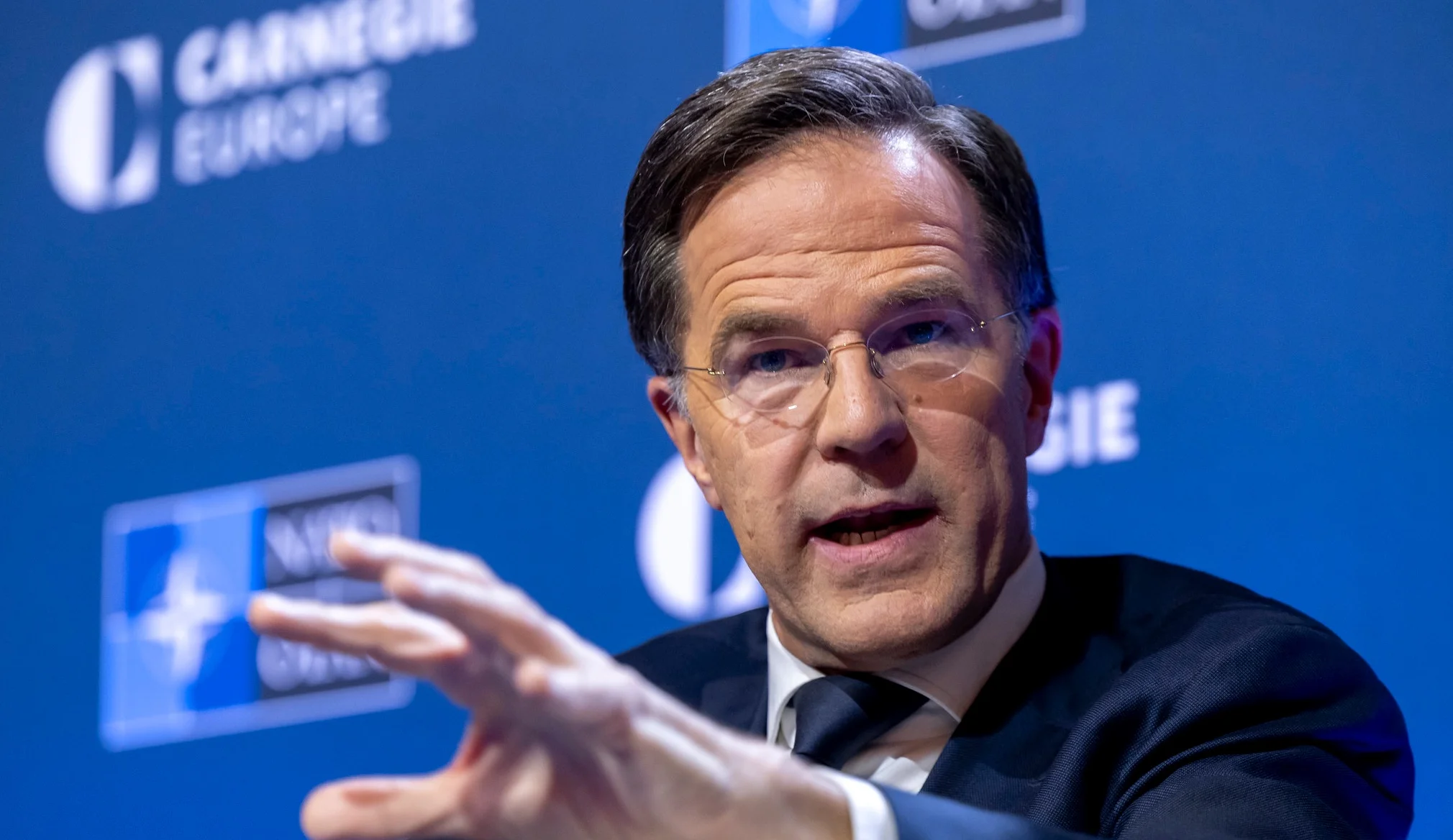
NATO Secretary-General Mark Rutte will travel to Washington next week for a “long‑planned” visit that now doubles as an urgent test of the 75‑year‑old alliance, after President Donald Trump openly threatened to pull the United States out over Europe’s stance on the Iran war. NATO and U.S. officials confirmed the trip on Wednesday but declined to give dates or a detailed agenda, underscoring both the sensitivity and the stakes of the secretary‑general’s first visit since Trump began publicly questioning whether the U.S. should remain in the Western defense pact.
A “long‑planned” visit that suddenly looks like crisis diplomacy
Rutte’s trip was in the works well before Trump began venting at European partners over their reluctance to join U.S. efforts to reopen the Strait of Hormuz, NATO spokesperson Allison Hart stressed. “I can confirm that the Secretary General will be in DC next week for a long‑planned visit,” she told reporters in Brussels, adding no further details about meetings or topics.
A White House official also confirmed the visit but did not say whether Trump will host Rutte at the Oval Office, meet him at another venue or delegate the encounter to senior aides. In normal times, such a trip would be routine alliance diplomacy; this year, it comes as the U.S. president repeatedly muses in public about scrapping the very treaty Rutte is charged with upholding.
For NATO, which is simultaneously backing Ukraine against Russia and watching the Iran war threaten global energy flows, the Washington stop is meant to reinforce “continued transatlantic unity” and underline the alliance’s value for U.S. security, according to people familiar with the planning.
Trump’s NATO threats and the Iran war backdrop
The immediate trigger for the latest round of NATO angst is the Iran conflict. Since launching “Operation Epic Fury” five weeks ago, Trump has blasted European governments for refusing to send warships into the Strait of Hormuz to help clear mines and escort tankers, arguing that countries dependent on Gulf oil should “go get your own oil” and “find some courage.”
In that context, Trump has told aides and publicly signaled that he is “considering” withdrawing the United States from NATO, according to Reuters and other outlets. He has framed the idea as a response to what he sees as chronic under‑spending on defense and a lack of practical support on Iran, echoing earlier comments that he might “encourage” Russia to act against allies that do not meet NATO’s 2% of GDP spending guideline.
These remarks come as the president prepares a prime‑time address on the Iran war and touts the possibility of ending major U.S. operations in “two or three weeks,” even if Hormuz is not fully reopened. The combination of a high‑risk conflict, an unstable energy market and open questions about U.S. treaty commitments has left European officials scrambling for reassurance ahead of Rutte’s trip.
Rutte’s balancing act between Trump and Europe
Mark Rutte, the former Dutch prime minister who took over as NATO secretary‑general after Jens Stoltenberg, has long been seen as a skilled broker with personal ties to Trump from his years on the European Council. His Washington visit will test whether those relationships can be translated into concrete assurances.
European capitals expect him to deliver a two‑part message. First, that allies understand U.S. concerns on burden‑sharing and are increasing defense budgets, as many did after Russia’s full‑scale invasion of Ukraine in 2022. Second, that any suggestion of a U.S. withdrawal from NATO would embolden Russia, unsettle Ukraine’s fragile front lines and complicate efforts to contain Iran’s regional ambitions.
British Prime Minister Rishi Sunak underscored those stakes in a call with Rutte on April 1, in which the two men discussed “unwavering support for Ukraine’s sovereignty” and progress in peace talks, while stressing the need to keep NATO’s deterrent credible. Diplomats say similar messages have been conveyed from Berlin, Paris, and Eastern European capitals wary of any U.S. weakening of Article 5’s collective defense pledge.
What’s likely on the agenda in Washington
While neither NATO nor the White House has published a detailed schedule, officials and analysts point to several obvious agenda items that Rutte and U.S. counterparts are expected to tackle.
- Iran war and Hormuz security: Rutte is likely to brief the administration on allied views of the conflict and explore ways NATO could support maritime security in the Gulf without being drawn directly into the U.S.–Iran confrontation. That could include expanded information‑sharing, deconfliction channels or parallel EU missions, short of a full NATO flag in Hormuz.
- Ukraine and the eastern flank: With Ukraine still under pressure from Russian forces, Rutte will want to avoid any perception that NATO is distracted or divided and may push for strong public statements reaffirming U.S. commitment to Europe’s eastern defenses.
- Defense spending and capabilities: Expect renewed discussion of how and when more allies will reach the 2% target, and how NATO can better pool resources on air defense, munitions, and emerging technologies, an area where Rutte has previously argued the alliance must move “from promises to deliveries.”
- Alliance messaging and red lines: Behind closed doors, Rutte may urge the White House to temper rhetoric about quitting NATO, arguing that even speculative threats can unsettle markets, encourage adversaries, and complicate diplomacy.
Whether any of these talks will produce a joint statement, press conference or signed commitments remains unclear. Reuters and other outlets note that no formal side events have yet been announced.
Global markets and security watchers look on
Investors and security analysts will be watching Rutte’s Washington swing for signs of either stabilization or further strain in transatlantic ties. Fears that the Iran war could widen, and that Trump might leave Hormuz partly closed while exiting the conflict, have already contributed to volatile oil prices and bouts of risk‑off trading in global equities.
A clearer, calmer U.S.–NATO relationship could help reassure markets that there will be a coordinated approach to maritime security and sanctions enforcement, even if major combat operations ebb. Conversely, if Rutte’s visit is followed by fresh talk of a U.S. break with NATO or public clashes over burden‑sharing, analysts warn that could feed perceptions of a more fragmented Western response to both Russia and Iran.
For now, officials on both sides are sticking to the script: a “long‑planned” visit, a routine round of high‑level consultations, nothing to see here. Yet the timing, with a hot war in the Middle East, an unfinished war in Ukraine and an American president openly questioning the alliance’s future, ensures that when Rutte’s motorcade pulls up in Washington next week, the world will be paying close attention to what happens behind closed doors.





