
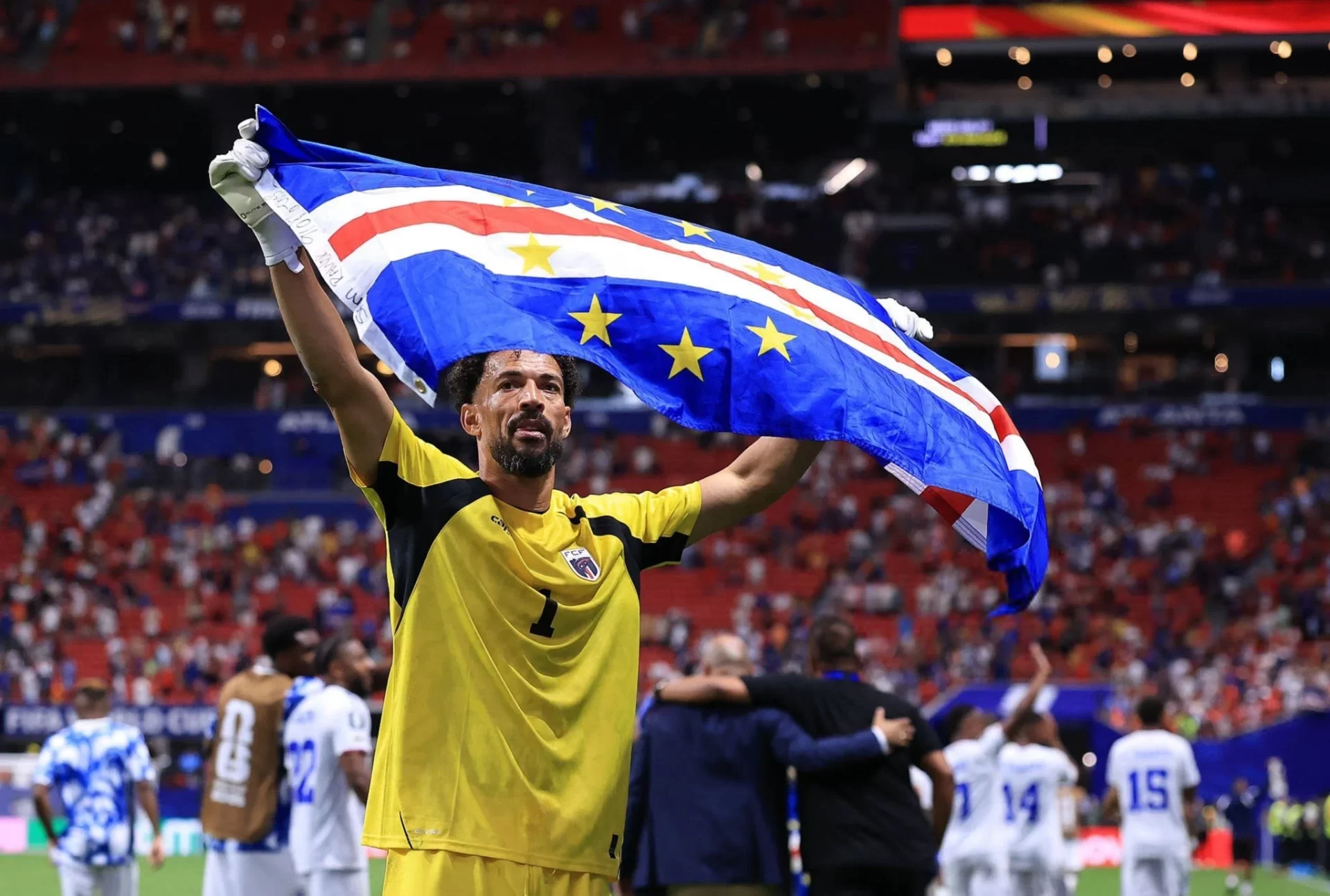
Cape Verde marked its first-ever appearance at a men’s FIFA World Cup by holding European champion Spain to a goalless draw in Atlanta, producing one of the biggest shocks of the 2026 tournament and announcing the tiny Atlantic archipelago as a new story to watch on football’s biggest stage.
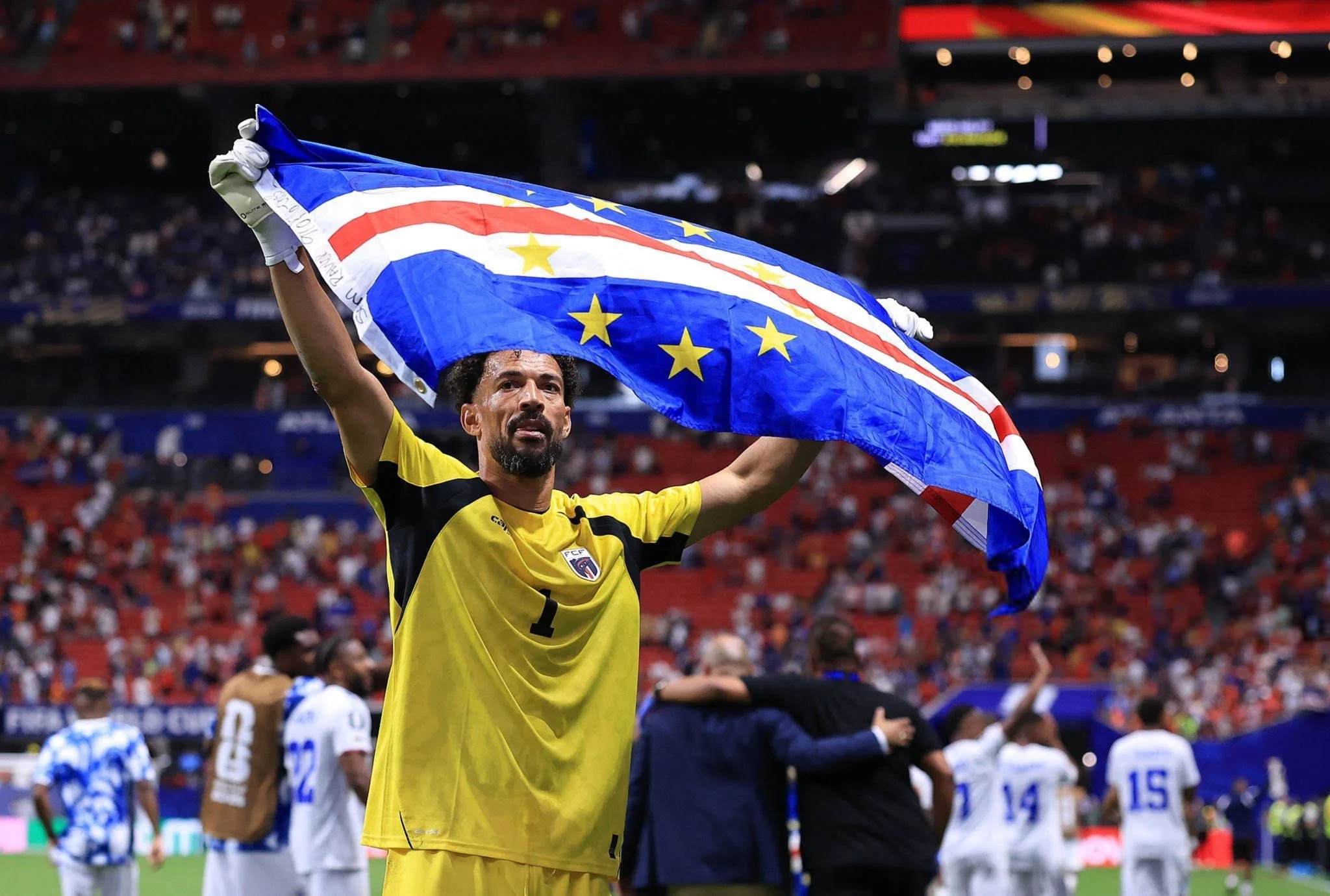
Historic debut in Atlanta
Playing in its first men’s World Cup match, Cape Verde, an archipelago of around 550,000 people off West Africa – held heavily favored Spain to a 0-0 draw at Atlanta’s Mercedes‑Benz Stadium on Monday.
Spain, the reigning European champion and one of the bookmakers’ leading title contenders, came into the Group H opener listed at around -1200 by some oddsmakers, underscoring the scale of the upset.
The result instantly entered tournament lore as one of the most surprising scorelines of the group stage, with Reuters describing it as a “stunning” debut in which Cape Verde frustrated a Spain side that dominated possession but could not find a way through.
It was also the first World Cup match ever played in Atlanta, giving the city’s hosts an unexpected underdog story to open their slate of games.
Vozinha’s masterclass in goal
Central to Cape Verde’s achievement was veteran goalkeeper Vozinha, who at 40 produced one of the standout individual performances of the competition so far.
Associated Press and BBC reports detail how he made multiple crucial saves in the first half alone, standing up to Spain’s pressure and organizing a defense that repeatedly blocked and cleared shots from close range.
Spain finished with 27 attempts on goal and close to 75% possession yet could not beat Cape Verde’s last line of resistance.
Euronews notes that Vozinha’s display earned him Man of the Match honors, a fitting recognition for the player whose interventions preserved Cape Verde’s clean sheet and first World Cup point.
Spain’s dominance without reward
On almost every metric except the scoreline, Spain controlled the game.
Luis de la Fuente’s side, stacked with talent and experience, circulated the ball in familiar fashion, pinning Cape Verde back for long spells as they probed for openings around the penalty area.
Reuters reports that La Roja registered 27 shots but found only a handful truly testing Vozinha, with many efforts blocked by a packed back line or drifting wide under pressure.
Even the introduction of teenage star Lamine Yamal in the second half could not tilt the match decisively; CNN notes that the Barcelona winger was unable to unlock a defense that grew in confidence as the minutes ticked by.
The stalemate continues a curious pattern for Spain at recent World Cups: the BBC points out that after a 7-0 opening win over Costa Rica in 2022, Spain drew 1-1 with Germany in Qatar and 0-0 with Morocco before going out on penalties – and have now begun 2026 with another goalless draw.
Cape Verde’s disciplined game plan
Cape Verde did not come to Atlanta to trade punches on equal terms; instead, they executed a compact, defense‑first game plan that limited Spain to half‑chances for long stretches.
Euronews describes how the debutants sat deep, defended in numbers, and relied on sporadic counters, largely content to soak up pressure while protecting central areas of the pitch.
Far from being passive, however, Cape Verde grew bolder as Spain’s frustration mounted.
In the 90th minute, Diney Borges nearly won it for the underdogs, flashing a header dangerously close to Unai Simón’s goal and briefly silencing Spanish fans before the keeper gathered.
That late chance, AP notes, underlined that the Blue Sharks were inches away from turning a famous draw into an even more sensational victory.
A landmark for a small nation
With Monday’s result, Cape Verde became only the third‑smallest country by population ever to take part in a men’s World Cup finals – and did so by taking a point off the second‑ranked team in the world.
CNN writes that player who arrived as unknowns on the global stage “will now be remembered as legends” back home, with Vozinha in particular celebrated for a performance that secured Cape Verde’s first World Cup point.
In Praia and across the diaspora, celebrations spilled into the streets as fans processed the magnitude of holding Spain, a team loaded with Champions League regulars – to a standstill.
BBC video from fan zones showed Cape Verde supporters in tears and waving flags, describing the draw as feeling “like a win” and a moment they never expected to witness in their lifetimes.
Spain’s path gets complicated
For Spain, the draw is less a catastrophe than a complication.
Fox Sports analysis notes that dropping two points in their opener, in a group that also includes Uruguay and Saudi Arabia, leaves La Roja with “virtually no margin for error” if they want to finish top of Group H.
Spain’s remaining fixtures will test their ability to respond to adversity against more established opposition, especially if critics seize on Monday’s stalemate as evidence of familiar wastefulness in front of goal.
The result also feeds into a broader narrative about the expanded 48‑team World Cup: The Athletic argued that Cape Verde’s performance “should quiet complaints” about weaker sides, showing that properly prepared debutants can compete with the elite.
Group H outlook after Atlanta shock
After the 0-0 in Atlanta, Cape Verde sits on one point, level with Spain, with Uruguay and Saudi Arabia yet to play their opening matches.
With three group games per team and the top two advancing, even a single point can prove valuable, especially for a debutant not widely tipped to progress.
If Cape Verde can build on this foundation with a win against one of their remaining opponents, they could put themselves in genuine contention for the last 16, a scenario few analysts considered before the tournament.
For Spain, a more clinical performance in front of goal will be essential in the next fixtures to avoid a nervy final matchday in a group that now looks far less straightforward than on paper.
US and global angles
For US audiences, the match offered a compelling underdog story in a World Cup being played on home soil, with Atlanta’s debut as a host city wrapped around one of the tournament’s first major shocks.
The sight of Cape Verde’s fans and players celebrating inside an NFL stadium will likely become one of the enduring images of the group stage, illustrating how the expanded World Cup has brought new nations – and narratives – into the spotlight.
Globally, the result reinforces a familiar World Cup lesson: reputations, rankings and betting odds mean little over 90 minutes when a well‑organized outsider executes its game plan.
On a day full of draws, as ESPN noted, Cape Verde’s goalless stand against Spain produced the headline moment – a reminder that for debutants, a single point can reshape both a group table and a nation’s footballing history.



