
China is using Shanghai’s World Artificial Intelligence Conference (WAIC) as a stage to signal that it intends to be not just a major AI power, but a rule‑setter for how the technology is built and governed worldwide. With President Xi Jinping weighing in on “AI for all” and organizers promising record participation from global companies and researchers, the summit underscores how deeply AI has moved into the center of China’s industrial strategy and its diplomacy.
What the Shanghai AI summit is
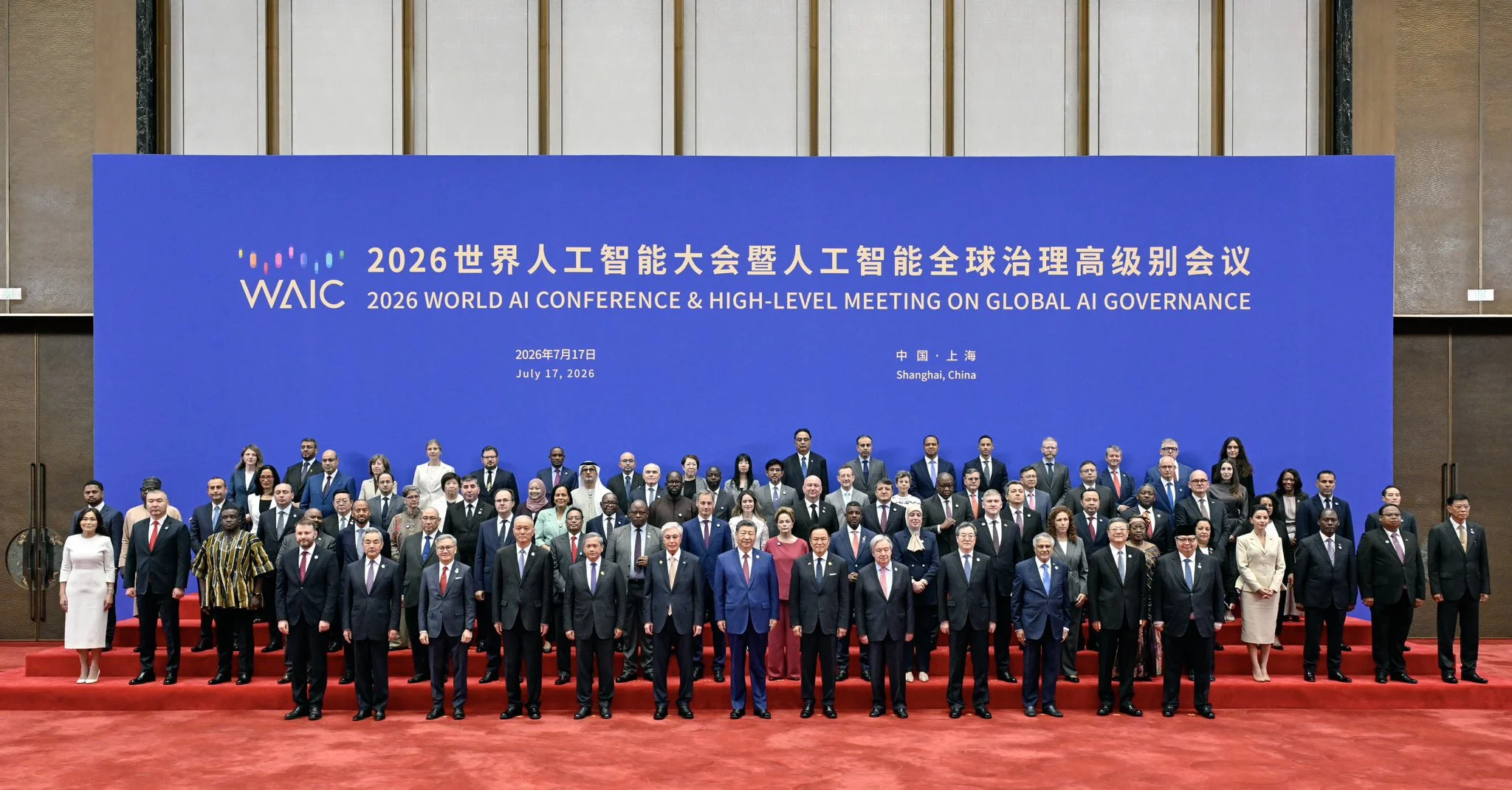
The “AI Shanghai summit” now refers broadly to a cluster of high‑profile events anchored by WAIC 2026, the World Artificial Intelligence Conference and High‑Level Meeting on Global AI Governance, taking place in the city from July 17 to 20. Chinese officials describe WAIC as one of the world’s most influential AI gatherings, bringing together leading tech firms, startups, researchers, and policymakers.
The conference runs under the theme “Smart Partners, Co‑Creating the Future,” and is organized by the Shanghai Municipal Commission of Economy and Informatization along with national ministries and local governments. It is the ninth edition of WAIC and the first to formally incorporate a high‑level global AI governance meeting under its banner.
Earlier in the year, Shanghai also hosted the Global Developers Pioneers Summit, a developer‑focused AI meeting, and an Embodied AI Technology Ecosystem Conference on humanoid robotics, both framed as lead‑ins to WAIC and part of the city’s wider AI summit ecosystem.
Scale and structure: record‑breaking WAIC 2026
Shanghai authorities say WAIC 2026 will be the biggest yet.
An official briefing on July 7 revealed that the conference will feature more than 1,100 companies, over 3,000 exhibits and more than 300 global product debuts. Organizers plan more than 140 themed forums over four days, with over 1,400 guest speakers from China and abroad.
The summit is spread across three main areas:
- The Expo area: Shanghai World Expo Exhibition & Convention Center and related venues.
- Zhangjiang: the Zhangjiang Science Hall in Pudong, a key tech and life‑sciences district.
- West Bund: West Bund International Convention and Exhibition Center in Xuhui, part of a growing innovation corridor along the Huangpu River.
Program tracks include high‑level forums, large exhibitions, competitive showcases, hands‑on experience zones, startup incubators and talent‑recruitment events. Visitor tickets and registration are being managed through the “Hi WAIC” mobile app, underscoring the summit’s retail‑style appeal to both professionals and the public.
Xi Jinping and “AI for all”
The summit is also being used to project political messages.
Bloomberg reports that President Xi Jinping, in remarks around China’s top tech gatherings, has hailed the country’s progress in developing lower‑cost AI and stressed the goal of making “AI for all,” pressing his personal imprint on the sector. While WAIC is formally hosted by ministries and the Shanghai city government, the conference’s agenda and messaging align closely with Xi’s broader call for AI to serve national development, security, and social governance.
The inclusion of a High‑Level Meeting on Global AI Governance within WAIC reflects Beijing’s aim to shape international norms on AI safety, data, and ethics. Chinese officials say the governance meeting will bring together policymakers, experts, and industry leaders to discuss rules for frontier models, cross‑border data use and AI risk management.
For foreign companies and governments, WAIC has become a window into how China intends to balance open innovation with tighter political and regulatory control over AI systems.
Business and technology themes: from embodied AI to AGI
Beyond politics, WAIC 2026 and related Shanghai AI summits are heavy on concrete tech themes.
China Business Gateway’s summary of WAIC says the conference showcases advances in artificial intelligence, robotics, autonomous driving, smart manufacturing, digital healthcare, fintech and cloud computing. Organizers highlight “next‑generation AI models, humanoid robots, AGI research milestones, and smart city infrastructure” as areas to watch.
A separate Embodied AI Technology Ecosystem Conference held in Shanghai earlier this year launched new standards for humanoid robotics hardware and software and unveiled a Global Embodied AI Ecosystem Co‑Build Plan. Local robotics firm Mscape signed partnerships with nearly 20 companies, including Unitree, Fourier and iFlytek, aiming to build a full‑chain ecosystem covering technology development, scenario testing and commercial operations.
Shanghai officials say these embodied‑AI efforts are part of positioning the city as a hub for AI that can act in the physical world, from warehouse robots to service and industrial automation. WAIC builds on that by putting humanoid robotics and embodied AI demonstrations on the exhibition floor alongside software‑only AI models.
Developer and startup focus: the Global Developers Pioneers Summit
The Shanghai AI summit ecosystem is not just about big firms; it also targets developers and startups.
In late March, Shanghai hosted the 2026 Global Developers Pioneers Summit, a three‑day AI event designed to “accelerate the practical application of AI innovations by breaking the barriers between industry and research.” Held under the theme “Developers, Find, Find, Find,” the summit featured more than 50 workshops, over 100 interactive experiences and contests aimed at solving industry challenges with technology.
Officials described the developer summit as seeking to build a “super entrepreneur” ecosystem, empowering individual developers, and small companies by connecting them into open‑source agent ecosystems and skills marketplaces. The event’s emphasis on agentic AI, AI systems that can act semi‑autonomously across tools and environments, ties directly into WAIC’s showcase of advanced models and platform partnerships.
Together, these developer‑focused events and WAIC’s big‑industry presence paint a picture of Shanghai trying to be a “community of global developer communities,” not just a corporate trade show.
Positioning Shanghai as a global AI hub
Local authorities are clear about what all of this is for: branding and building Shanghai as a global AI center.
China Daily and official Shanghai government releases say WAIC and the developer summit are “tasked with helping build Shanghai into a city of open source and openness, where creativity can be materialized at the fastest speed, AI applications can reach their full potential, and developers can be better understood.”
Zhong Junhao, secretary‑general of the Shanghai AI Industry Association, told reporters that the Global Developers Pioneers Summit and WAIC are designed to connect top‑level developers, research institutions, startups and industry decision‑makers in a way that accelerates industry integration. The goal is to turn the city into a “hub for artificial intelligence innovation” with a strong ecosystem around open‑source agents, computing power, and energy integration.
WAIC’s expansion into three districts, and the decision to run talent‑recruitment drives and startup incubator tracks alongside governance forums, reflect an attempt to make AI central not only to Shanghai’s industry mix but also to its urban identity.
International participation and global governance agenda
WAIC organizers emphasize that the summit is international in scope.
The Shanghai government’s preview notes that more than 1,400 guests from China and overseas will attend WAIC, participating in over 140 forums. China Business Gateway highlights the presence of multinational tech firms, global AI research labs and foreign delegations seeking partnerships with Chinese companies.
At the governance meeting, officials say they intend to discuss global AI rules with international organizations and foreign governments, although the detailed agenda is not fully public. That fits a broader pattern: China is keen to be seen as a responsible AI power by hosting “high‑level” governance talks, while also pushing its own standards and frameworks.
For foreign attendees, WAIC offers both opportunity and risk: a chance to tap into China’s AI market and hardware ecosystem, but also a context in which political considerations and data‑governance rules differ markedly from those in the US and Europe.
What the summit means for AI and business
For the AI and business community, the Shanghai summit marks several significant trends.
- Scale and consolidation: WAIC’s growth to more than 1,100 companies and 3,000 exhibits underscores the consolidation of AI conferences around a few mega‑events where product launches, standards discussions and hiring collide.
- Governance baked into industry shows: By formally combining a global governance meeting with a commercial and technical conference, China is signaling that regulatory debates are now part of the main stage, not side sessions.
- Embodied AI and infrastructure focus: Shanghai’s emphasis on embodied AI, robotics and edge computing hardware shows that physical AI systems, not just chatbots, are central to its industrial vision.
- Developer ecosystems: The developer summit and WAIC’s startup tracks reflect a recognition that AI innovation increasingly comes from open‑source communities and small teams, not only giant platforms.
As WAIC 2026 unfolds, the summit will likely produce a wave of product announcements and partnership deals. But its longer‑term significance lies in how it helps set expectations: for AI as a pillar of China’s economy, for Shanghai as an international tech city, and for a governance conversation that Beijing wants to help lead.