
The FIFA World Cup will crown its next men’s champion just across the Hudson River this Sunday, when New York New Jersey Stadium, better known to NFL fans as MetLife Stadium, stages a final that organizers promised would be “epic” when the site was first awarded the showpiece. The match caps a month‑long takeover of the New York metropolitan area by the world’s game, with city and state officials treating the final as both a global sporting event and a once‑in‑a‑generation tourism and security operation.
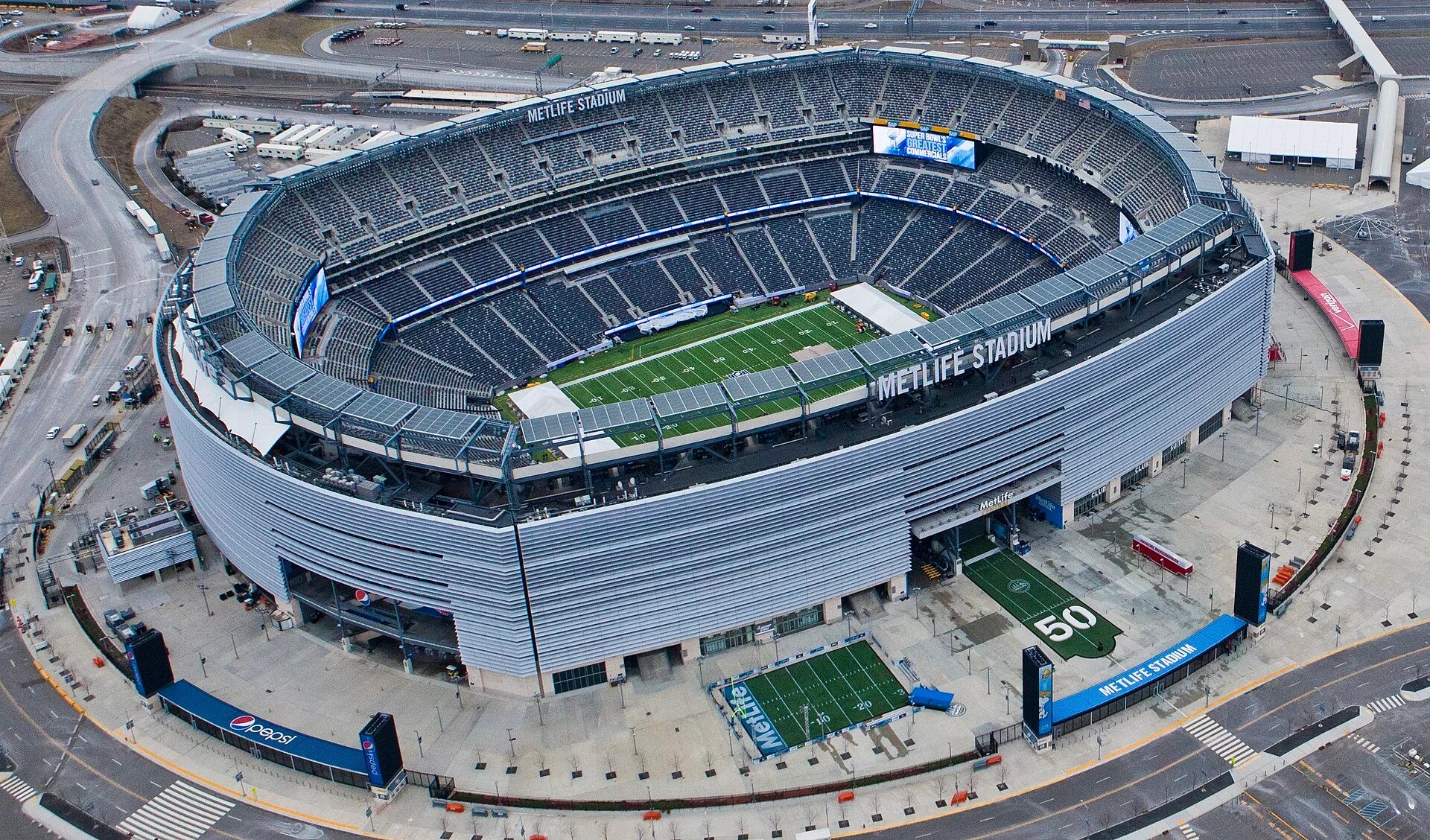
The venue: New York New Jersey Stadium (MetLife)
FIFA officially designated “New York New Jersey Stadium” as the host of Match 104, the World Cup final, confirming the venue in East Rutherford, New Jersey, as the stage for the biggest game of the expanded 48‑team tournament. The stadium, opened in 2010 and home to the NFL’s New York Giants and New York Jets, seats around 82,500 for soccer.
Located in the Meadowlands sports complex, roughly 10 miles from midtown Manhattan, the venue has hosted major events including Super Bowl XLVIII and Taylor Swift’s “Eras Tour,” but the World Cup final is its most globally watched fixture yet. FIFA President Gianni Infantino said the final in New York New Jersey would “unite the world” and be “epic,” highlighting its proximity to one of the planet’s most recognizable skylines.
New York New Jersey Stadium has already staged several World Cup matches this summer, with Brazil, France, Germany, and other heavyweights playing group fixtures there before the knock‑out rounds. Sunday’s match will be the eighth and last of the tournament at the venue.
The city’s hosting plan: fan zones and logistics
New York City is treating the final as both a sporting event and a citywide festival.
NYC Tourism’s official guide and the city’s “World Cup Hosting Playbook” lay out a plan for fan zones in each borough, designed to give supporters without match tickets a place to watch games and celebrate. According to AP, free fan zones have been set up at Rockefeller Center in Manhattan, the Billie Jean King National Tennis Center in Queens, Brooklyn Bridge Park, a shopping area near Yankee Stadium in the Bronx, and a minor league ballpark in Staten Island.
There is also a fan zone in Harrison, New Jersey, near the New York Red Bulls’ stadium, where Sports Illustrated is charging a modest fee for adults and offering free entry for children under 12. City officials say the goal is to spread crowds and economic benefits across the region, rather than concentrating everything in midtown.
Mayor Zohran Mamdani and Governor Kathy Hochul joined FIFA and the NYNJ Host Committee in unveiling a joint hosting plan that covers transport, policing, emergency services and coordination with local businesses. New York is leaning heavily on its experience managing large parades, New Year’s Eve, and previous major sports events to handle the influx of fans.
Getting to the final: trains, buses, and costs
For match‑going fans, the biggest practical question is how to get from New York to the Meadowlands.
AP notes that the standard NJ Transit “special event” service from Manhattan’s Penn Station to the Meadowlands has been re‑priced for the World Cup: a round‑trip ticket for the final costs $98, down from an initially mooted $150, but far above the $12.90 typically charged for NFL games or concerts. The route is not direct; passengers must board designated trains at fixed times, then transfer at Secaucus Junction to reach the stadium spur line.
Fans can also travel via other NJ Transit routes from Secaucus or Hoboken, and the host committee is backing official shuttle buses from Grand Central Terminal, Port Authority Bus Terminal, a planned north Midtown pickup point, and a park‑and‑ride site in Clifton, New Jersey. Those shuttles cost about $20 for a round trip.
Despite the Meadowlands’ large parking lots, most areas around the stadium are reserved for FIFA‑designated “premium parking,” clustered near the American Dream mall. Ride‑sharing services will have fixed pickup and drop‑off zones at the nearby harness‑racing track. City officials have warned fans not to expect to drive directly up to the stadium without pre‑booked parking.
Within New York, subway, commuter rail and ferry services are being augmented to move fans between airports, hotels, fan zones and transit hubs. Authorities say they expect tens of thousands of visitors to remain in the city during the final weekend, even if they are not attending the match itself.
New York’s World Cup footprint beyond the final
New York New Jersey has been more than just a final host.
NYC Tourism shows that the region is staging eight World Cup fixtures in all: five group games, a Round of 32 matches, a Round of 16 tie and the final. The schedule at New York New Jersey Stadium includes marquee clashes like Brazil v Morocco, France v Senegal, and Ecuador v Germany in the group phase.
Matches are just one part of the city’s summer sports calendar. AP notes that Major League Baseball’s Yankees and Mets have home series overlapping the final weekend, including a high‑profile Yankees vs Los Angeles Dodgers matchup at Yankee Stadium. That combination of events, plus tennis, concerts, and regular tourism, contributes to heavy demand for hotel rooms and transport.
The city’s hosting playbook highlights measures to mitigate impacts on residents, including crowd management, support for small businesses near fan zones, and coordination with community boards. Officials argue that the long‑term tourism and branding benefits outweigh short‑term congestion.
Why FIFA chose New York New Jersey
FIFA’s decision to award the final to New York New Jersey was both practical and symbolic.
When the match schedule for the expanded 2026 tournament was announced, FIFA’s president said the final “had to be” in a global city with world‑class infrastructure and a stadium capable of handling the biggest event in the sport. New York New Jersey Stadium met the technical requirements: modern facilities, strong transport links, nearby airports and experience hosting major events.
The broader region also fits FIFA’s marketing priorities. New York Tourism underscores the global visibility of games played in sight of the Manhattan skyline, and the host committee has pushed the narrative of “New York’s World Cup,” even though the stadium sits in New Jersey.
With World Cup 26 spread across 16 cities in the United States, Canada and Mexico, the final in New York New Jersey is meant to act as a climax in a city synonymous with big occasions, from Broadway and Wall Street to Times Square.
Security, crowd management and legacy
Behind the spectacle, authorities are managing risk.
The city’s hosting playbook details cooperation between NYPD, New Jersey State Police, federal agencies, and private security to manage match‑day operations and fan events. Measures include controlled access at fan zones, bag checks, drone restrictions and contingency plans for severe weather or transport disruptions.
Officials are also thinking about what comes after the final. Mayor Mamdani’s office and the host committee say they want to leave a “legacy” of improved transit options, stronger international tourism ties and experience that could support future bids for events such as the Club World Cup or major continental tournaments.
For now, though, the focus is on Sunday: 82,500 fans in New York New Jersey Stadium, millions more in fan zones and on screens worldwide, and a World Cup final that is as much a test of a city’s hosting capacity as of the teams’ footballing nerve.