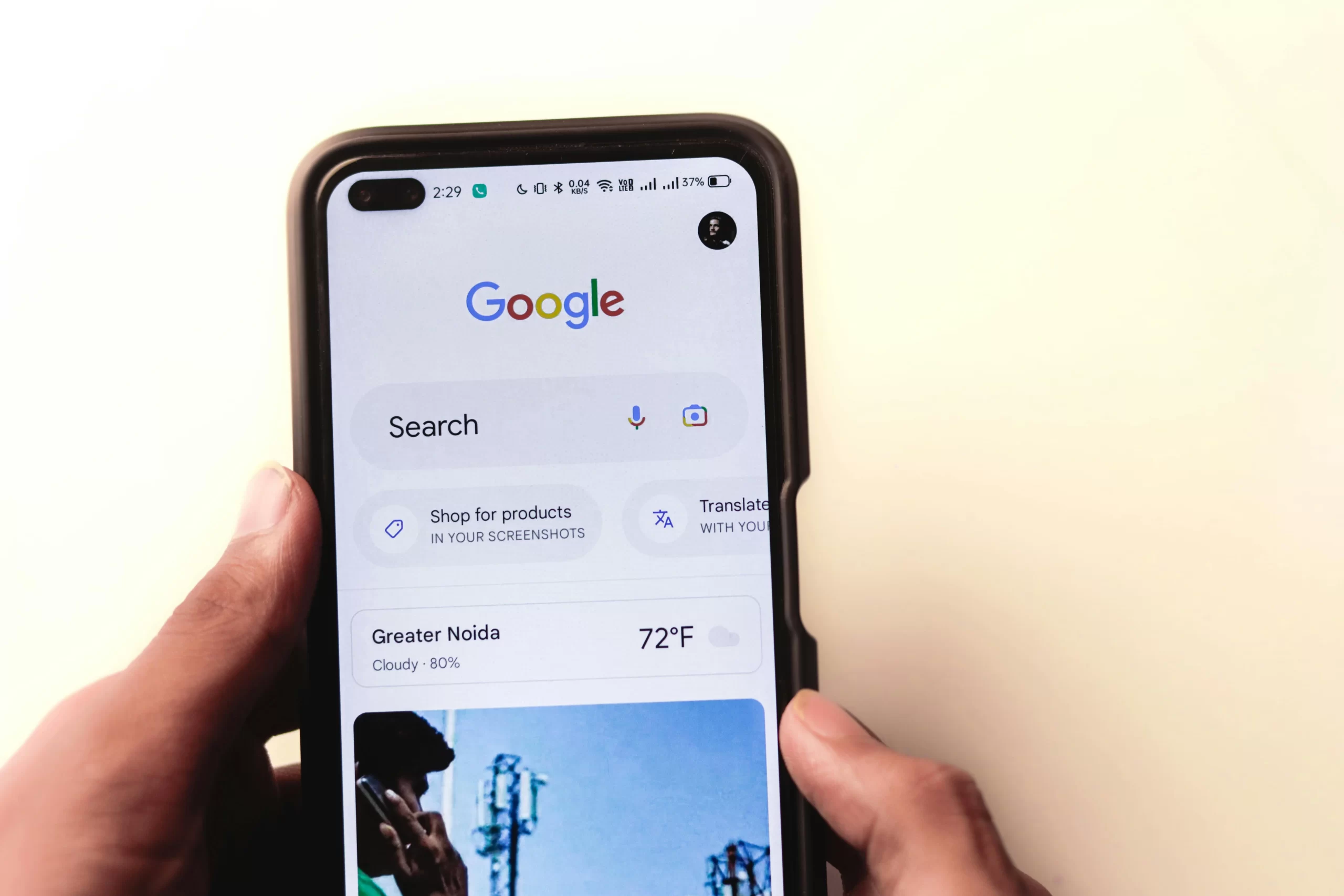
Google is quietly testing a feature that uses artificial intelligence to rewrite headlines in its classic search results, upending years of SEO playbooks and leaving publishers worried about what happens when they no longer control the words that sell their stories. Coming on top of AI Overviews that already answer many queries directly on the results page, the experiment raises a blunt question for newsrooms and marketers alike: if Google’s AI writes the headline, who owns the click, if there is a click at all?
What Google is actually doing
Google has long reserved the right to tweak title tags, but this is something different.
In statements to Search Engine Land and The Verge, the company confirmed it is running a “small,” “narrow” test that uses AI to generate new titles for some results in traditional Search, not just in Discover.
Key points from Google’s confirmation:
- The test affects a subset of queries and results, with a focus on better matching titles to user intent and improving engagement.
- It is not yet approved for broad rollout, but it’s live for enough users that publishers have begun spotting their own headlines rewritten.
- It is not limited to news, though news sites have provided many early examples.
In one instance cited by Search Engine Land, Google shortened a nuanced Verge headline, “I used the ‘cheat on everything’ AI tool and it didn’t help me cheat on anything”, to a flat “‘Cheat on everything’ AI tool,” stripping out the skeptical twist that framed the piece. Another report described Google taking a reported, contextual news line and turning it into something closer to generic clickbait.
Under the hood, Google says it now uses multiple page signals, <title> tags, <h1> headings, on‑page text, og:title metadata, prominent styled text and even external anchor text, to “automatically determine title links,” with AI helping decide what to surface.
Why publishers are alarmed
For newsrooms and SEO teams, headlines are not decoration; they are strategy.
Publishers spend years learning how to:
- balance keywords, clarity, and curiosity
- reflect their editorial voice and standards
- avoid libel, misrepresentation or over‑promising
Geo News warns that having Google simply replace these efforts with AI‑generated alternatives risks undercutting “years of search engine optimization (SEO) strategy,” changing tone and even misframing sensitive stories.
Sean Hollister, a senior editor at The Verge, compared the practice to “a bookstore ripping the covers off the books it puts on display and changing their titles,” arguing that Google is breaking an implicit contract: “the website you click is the website you get.”
The biggest concerns cluster around three areas:
- Click‑through rates (CTR): A headline that no longer matches your testing, your keyword research or your angle may simply win fewer clicks, or attract the wrong clicks that bounce quickly.
- Brand voice and trust: AI rewrites can flatten distinctive tone or inject unearned hype, weakening differentiation and in some cases changing the meaning of the piece.
- Legal and ethical risk: If Google’s version overstates a claim or strips out critical qualifiers, any backlash over “misleading” headlines may fall on the publisher, not the search engine.
As one trade outlet put it, “Google Search is already sending fewer clicks. Now you also must contend with Google generating entirely new headlines with AI.”
AI Overviews and the traffic squeeze
The headline test doesn’t exist in a vacuum. It lands on publishers already bruised by Google’s AI Overviews and other AI‑driven features.
Recent analyses cited by Search Engine Land and MediaCopilot suggest:
- When AI Overviews appear, click‑through rates to organic results can drop by up to 42–61%, as users get answers without clicking through.
- Across a large dataset, organic traffic to publishers from Google dipped 42% overall after AI Overviews, even as breaking news traffic jumped 103% thanks to Top Stories and Discover visibility.
- AI Overviews appear far less often for news (around 15% of news queries) than for evergreen categories like health or how‑tos, which softens the blow for hard news but hits evergreen and service journalism hardest.
Geo News describes this as a “traffic crisis” in which informational publishers are hit twice: first by AI summaries that answer questions upfront, and now by AI headlines that may further weaken the incentive to click.
In that context, AI title rewrites look less like a cosmetic tweak and more like another turn of the screw in a search ecosystem where Google increasingly performs both as indexer and front‑end interface to the web.
What it means for SEO strategy
If Google is willing to override your titles with its own, does SEO still matter? Yes—but the center of gravity is shifting.
Several experts and trade outlets argue that:
- Classic keyword‑first headline tactics lose power if Google uses broader page signals and AI to craft its own titles.
- Entity‑based SEO, clearly signaling who and what your page is about in structured, consistent ways, matters more than exact‑match phrasing.
- Clear, well‑structured content that answers questions comprehensively is more likely to be trusted as a source for AI Overviews and headline generators alike.
Geo News and SEO commentators recommend several shifts:
- Write for intent, not just strings. Craft headlines and intros that directly address the way users phrase questions, so AI systems see your content as a strong match.
- Reinforce entities everywhere. Use consistent names, schema markup and internal linking to make your brand, authors, and core topics machine‑legible beyond the <title> tag.
- Optimize the whole “above the fold.” Because Google now draws on H1s, stand‑firsts and prominent on‑page text, you need alignment between title, dek and early paragraphs.
- Lean into brand and bylines. As AI flattens headline differences, recognizable brands, authors, and site reputations become stronger click magnets.
In other words, think less in terms of “one magic line” and more in terms of content objects that communicate clearly to both humans and models, no matter which snippet or title Google surfaces.
How publishers can respond
No single tactic will fully neutralize the risk, but newsrooms and site owners do have levers.
Some immediate steps being discussed in SEO and publisher circles include:
- Monitor rewrites. Track SERPs for your key stories and brands to document where and how Google changes your headlines, including tone, length, and accuracy.
- Push for transparency. Industry groups are already pressing Google to publish clearer guidelines, opt‑out mechanisms, or at least error‑reporting channels for misleading AI titles.
- Diversify traffic. Invest more in newsletters, direct apps, social video, and non‑Google discovery (from Apple News to Flipboard) to reduce exposure to a single gatekeeper.
- Experiment with AI‑aware copy. Some publishers are testing slightly more literal, intent‑aligned headlines and H1s to see if Google’s AI is less tempted to rewrite them.
- Revisit analytics. Segment performance to distinguish between AI‑affected and unaffected query types, news vs evergreen, branded vs generic, to understand where to double down.
Longer term, a few are even exploring legal and policy angles, especially if AI rewrites distort sensitive stories or undercut existing agreements around how snippets represent their content.
The bigger picture: search is no longer neutral packaging
For years, publishers treated Google’s “10 blue links” as neutral wrappers: you fought to win a position and wrote the best headline you could, but the snippet itself was mostly yours. AI is eroding that assumption.
Between AI Overviews that answer questions without clicks, AI‑powered article overviews in Google News that summarize stories before users tap through, and now AI‑generated titles that may or may not reflect what journalists wrote, the search page is becoming a layer of editorial mediation in its own right.
For publishers, that means two things at once:
- The need to keep optimizing for Google’s evolving systems, entities, quality signals, authority, if they want to remain visible.
- A more urgent case for building direct, resilient relationships with readers that don’t depend on whether an algorithm decides to rewrite your headline on any given day.
Google insists its headline experiment is small and meant to help users. For an industry already watching search traffic slide, even small experiments can feel like existential ones.