
Key Facts
- Microsoft has announced updated Surface Pro 12-inch and Surface Laptop 13-inch models powered by Qualcomm’s Snapdragon X2 Plus processor, with availability beginning Oct. 13 in select markets.
- The Surface Pro 12-inch starts at $1,149.99, while the Surface Laptop 13-inch begins at $1,199. Both now start with 16GB of memory, removing the prior 8GB configuration.
- Microsoft says the Snapdragon X2 Plus delivers up to 17% faster Office productivity performance, 60% faster graphics performance and up to 95% faster local AI inference than the prior generation, while improving battery efficiency by up to 18%.
- Both devices include an 80-trillion-operations-per-second Qualcomm Hexagon neural-processing unit, qualifying them as Copilot+ PCs built for on-device AI features.
- Microsoft has increased screen brightness to 500 nits on both machines; the Surface Pro display is 25% brighter than before, while the 13-inch Laptop retains a 3:2 touchscreen and receives a full-size backlit keyboard.
Microsoft has refreshed two of its most portable Surface computers, the Surface Pro 12-inch and Surface Laptop 13-inch with Qualcomm’s Snapdragon X2 Plus processor, brighter displays, more standard memory and a larger emphasis on local artificial intelligence.
The announcement, made at Qualcomm’s Snapdragon Summit, is a measured but strategically important update. Microsoft is not reinventing the Surface Pro’s tablet-and-keyboard formula or the Surface Laptop’s compact clamshell design. Instead, it is using a newer Arm-based chip to argue that thin, light Windows computers can deliver better performance, longer battery life and stronger AI capabilities without the compromises that have sometimes limited Windows on Arm machines.
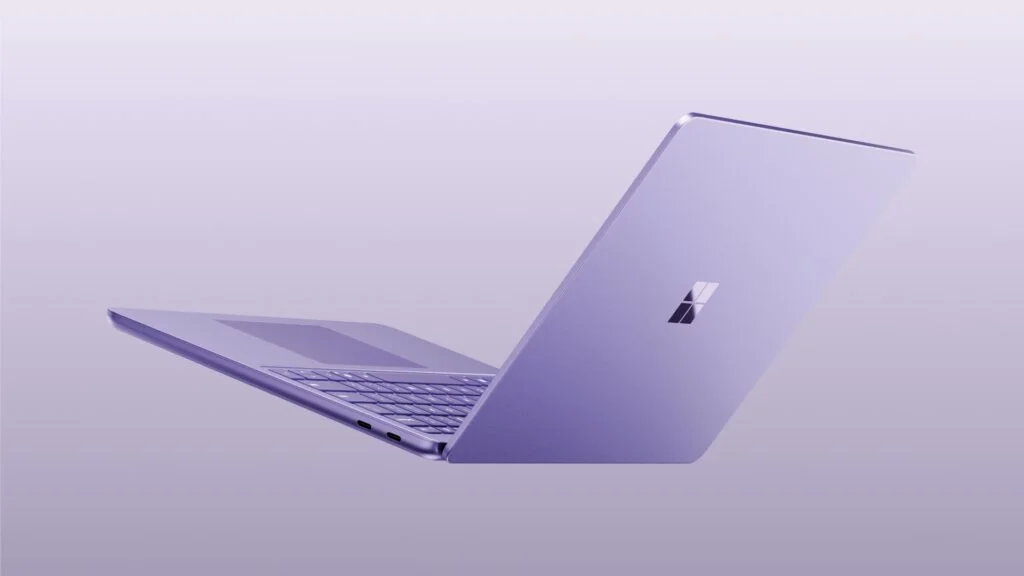
The new Surface Pro 12-inch will start at $1,149.99, while the new Surface Laptop 13-inch begins at $1,199. Both are scheduled to reach select markets on Oct. 13. Preorders have begun through Microsoft and participating retailers, according to product announcements and early retail reporting.
The question for potential buyers is straightforward: are these meaningful upgrades, or merely a higher-priced processor refresh? The answer depends on whether a buyer values portability, battery life and on-device AI more than compatibility with every legacy Windows application and maximum raw performance for heavy professional workloads.
Snapdragon X2 Plus is the central upgrade
The defining change in both systems is Qualcomm’s Snapdragon X2 Plus, a new Arm-based processor that combines CPU cores, an Adreno graphics processor and Qualcomm’s Hexagon neural-processing unit, or NPU.
Microsoft says the new chip delivers up to 17% faster performance in Office productivity tasks, 60% faster graphics performance and 95% faster local AI inference compared with the previous generation. It also claims as much as an 18% improvement in battery efficiency.
Those are manufacturer figures, not independent benchmarks. They should be viewed as claims to be tested once reviewers evaluate the devices using repeatable workloads, real software, battery tests and sustained performance measurements.
But the improvements point to Microsoft’s priorities. The company is not trying to turn the 12-inch Surface Pro or 13-inch Surface Laptop into gaming machines or workstation replacements. It is trying to make them more capable everyday computers for web browsing, office applications, video calls, note-taking, creative work, light editing and AI-supported productivity.
The Snapdragon X2 Plus configuration in these consumer Surface devices uses a six-core processor and an NPU rated at 80 TOPS, short for trillions of operations per second. That local AI hardware is designed to handle compatible machine-learning tasks without sending all processing to cloud servers.
For consumers, the benefit may include faster AI image generation, live captioning, camera effects, voice processing, search functions and other Windows Copilot+ experiences. For Microsoft, the benefit is strategic: it makes AI capability a baseline expectation for future PCs, not a niche feature reserved for expensive desktop hardware.
The Copilot+ PC proposition
Both devices are Copilot+ PCs, Microsoft’s designation for Windows computers with NPUs powerful enough to run specific AI features locally.
That label is important because it reflects the company’s view of where personal computing is headed. Rather than relying entirely on cloud-based AI services, Microsoft wants more functions to happen directly on the device. Local processing can reduce delays, preserve functionality when connectivity is weak and, in some situations, limit the amount of data that must be sent to remote servers.
The devices’ 80-TOPS Hexagon NPU is the engine for that effort. Microsoft says the new chip can provide up to 95% faster local AI inference, a term that describes the process of using an already trained model to produce a result, such as altering an image, transcribing audio, recognizing a visual element or applying a camera effect.
But buyers should distinguish between hardware potential and day-to-day value. A powerful NPU does not automatically make a PC more useful. The experience depends on which AI features Microsoft and third-party software developers actually support, whether those features are reliable and whether users find them more helpful than conventional software tools.
For example, a student may benefit from local live captions during a lecture, while a small-business owner may value camera effects during video calls. A designer might use AI-assisted image tools. But someone who mainly streams video, writes documents and checks email may see little immediate benefit from an 80-TOPS NPU.
The Surface refresh is therefore partly a bet on software catching up with hardware. Microsoft is placing the capability in consumers’ hands now in anticipation of a wider ecosystem of AI-enabled Windows applications.
Surface Pro 12-inch: brighter and more flexible
The Surface Pro 12-inch remains Microsoft’s most portable two-in-one design. It can function as a tablet with a built-in kickstand or as a compact laptop when paired with a keyboard.
The updated model weighs about 1.5 pounds without accessories and measures 0.30 inches thick. It uses a 12-inch PixelSense LCD touchscreen with a 2,196-by-1,464 resolution, a 3:2 aspect ratio and a dynamic refresh rate up to 90Hz.
The display is one of the most visible upgrades. Microsoft says it is now 25% brighter, reaching 500 nits of typical SDR brightness. That should make the device easier to use near windows, in bright offices and outdoors, though the company has not introduced an OLED option for this compact consumer model.
The Surface Pro is available with 16GB or 24GB of LPDDR5x memory and 256GB or 512GB of UFS storage. Microsoft’s decision to eliminate the 8GB configuration is welcome. In 2026, 16GB has become a more realistic baseline for a premium Windows computer expected to run browser tabs, office applications, video calls and AI features simultaneously.
Microsoft quotes battery life of up to 15.5 hours of local video playback and up to 13 hours of active web use. As with all laptop battery claims, actual results will vary depending on brightness, application mix, wireless use, background processes and the efficiency of software running through emulation.
The device includes a 1080p Surface Studio front camera with Windows Studio Effects, which use the NPU for functions such as automatic framing, portrait blur, eye-contact correction and lighting adjustments. A rear camera remains useful for scanning documents, whiteboards and notes—one of the practical advantages of the Surface Pro’s tablet form factor.
The new Surface Pro also offers an optional 5G configuration for commercial customers, a notable addition for field workers and organizations that want cellular connectivity without relying on public Wi-Fi or phone tethering. Microsoft says 5G was among the most frequently requested features for the smaller device.
Surface Laptop 13-inch: a compact clamshell with long battery claims
The updated Surface Laptop 13-inch targets users who want a traditional laptop rather than a detachable tablet.
It has a 13-inch PixelSense LCD touchscreen with a 1,920-by-1,280 resolution, a 3:2 aspect ratio and 500 nits of typical SDR brightness. It supports a 60Hz refresh rate, lower than the Surface Pro’s up-to-90Hz panel but typical for a productivity-focused clamshell.
Microsoft says the new Laptop offers up to 22.5 hours of local video playback and up to 18 hours of active web use, placing battery life at the center of its appeal. If those figures hold up under independent testing, the Surface Laptop could be particularly attractive to students, travelers and remote workers who value portability and can tolerate the constraints of an Arm-based Windows system.
The laptop weighs approximately 2.7 pounds and uses an aluminum enclosure. Its keyboard is now full-size and backlit, paired with a precision touchpad. It includes a 1080p Surface Studio camera with Windows Studio Effects and a fingerprint reader integrated into the power button for Windows Hello sign-in.
Like the Surface Pro, it starts with 16GB of memory and is offered with 16GB or 24GB configurations. It also has 256GB or 512GB of storage, which Microsoft says is removable. That storage option is more favorable for repairability and long-term maintenance than fully soldered storage, although buyers should confirm service procedures and warranty terms before attempting any upgrade.
A new Black color option joins the lineup, adding a more neutral professional choice to the Surface Laptop’s existing style-driven palette.
What buyers should know about Windows on Arm
The Snapdragon X2 Plus is based on Arm architecture, rather than the x86 designs associated with Intel and AMD processors. That distinction remains important.
Native Arm applications can deliver strong efficiency and performance, particularly for Microsoft’s own software, web applications and modern productivity tools. But some older Windows applications, specialized business programs, drivers and peripherals may not work as well, or at all, through emulation.
Microsoft’s Windows on Arm compatibility has improved substantially, and many mainstream applications now run natively or perform adequately through emulation. Still, prospective buyers should check the software they rely on before purchasing either device.
This is especially important for:
- Professionals using proprietary industry software.
- Gamers who depend on anti-cheat systems or PC titles designed for x86 hardware.
- Users of specialized printers, scanners, audio interfaces or other peripherals requiring legacy drivers.
- Developers who need specific local toolchains, virtual machines or hardware-dependent workflows.
- Enterprise buyers deploying older custom applications.
The new Surfaces are likely best suited to people whose work centers on Microsoft 365, web browsers, video conferencing, note-taking, streaming, cloud services and modern creative or AI tools. They may be less ideal for buyers who need maximum compatibility with older Windows software or desktop-class gaming performance.
Pricing and the value question
The starting prices are higher than the prior generation. The Surface Pro 12-inch begins at $1,149.99, while the Surface Laptop 13-inch begins at $1,199. The Laptop’s price is about $50 above the earlier entry point.
The increase reflects a faster processor, more standard memory, brighter displays and stronger AI hardware. But it also places both models in a more competitive range, where buyers can compare them with Apple’s MacBook Air, Intel- and AMD-based ultrabooks, Chromebooks at lower prices and more powerful Windows laptops from Dell, HP, Lenovo and Asus.
The Surface Pro’s starting price deserves additional attention because the cost of a keyboard and pen, if sold separately in a particular configuration, can materially raise the final price. The 2-in-one experience is strongest with those accessories, so shoppers should calculate the full purchase cost rather than focus only on the tablet’s base price.
For users who want a lightweight, flexible Windows device with pen support, a kickstand and cellular options, the Surface Pro remains distinctive. For buyers who primarily type and want maximum battery life in a straightforward portable computer, the Surface Laptop may be the more practical choice.
The larger strategy
These products are modest in form but significant in strategy.
Microsoft is using the Surface line to normalize three ideas: that Windows PCs can be built around Arm chips; that local AI processing should be standard; and that long battery life need not require sacrificing mainstream productivity.
The Surface Pro 12-inch and Surface Laptop 13-inch are not dramatic redesigns. They are proof points for a Windows-on-Arm ecosystem that Microsoft has spent years trying to advance. Qualcomm’s Snapdragon X2 Plus gives the company a new chance to demonstrate that compact PCs can compete on efficiency, AI performance and usability.
The most important unanswered question is whether Microsoft can persuade buyers that Copilot+ capabilities are worth paying for. The hardware improvements, more memory, brighter screens, faster graphics and claimed battery gains, are tangible. The AI value proposition remains less settled and will depend on software maturity, user trust and real-world usefulness.
For now, Microsoft has produced two cleaner, better-equipped versions of familiar Surface machines. Their success will be decided after Oct. 13, when independent reviews reveal whether Snapdragon X2 Plus delivers on the company’s promises, and whether consumers see local AI as a defining reason to upgrade rather than a feature they rarely use.