
Key Facts
- President Donald Trump is scheduled to meet New York City Mayor Zohran Mamdani at Gracie Mansion on Monday, Sept. 21.
- City Hall says the discussion will focus on “issues affecting New York City and New Yorkers,” but neither side has released a detailed agenda.
- The White House has confirmed the meeting. It will be Trump’s third in-person meeting with Mamdani and the first at the mayor’s official residence.
- Trump will be in New York for the United Nations General Assembly, where he is scheduled to address world leaders Tuesday morning.
- The meeting is notable because Trump, a Republican, and Mamdani, a Democratic socialist, have sharply different policy views but have maintained a more cordial relationship in person than their political differences might suggest.
NEW YORK — President Donald Trump will meet New York City Mayor Zohran Mamdani at Gracie Mansion on Monday, bringing together two political figures with sharply different ideologies but an increasingly pragmatic relationship shaped by the needs of the nation’s largest city.
The meeting, confirmed by Mamdani’s office and a White House official, will focus on “issues affecting New York City and New Yorkers.” Neither side has publicly released a detailed agenda, a meeting time or a list of participants.
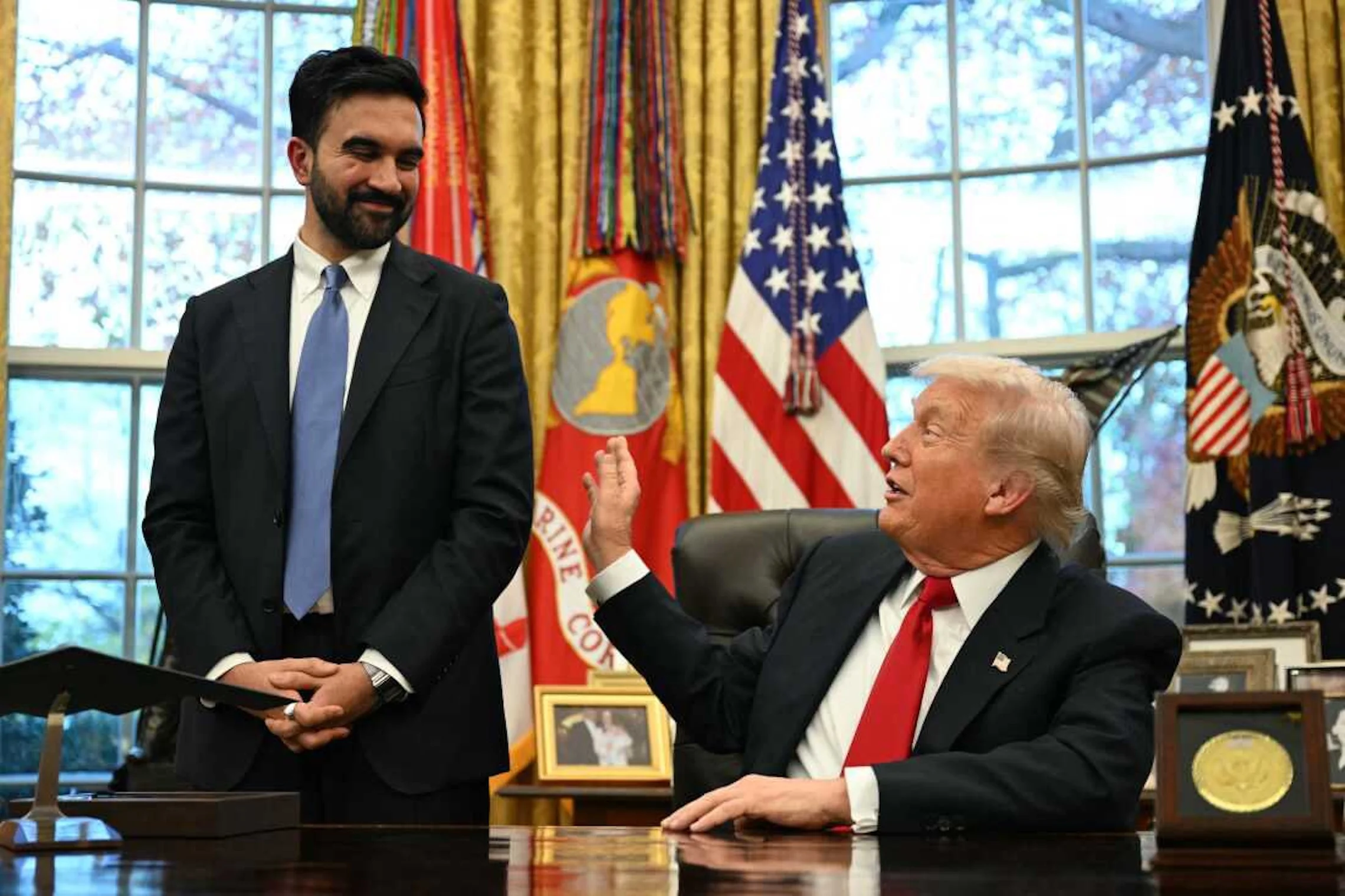
The sit-down takes place as Trump returns to New York for the United Nations General Assembly, where nearly 130 heads of state and government are expected this week. Trump is scheduled to address the General Assembly on Tuesday morning, while also holding bilateral meetings with foreign leaders.
For Mamdani, hosting Trump at the official mayoral residence on Manhattan’s Upper East Side creates an opportunity to press the federal government on matters that affect city residents: housing, transit, immigration, public safety, federal funding, health care and the costs of a city that remains deeply dependent on Washington even as it often clashes with national policy.
For Trump, the meeting offers a chance to show engagement with his hometown during one of the most visible weeks on New York’s calendar. It also comes as Republicans use Mamdani as a symbol in their midterm-election messaging, even while Trump himself has maintained a notably cordial tone toward the mayor.
What is confirmed
The basic facts are clear.
Trump and Mamdani will meet Monday at Gracie Mansion, the official residence of New York City’s mayor. The meeting will focus broadly on city issues, according to a statement from Mamdani’s office.
The White House has confirmed the meeting but has not provided additional details.
Gracie Mansion is located in Carl Schurz Park on the Upper East Side. It has served as the mayor’s official residence since 1942 and is often used for public events, meetings with civic leaders and formal city business.
The gathering will mark the first time Trump meets Mamdani at Gracie Mansion. It will also be their third in-person meeting overall.
The two leaders first met at the White House in November 2025, shortly after Mamdani won New York City’s mayoral election. They met again at the White House in February. Reuters reported that the first meeting was friendly and that Mamdani described the second as productive.
The planned meeting is therefore not an entirely new political relationship. It is the next stage in an unusual dialogue between a Republican president and a Democratic socialist mayor.
Why the meeting matters
Trump and Mamdani represent opposing currents in American politics.
Trump’s administration has emphasized deregulation, immigration enforcement, tariffs, expanded domestic energy production, tougher law-and-order policies and skepticism toward large urban Democratic governments.
Mamdani rose to national attention as a democratic socialist with a platform focused on affordability, tenant protections, public services, labor rights and reducing the cost of living in New York City. CNBC described him as a leading figure amid the Democratic Party’s broader leftward shift.
The ideological differences are obvious. The practical relationship is more complicated.
New York City relies on cooperation with the federal government for transportation funding, public housing, homeland security, disaster relief, health programs, immigration-related services, law enforcement partnerships and major infrastructure projects.
The federal government, in turn, relies on New York as a center of finance, media, immigration, international diplomacy and economic activity.
The meeting suggests both leaders see value in keeping direct communication open even when they disagree sharply on policy.
That does not mean they will reach a major agreement. The public statements provide no evidence of a specific deal.
But direct access matters. A mayor who can speak directly with the president can make a case for funding, policy flexibility, emergency support or changes to federal rules that affect city operations.
The likely city agenda
City Hall has said only that the meeting will focus on issues affecting New York City and New Yorkers.
That broad wording leaves many possible topics.
No official agenda has been released, so any specific issue should be treated as a likely area of discussion rather than a confirmed item. But the city’s relationship with Washington commonly involves several core areas.
Housing and affordability
Housing is among New York City’s most pressing challenges. Rents, homelessness, affordable-housing supply and public-housing maintenance all depend partly on federal policy and funding.
Mamdani’s administration has made affordability a central focus. A meeting with Trump could provide an opportunity to discuss housing vouchers, public-housing capital needs, zoning incentives, federal tax credits or financing tools for new construction.
The two leaders may disagree over the best approach. But both have incentives to show concern about housing costs, one of the most visible economic issues for New Yorkers.
Immigration
Immigration is likely to be a sensitive subject.
New York City has long been a destination for immigrants and asylum seekers. The city’s service systems have faced pressure from housing, legal-aid, school and health-care needs connected to newly arrived migrants.
Trump has made stricter immigration enforcement a central policy priority. Mamdani has criticized some federal immigration policies and has emphasized the city’s role as a place where immigrant communities can access services and legal protections.
The meeting could include discussion of federal enforcement activity, work authorization, asylum processing, shelter costs or coordination between city agencies and the federal government.
Transportation and infrastructure
New York City’s transit network, bridges, tunnels, airports and public works systems depend on large federal investments.
The city and state often seek federal support for subway modernization, commuter rail improvements, airport upgrades, climate-resilience projects, road repairs and other infrastructure.
Trump, a longtime New Yorker and real-estate developer, has often spoken about infrastructure in broad terms. Mamdani may use the meeting to press for specific commitments or protections for federal funding streams.
Public safety and homeland security
New York receives federal support for counterterrorism, emergency preparedness and major-event security.
The U.N. General Assembly itself illustrates the city’s security role. During High-Level Week, New York must manage road closures, protests, motorcades, security zones and the protection of visiting heads of state.
Federal-city coordination is essential. The meeting could provide a setting to discuss broader public-safety resources, law-enforcement grants or homeland-security planning.
Federal funding and budget pressure
The city receives federal money through many channels, including health care, housing, transportation, nutrition assistance, education and emergency services.
Changes in Washington can have major consequences for the city budget. A direct meeting gives Mamdani a chance to argue against cuts or seek flexibility in how federal funds are used.
| Potential topic | Why it matters to New York City | Why federal cooperation matters |
|---|---|---|
| Housing | Rent burden, homelessness and public-housing repairs | Federal vouchers, tax credits and capital funds |
| Immigration | Shelter, legal services, schools and health care | Enforcement policy, work authorization and emergency aid |
| Transit | Subway, bus, rail and infrastructure needs | Grants, approvals and long-term capital funding |
| Public safety | Counterterrorism and emergency preparedness | Homeland-security support and agency coordination |
| Health care | Hospitals, Medicaid and public-health systems | Federal reimbursement and program rules |
| Climate resilience | Flooding, coastal risk and infrastructure protection | Federal disaster and resilience funding |
| Economic growth | Jobs, small businesses and tourism | Trade policy, taxes and infrastructure investment |
The table reflects likely areas of city-federal engagement, not a confirmed agenda for Monday’s meeting.
An unusual political relationship
Trump and Mamdani have had adversarial political histories, but their personal meetings have been more restrained.
During the 2025 mayoral campaign, Trump actively opposed Mamdani’s election. Republicans have since used the mayor in national messaging, attempting to portray Democrats as too far left or aligned with socialist policies.
Mamdani, in turn, has criticized Trump on immigration, foreign policy, federal funding and broader questions of economic inequality.
Yet the two have managed to maintain a working relationship.
Their first meeting at the White House in November 2025 was described as surprisingly friendly. Their second meeting in February was later characterized by Mamdani as productive.
That political dynamic is not unprecedented. Big-city mayors and presidents often find ways to cooperate when federal funding, disaster response or major infrastructure is at stake.
But the contrast is especially sharp in this case.
Trump is a Republican president whose party is using Mamdani as an electoral target. Mamdani is a Democratic socialist mayor governing a city that Trump has repeatedly criticized but also considers home.
The result is a relationship driven by both conflict and necessity.
The U.N. General Assembly backdrop
The meeting is scheduled during one of the most security-intensive and diplomatically important weeks of the year in New York.
Trump is attending the United Nations General Assembly, where nearly 130 world leaders are expected. He will address the General Assembly Tuesday morning and hold meetings with foreign leaders, including Ukrainian President Volodymyr Zelenskiy, British Prime Minister Andy Burnham and Japanese Prime Minister Sanae Takaichi, according to Reuters reporting.
The broader agenda includes the war involving Iran, the conflict in Ukraine, Middle East diplomacy, AI governance, global trade, climate issues and the future of the United Nations itself.
Trump’s visit to Gracie Mansion is therefore not occurring in isolation. It is part of a packed New York itinerary combining global diplomacy, domestic politics and hometown symbolism.
For Mamdani, hosting the president during U.N. week highlights the city’s unusual role: New York is both a municipal government managing everyday services and the stage for international diplomacy.
A mayor must deal with trash collection, housing inspections and school budgets while also coordinating security and logistics for presidents, prime ministers and monarchs.
The meeting gives Mamdani an opportunity to emphasize that the city’s needs do not pause because global leaders arrive.
What the meeting is not
The planned sit-down does not necessarily signal a policy alliance.
There is no announced agreement, joint proposal, funding package or new federal-city initiative. The mayor’s office has not said whether a news conference, press availability or formal statement will follow.
The meeting is also not a formal U.N. event. It is a bilateral domestic-political meeting between the president and the mayor of New York City.
The lack of detail may be strategic. Both sides can benefit from keeping expectations modest.
Trump can say he is meeting a political opponent to focus on city issues. Mamdani can say he is representing New Yorkers’ interests directly, without appearing to endorse the president’s wider agenda.
The outcome may be limited to an exchange of views. It may also lead to follow-up discussions among federal and city officials.
The real test will be whether Monday’s meeting produces concrete action in the weeks and months that follow.
What to watch
Several questions will help determine whether the meeting has practical consequences.
Will either side release a detailed agenda?
A more specific topic list would show whether the discussion is mainly symbolic or focused on particular policy asks.
Will federal funding be discussed?
Any mention of transit, housing, health care, immigration services or security grants would indicate a substantive city-federal conversation.
Will immigration create tension?
This is among the areas where Trump and Mamdani are most likely to disagree. Public comments after the meeting could reveal whether they found any common ground.
Will there be a joint statement?
A joint announcement would be unusual but significant. Separate statements may provide competing accounts of what was discussed.
Will the relationship remain cordial?
The tone of the meeting will matter. A public clash could reinforce national partisan divides. A constructive meeting could show that local and federal officials can work together despite sharp ideological differences.
Will there be follow-up?
The value of the meeting will depend on whether staff-level discussions continue and whether any requests lead to policy changes, funding decisions or formal agreements.
The broader political stakes
The meeting has national implications because Mamdani has become a political symbol beyond New York City.
For Republicans, he is often used to portray Democrats as aligned with socialism or urban progressive policies. For Democrats, he represents a new generation of leaders emphasizing housing affordability, public services and economic inequality.
Trump’s decision to meet with him complicates those narratives.
It allows Trump to present himself as willing to work across ideological lines. It allows Mamdani to show that even a mayor with sharply different views can secure access to the White House.
The optics are especially notable ahead of November’s midterm elections. CNBC reported that Republicans risk losing control of both the House and Senate, while Democrats have been gaining in public polling.
Neither Trump nor Mamdani is likely to abandon their political positions. But both can gain from appearing focused on practical concerns rather than partisan spectacle.
For New Yorkers, the more important issue is whether the meeting produces progress on affordability, transit, safety, immigration services or federal support.
A cordial photo opportunity will not lower rents or repair subway signals. A direct conversation that leads to funding or policy flexibility might.
What happens next
Trump and Mamdani are expected to meet Monday at Gracie Mansion.
The meeting will be the first held at the mayor’s official residence, the third in-person meeting between the two leaders and one of several high-level encounters on Trump’s U.N. General Assembly schedule.
The city has not announced a public timetable, press availability or specific list of issues.
The meeting’s announced purpose remains broad: issues affecting New York City and New Yorkers.
That phrasing leaves room for a wide discussion. It also gives both sides flexibility to claim success without committing to specific policy outcomes.
The clearest measure of the meeting will not be what happens inside Gracie Mansion Monday. It will be what follows: funding decisions, administrative changes, continued dialogue or a return to political confrontation.
For now, the planned visit is a notable example of local and national politics intersecting on one of the world’s most visible stages, with a Republican president and a Democratic socialist mayor meeting at the mayor’s home while global leaders gather just miles away at the United Nations.