(ABIDJAN, Oct. 2025) – Ivory Coast, which is the largest cocoa-exporting country in the world, is experiencing a rare slowdown in cocoa purchasing at the outset of the 2025/2026 cocoa season. Record prices at the farmgate level, poor-quality beans, and exporters lacking liquidity are all acting as delays in transferring cocoa from farms to international trade – introducing new stresses to the supply chain that has endured multiple years of extreme weather conditions, climate shocks, and rising farm production costs.
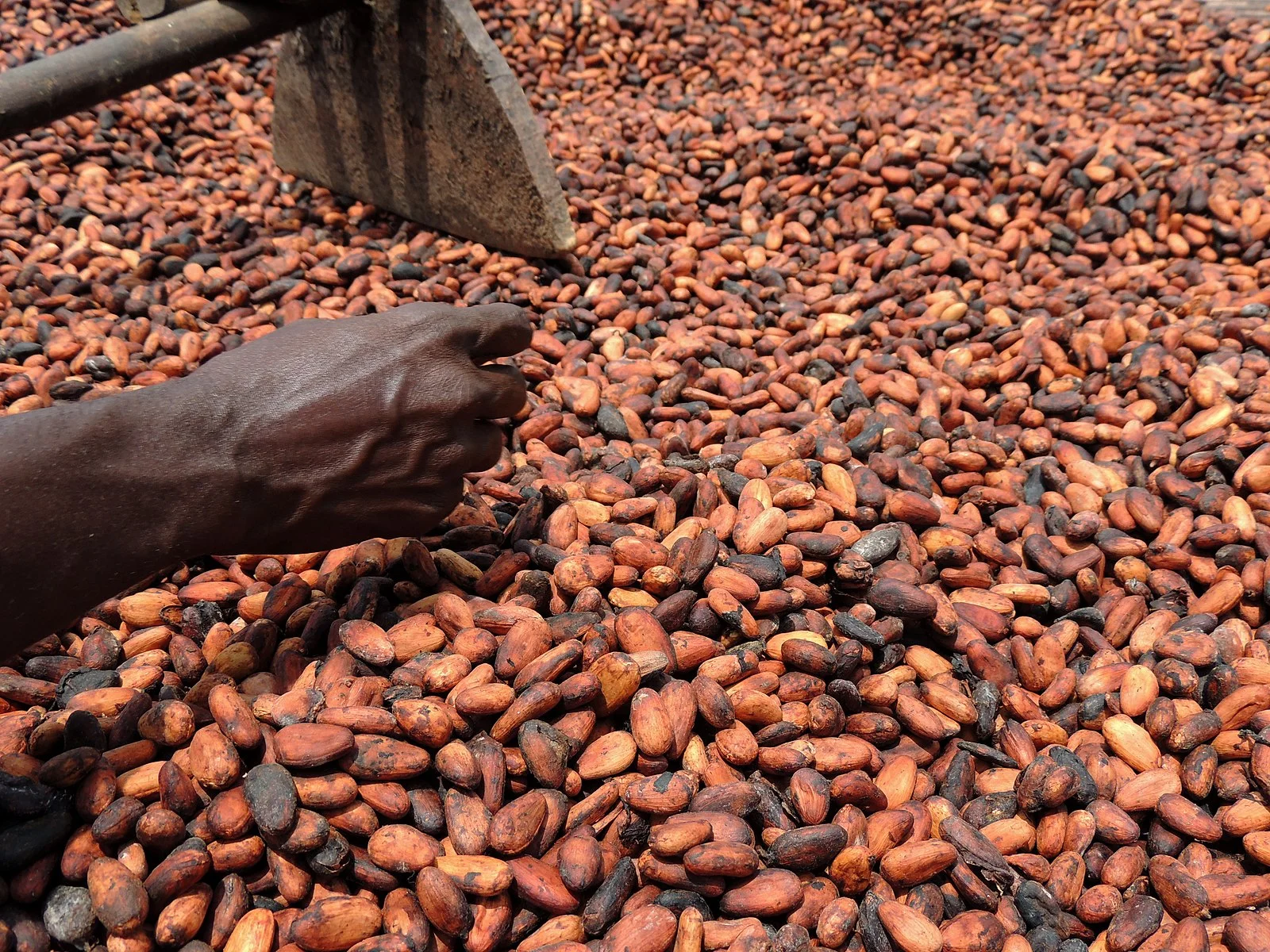
While state officials predicted a solid recovery in Ivorian cocoa production for this year, the real-life scenario is different. Farmers, middlemen, and traders have observed delayed buying activities across the nation, doubts among exporters, and a growing curiosity about bean quality, which may threaten the nation’s agricultural lifeblood in the end.
The Epicenter of Global Cocoa
Ivory Coast produces about 40%-45% of the cocoa in the world, which is a significant ingredient for a $140 billion global cocoa industry. The cocoa sector supports an estimated 1.2 million Ivorians, contributes approximately 15% of total national GDP, and provides the vital export earnings for the West African economy.
Every October, the Coffee and Cocoa Council (CCC) sets an official farmgate price for cocoa beans (i.e. how much will be paid to growers on a per kilogram basis). In an attempt to support producers of cocoa after a few challenging seasons, the government raised the farmgate price to 1,800 CFA francs per kilogram ($2.92 USD/kg) this year, a year-on-year price increase of nearly 60%.
The government raised the price to bolster farmer income and soften the impact of inflation and the rising costs for farm production. The expectation is that the increased income could spur the sector. Instead, the price increase has created a financing freeze among exporters and local buyers who cannot afford to pay the higher prices.
Price Shock and Cash Crunch
“A farmgate price is a good thing for farmers, but everyone else is freaking out,” stated a commercial director with one of the largest cocoa exporting companies in Abidjan. The companies that purchase beans from the cooperative and thereafter prepare to ship the beans have stated that the higher price and lack of credit means that bulk buying is likely impossible.
Ordinarily, exporters provide local buyers with short-term financing in order for them to purchase beans at a regulated price from the cooperatives. But this year there apparently is no funding. There are reports that banks have tightened lending standards, which is driven, at least in part, by volatility and concerns about the condition of the beans.
“Last year, financing was open, and it was flexible. This year, nobody wants to lend,” stated one Lebanese buyer from the southwestern port of San Pedro, where half of all cocoa exports from Ivory Coast occur, “No exporter wants to take the risk of buying beans that they can’t sell, or paying a price for beans that are poor quality.”
Exporters are now exposed to total costs of just under 110 million CFA francs ($179,000 USD) per shipment of 35-40 tons, while the average shipment for last season was a lot lower. The squeeze has forced many companies to resize their operations, leading to lower daily purchases, and a reduced number of buyers employed to ensure the daily purchase payment cash flow is stable.
Concerns regarding Quality at the Ports
To make matters worse, there are widespread reports about the quality of cocoa beans adverting downwards. Traders and exporters palletized in the country’s main ports of Abidjan and San Pedro reported that almost half of the beans extracted for inspection in October had been rejected for mold, excessive moisture, or excessive waste material.
Some of this has been associated with erratic rainfall and poor post-harvest management practices with smaller farmers. Heavy rains frequently occur during the drying season and farmers can’t move their beans fast enough, so the moisture is too high; beans are also not being fermented properly even further prolonging the problem of how to move the beans sufficiently fast.
According to one exporter that spoke to Bloomberg, “We’re getting deliveries full of defective beans. … Many of them are wet and the waste content is extremely high. We can’t load them for export.”
Mold issues in some cases have been sufficiently serious for gaining sanitary inspections, putting delays in exporting these shipments. Stockpiled beans are occupying warehouse space while some are reportedly hoping for a resurgence in purchases from global buyers.
Supply Chain Bottlenecks Push up Global Price Volatility
The decrease in purchasing from Ivory Coast couldn’t come at a worse time for the global market. After cocoa futures reached their season peaks earlier in the calendar year of $10,000 per ton in New York and £9,200 in London, few are optimistic that a loss of exports from the Ivory Coast won’t rekindle any price surges into the $9000 range.
“Just a few weeks of delays from deliveries from Abidjan or San Pedro could constrain the inventories on the whole supply chain,” said Commerzbank commodities analyst Alexander Kraus. “Just as demand stabilizes and Ghana has its own supply chain woes, we can see a reversal back over $9000 per ton easily”.
To monitor the amount and production, the U.S. Foreign Agricultural Services produced its entire report in March 2025 forecasting that Ivory Coast would produce 1.8 million metric tons (MMT) of cocoa for the 2024/2025 market year, up from the drought affected 1.76 MMT in the previous year. Now observers expect less favorable climate conditions, brown rot infections, and even transport delays could drag the total nearer to 1.6 MMT and thus, significantly limit the potential for the country’s exports in early 2026.
Government Response and Export Licenses
In response to the events, the Coffee and Cocoa Council have designated 109 export licenses for the 2025/2026 season, in an effort to maintain order and legality or risk further unauthorized trade from potential market distortions. The government has stated that it will root out audit and support “parallel financing arrangements” to reduce liquidity concerns.
The CCC authorities also indicated, particularly for exporters, that quality would need to be maintained under strict compliance or risk penalties, as there are fears that any contaminated business could lead to diminishing the country’s standing of purchases from Europe and North America’s major purchasers.
However, if the current exporters slow on their purchases, the government’s pricing policy could fall under scrutiny again. As an analyst for the African Cocoa Research Council said in general terms, “the CCC may have to consider doing phased buying or credit guarantees.” If the exporters are stuck due to the inability to move the stock of beans due to time and shipment delays at this level for example, farmers higher prices will be negligible in value.
Cocoa Farmers: Caught Between Promise and Pressure
Though higher farmgate prices have been represented positively, farmers in cocoa-producing area from Soubré to Gagnoa to Man, describe worse conditions. For many farmers, costs for fertilizers, pesticides, and fuel are up and it is competing against disease, labor shortages, and variable rainfall.
“I sold half only my usual amount this week,” said cocoa producer Koffi Kouamé from the southern region of Divo. “The buyers said they have no money and some of my beans were rejected because they had mold. It is nice that the price is high, but now the market is not moving.”
Anxiety is also compounded by new European Union regulations to ensure cocoa imports are traceable and sustainability certified. The EU Deforestation-Free Regulation (EUDR) requires verification that cocoa shipments are not linked to deforestation for larger importers; this adds additional compliance burden on producers before the law takes effect in late 2025.
The Long-Term Landscape: Working to Achieve Greater Sustainability
Ivory Coast’s cocoa sector sits at a crossroads. For decades, the country’s foundation has rested in large volume of supply, not processed cocoa value. As the Institute for Security Studies observed, less than 3% of the cocoa exported from the country is processed into chocolate within Ivory Coast, drawing the majority of profits to European manufacturers.
Recognizing that greater resilience will depend on industrializing the value chain for cocoa, policymakers are training on increasing factory investments in grinding and butter processes as well as port-city infrastructure. The government’s Cocoa Action Plan for 2025-2030 includes some incentives for processing plants and a national goal to increase domestic value addition, from 20% to 35% of total exports, by 2030.
Environmental sustainability and reforms designed to protect farmers are similarly vital pieces of the outlook. The World Bank’s TRACE-Cocoa program, for example, continues to work to combat child labour, restore degraded farmlands, and teach producers climate-smart cultivation practices using grants. Analysts suggest that modernization not prices will eventually indicate stability.
Outlook: Uncertain but Crucial
For now, the whole global chocolate market is braced as cocoa purchases from, and concerning quality in, Ivory Coast are on hold, and exports outlook is uncertain. In the coming weeks, we will determine if the government interventions and new funding sources can renew activity and, hopefully, prior to the peak main harvest in December.
If there are continuing delays, there will be temporary exports gains for Ghana, Nigeria and Indonesia, the next three largest producers, but none can squarely replace the role of Ivory Coast in the marketplace. Climate risks are present, in addition to political and financial pressures and regulatory uncertainty which are creating a potentially fragile global chocolate cocoa supply chain, the likes of which have not been experienced in decades.
As once exporter in Abidjan recently said: “Everyone loves chocolate but very few people know how much sweat and risk is involved to have that bean available to the world. This season is really testing that truth.”