South Africa wakes up today under heavy security and a cloud of anxiety, as authorized marches and unofficial anti‑immigrant “deadlines” converge on cities from Johannesburg to Pretoria, forcing businesses to shut, commuters to stay home and government to balance constitutional rights with fears of violence. While the protests dominate the streets, the state is pushing ahead with policy launches and World Cup celebrations, underscoring how a country already grappling with inequality and crime is now confronting a tense debate over migration and social cohesion.
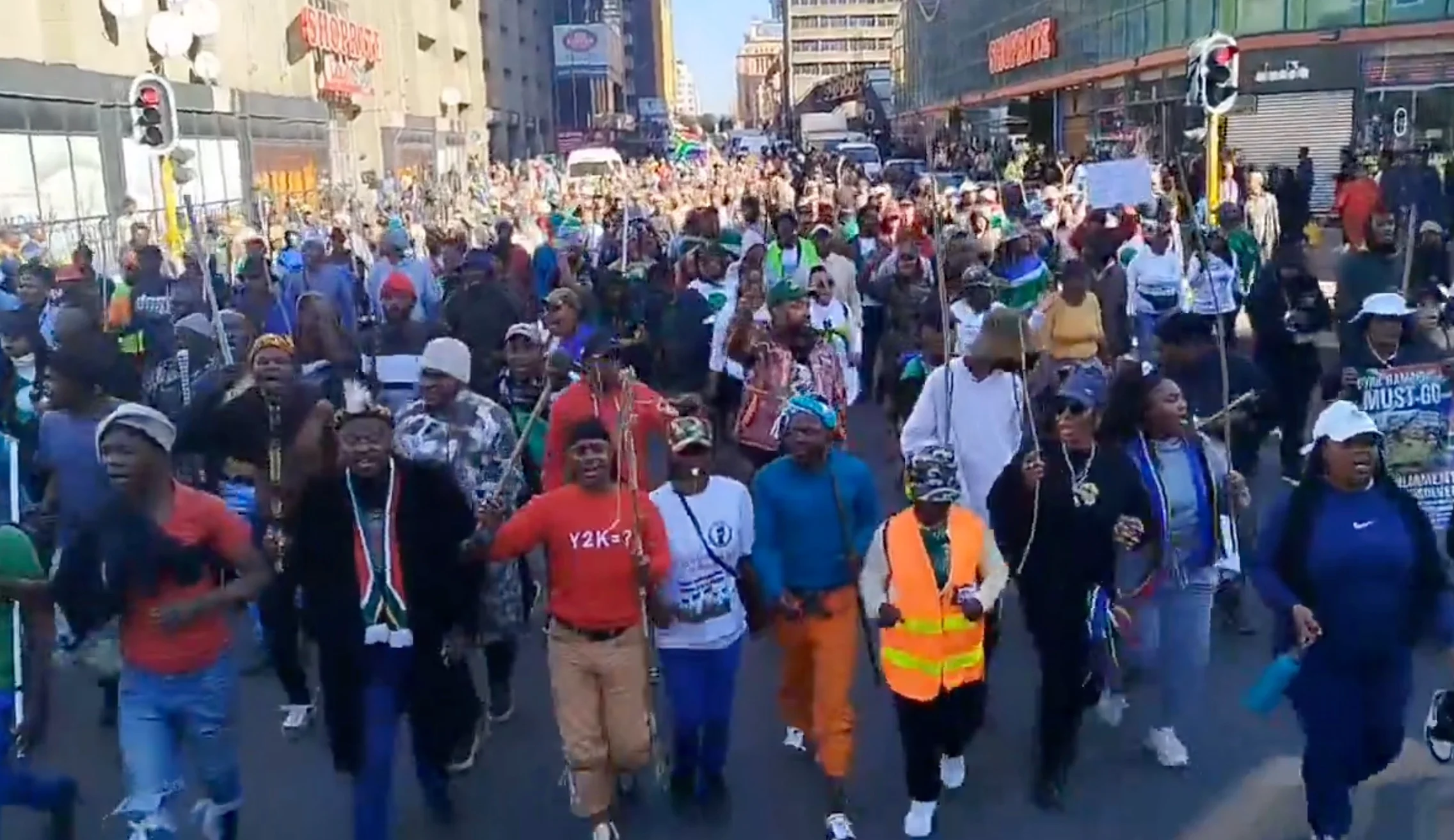
Streets under watch: unofficial “deadline” and authorized marches
The most immediate story today is the convergence of protests and threats around migration.
The BBC reports that “heavy security has been deployed in South Africa ahead of anti‑migrant protests” after some groups set an unofficial June 30 deadline for undocumented foreigners to leave the country. Al Jazeera writes that this deadline, “not recognized by authorities,” has fueled fear among migrants, many of whom have already left their homes or the country.
Reuters says several cities have “shuttered ahead of anti‑migrant protests,” with businesses closing and commuters staying home amid concerns that marches could turn violent. A video report from South Africa Business News describes shops shut and buses idle “across South Africa today” as demonstrators demand that undocumented foreign nationals leave, noting that “many foreigners from African countries have avoided going to work and thousands have already fled ahead of Tuesday’s deadline.”
A widely shared Facebook post catalogues protests approved by the South African Police Service (SAPS) for today, including marches by Labor and Civic Organization (LACO) from the Constitutional Court to Home Affairs in Braamfontein, Johannesburg; by other groups to Hillbrow SAPS and Sunnyside SAPS; and around Regina Mundi Church in Soweto to promote the Constitution. It also lists gatherings by groups such as Radical Dudula of South Africa and Abahambe in areas ranging from Hammanskraal to Brakpan, many explicitly targeting foreign‑owned spaza shops or invoking slogans like “This is Brakpan, not Drugpan.”
The same post notes a counter‑protest planned by “Foreigners and local South Africans” at Gandhi Square in Johannesburg to demonstrate against xenophobia. The result is a patchwork of marches, some officially authorized, some less formal, all competing for streets and narratives.
Government response: calls for calm, law and constitution
In the face of potential unrest, government has been keen to signal that protests must remain within constitutional bounds.
The South African Human Rights Commission issued a statement “calling for peace and adherence to the rule of law during the 30 June marches,” emphasizing that while peaceful protest is protected, intimidation and violence are not. SAnews quotes Justice Minister Mmamoloko Kubayi, chair of the Inter‑ministerial Committee on Migration, reiterating that “the South African state will ensure that law and order prevails as protestors take to the streets against irregular migration.”
Premier Alan Winde of the Western Cape has “appealed for calm ahead of national protests,” according to the government newsroom, stressing the need to avoid repeating xenophobic violence seen in previous years. President Cyril Ramaphosa recently met with “Kings and Queens on Government’s approach to managing migration,” signaling efforts to frame the issue as one requiring broad social consensus rather than unilateral action.
Police have warned organizers to maintain peace. The BBC notes that authorities have cautioned that they are “ready for any potential disturbances,” while urging demonstrators to avoid threats and ultimatums. The SAPS‑approved protest list includes time slots, routes and expected numbers, part of a strategy to contain marches within manageable parameters.
Migration, xenophobia, and economic strain
The tension today sits atop long‑running debates about migration, jobs, and crime in South Africa.
Al Jazeera reports that many migrants, including from Zimbabwe, Mozambique, Malawi, and the Democratic Republic of the Congo, “fear they will be targeted” as groups call for undocumented foreigners to leave by June 30. Previous waves of xenophobic violence, particularly in townships and informal settlements, have left deep scars and complicated regional relations.
Anti‑immigrant groups often link foreign nationals to crime and job competition, especially in low‑income urban areas where unemployment and service delivery failures are acute. Critics argue that such narratives scapegoat migrants for structural problems and overlook the contributions foreign workers make in sectors from retail to construction.
The government’s Inter‑ministerial Committee on Migration has been working on policy responses, including enforcement against irregular migration and support for integration measures, but the June 30 “deadline” shows how unofficial actors can still shape perceptions and behavior on the ground.
Life goes on: government launches and World Cup pride
Even as protests dominate headlines, South Africa’s official calendar today includes events aimed at long‑term development rather than confrontation.
The government’s events schedule notes that Deputy President Paul Mashatile is delivering a keynote address at the launch of BrainSAT satellite services and Thuraya satellite phones, part of efforts to expand connectivity and communications capacity. Agriculture and Rural Development is hosting the 2026 BEE National Conference from June 30 to July 1, focused on empowerment in the rural economy.
Other recent and ongoing initiatives include the inaugural National Science Month, launched by Higher Education Minister Blade Nzimande, and a policy dialogue on men’s mental health hosted by the Commission for Gender Equality. These events reflect attempts to broaden the agenda beyond crisis management, even on days dominated by protest planning.
On the sporting front, the mood is different. Government statements have “commended Bafana Bafana for a historic FIFA World Cup campaign,” and Minister Gayton McKenzie issued a tribute to the team’s run. Local sports pages today highlight Canada vs South Africa in the World Cup round of 32 and the Proteas’ focus on T20 World Cup semi‑finals, giving South Africans narratives of pride alongside the day’s tension.
Media landscape: intense coverage and competing frames
South African and international media are giving extensive attention to today’s protests.
BBC Africa leads with the heavy security and migrant exodus, framing the day as a test of how authorities manage unofficial deadlines and xenophobic threats. Al Jazeera focuses on migrant fear and questions about whether policing and community initiatives are sufficient to prevent violence.
Local outlets such as Daily Maverick, IOL, SAnews and News24 (aggregated on NewsNow) mix protest coverage with investigative and opinion pieces on broader topics — from land law debates to gender‑based violence and high‑profile criminal cases. The effect is a multitasking news cycle: marches and migration are one thread among many in an already busy national conversation.
Social media, meanwhile, amplifies both mobilization and counter‑narratives. Facebook posts circulate detailed protest logistics, hashtags like #Abahambe and #30thItsADate trend among organizers, and parallel hashtags call for #NoToXenophobia and constitutional solidarity. For residents, sorting verified information from rumor is itself a challenge in planning whether to go to work or stay home.
Today’s picture: a nation negotiating tension and trajectory
Seen together, the strands of “today in South Africa”, anti‑immigrant marches, government calls for calm, everyday governance, sport, and business, sketch a country negotiating multiple pressures at once.
On the streets, June 30 is a test of whether lawful protest can occur without tipping into violence or intimidation, and whether authorities can protect migrants and citizens while upholding rights. In policy terms, it is another reminder that migration management, economic frustration and political mobilization are intertwined.
At the same time, the satellite launch, science month, BEE conference and sporting tributes show a state trying to push forward on innovation, inclusion, and national pride, even on days defined by anxiety.
For ordinary South Africans, today may be measured less in headlines than in practical decisions: whether to open a shop, send a child to school, ride a bus through a protest route or attend a government event. That experience will be the ultimate judge of whether June 30, 2026 is remembered as a day of confrontation, a day of successful restraint or just another complicated day in a nation used to straddling hope and tension.