On the same day Americans observed Juneteenth, the 161st anniversary of the end of slavery in the United States, leaders from more than 80 countries stood at Osu Castle on Ghana’s Atlantic coast, passed through the same fortress that enslaved Africans were held in before crossing the ocean, and adopted a sweeping 19-point reparatory justice framework demanding unconditional apologies, debt relief, cultural restitution and a Global Reparation Fund from the nations that built their wealth on transatlantic slavery.
The Gathering That History Demanded
When Ghana first announced it would host a high-level global conference on reparatory justice, the sceptics asked whether the world was truly ready to move from rhetoric to framework.
The answer arrived on Friday in Accra, emphatically, unanimously and with the institutional weight of more than 80 governments behind it.
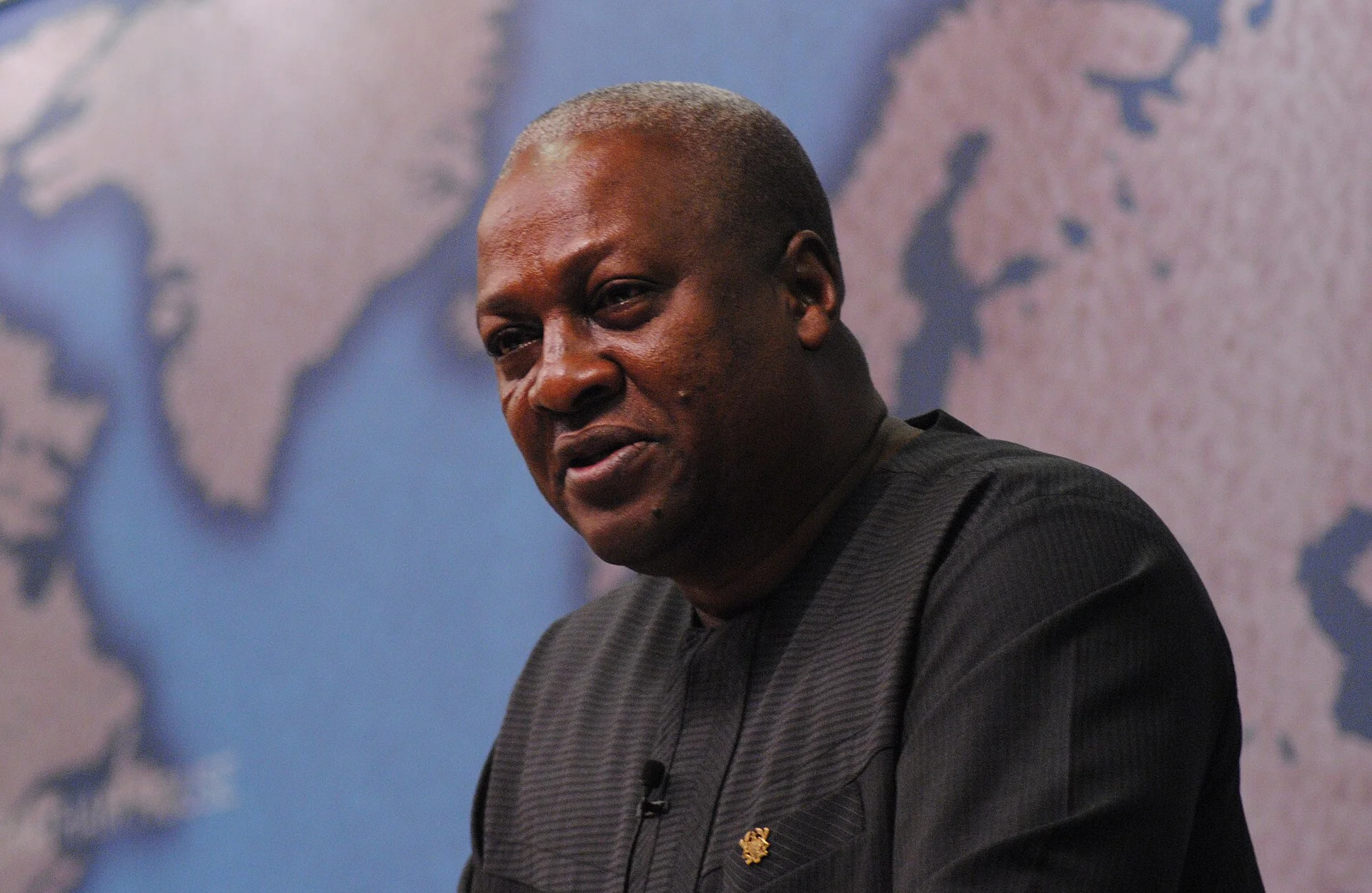
The three-day “Next Steps Conference on Reparatory Justice,” convened under the auspices of Ghana’s President John Dramani Mahama and co-hosted by the African Union and CARICOM, closed its proceedings on June 19, 2026 — Juneteenth — with the adoption of a 19-point reparatory justice framework that represents the most comprehensive multilateral reparations declaration ever endorsed at an international conference of this scale and political weight. The venue chosen for the closing ceremony, Osu Castle in Accra, the 17th-century Danish-built fortress that served as one of the primary holding and processing facilities for enslaved Africans during the transatlantic trade, made the symbolism as explicit as the substance.
“We are not asking the world to carry our pain for us,” Mahama told delegates at the conference’s opening session on June 17. “We are asking the world to help us build a future worthy of our past.”
The UN Foundation: A Vote That Changed Everything
The Accra conference did not emerge from nowhere. It was the most direct consequence of what may prove to be the most significant single vote in the history of the global reparations movement: the United Nations General Assembly’s adoption on March 25, 2026, of Resolution A/RES/80/250.
The resolution, introduced by Ghana on behalf of the African Union’s 55 member states, declared the transatlantic slave trade “the gravest crime against humanity,” called on UN member states to engage in “inclusive, good-faith dialogue on reparatory justice, including a full and formal apology,” and urged measures of restitution, compensation, and cultural repatriation.
It passed 123-3. Only three nations voted against it.
That supermajority, 123 countries out of the 193 UN member states casting affirmative votes, gave the resolution a moral authority no previous UN statement on reparations had achieved. Ghana’s Foreign Affairs Minister Samuel Okudzeto Ablakwa, who had spent years building the diplomatic coalition supporting the text, immediately framed the margin as the foundation for action: “Ghana is taking steps to strengthen the international coalition that supported the United Nations resolution on slavery as it prepares for the next phase of the reparations agenda.”
That next phase was Accra.
From Accra to the World: The Conference Architecture
The five-day buildup to June 17’s opening session was itself a masterclass in the diplomatic scaffolding that underpins transformative international gatherings.
Ghana’s government framed the conference under the theme “Next Steps on Reparatory Justice” and structured its proceedings around five operational objectives, as reported by GBC Ghana Online:
- Establishing a unified global framework to promote the UN resolution’s aims across all 123 coalition member states.
- Creating three international institutional panels, a Reparatory Justice Advisory Panel, a Cultural Restitution Expert Panel, and a Legal Panel on Reparations, to carry the process forward under UN auspices.
- Building a coordinated multilateral cooperation framework between the African Union, CARICOM, Pacific Island states and European partner nations willing to engage constructively.
- Developing the legal and evidentiary foundations for reparations as a cognizable claim under international human rights law.
- Producing a roadmap or declaration with agreed priorities and strategies for presentation to the 82nd UN General Assembly in September 2026.
The conference brought together heads of state, foreign ministers, AU commissioners, CARICOM prime ministers, Pacific representatives, historians, legal scholars, and diaspora organizations from more than 80 countries, a gathering whose geographic breadth reflected the global dimension of the crime it addressed.
Macron’s Presence: Europe Begins to Move
The single most diplomatically consequential announcement in the run-up to Accra came not from Accra at all, but from Paris.
French President Emmanuel Macron confirmed he would address the conference, making him the first sitting leader of a major former slave-trading European power to engage directly and formally with a high-level reparatory justice summit. Ghana’s Foreign Ministry issued a formal welcome to what it described as “France’s landmark declaration to partner with Accra on reparatory justice,” calling the announcement “a historic and consequential step toward confronting one of the gravest crimes in human history.”
Macron’s address did not constitute a formal French government apology, the precise demand the 19-point framework would later articulate, but his presence at the conference was read by participants across Africa, the Caribbean and Europe as a signal that the categorical European refusal to engage with reparatory justice was fracturing. The Modern Ghana analysis of the development was measured and precise: “France’s engagement represents a meaningful departure from the historical European position that responsibility for slavery rests with past generations rather than present governments.”
That departure is the political opening through which the Accra Declaration’s legal mechanisms are designed to move.
The 19-Point Accra Declaration
The document that emerged from three days of plenary sessions, bilateral consultations and working group negotiations is the conference’s most enduring contribution — and, according to Reuters, AP, the Washington Post and US News, its most consequential.
The 19-point Accra Declaration encompasses:
Apologies and Accountability
A demand that countries formerly involved in the Atlantic slave trade “offer full, formal and unconditional apologies as a foundational step towards reconciliation, trust-building and reparatory justice.” The word “unconditional” is a deliberate escalation beyond the partial, qualified acknowledgments that the UK and several European nations have previously offered, acknowledging historical wrongs while explicitly avoiding the language of legal obligation or financial commitment.
Global Reparation Fund
The creation of a globally administered fund to finance reparatory justice commitments — a proposal first advanced at Ghana’s 2023 reparations summit and now embedded in a formal multilateral declaration with the backing of 80 nations. The declaration does not specify a monetary amount — a deliberate strategic omission that allows signatory nations to endorse the principle while negotiations over quantum proceed through the new UN panels.
Debt Relief and Cancellation
Comprehensive relief and cancellation of debts owed by African and Caribbean nations whose economic trajectories were distorted by centuries of forced labor extraction and colonial economic architecture. This provision directly addresses the structural economic argument for reparations: that the wealth accumulation of the slave-trade era and its conversion into capital markets, trade infrastructure and financial institutions created present-day debt structures that continue to constrain development in affected nations.
International Financial Institution Reform
Reform of bodies such as the IMF and World Bank to ensure fairer, more equitable representation of countries in the Global South, a demand that reaches beyond reparations narrowly defined to encompass the entire architecture of Bretton Woods-era multilateral financial governance.
Cultural Artifact Restitution
Building directly on the UN resolution’s language, the declaration demands “prompt and unhindered” return of cultural artefacts, sacred objects and ancestral remains currently held in European and North American museum collections. This provision has particular urgency for West African nations whose royal regalia, ceremonial objects and human remains, removed during the colonial era, are currently held in the British Museum, the Louvre, Belgium’s Royal Museum for Central Africa and institutions across Germany, Denmark and the Netherlands.
Climate Justice Financing
An explicit recognition that communities bearing the generational weight of transatlantic slavery are among the most vulnerable to climate change, and that reparatory justice must include dedicated climate finance as a component, building a bridge between the reparations agenda and the climate justice framework that has emerged from the Paris Agreement’s implementation architecture.
Measures for African Women and Girls
Specific provisions addressing the gendered dimensions of enslavement, an acknowledgment that African women and girls experienced the transatlantic slave trade with forms of violence that were distinct from, and in addition to, the violence inflicted on enslaved men, and that reparatory justice frameworks have systematically underaddressed those gendered atrocities.
Right of Return and Citizenship Pathways
The declaration also encourages African nations to “provide the right of return and citizenship pathways for members of the diaspora” — a provision that operationalizes Ghana’s own existing Year of Return program and extends the model across the African Union, with Ghana already having designated the African diaspora as its “17th Region.”
Preservation of Slave Trade Monuments
A commitment to preserve coastal forts, castles, and slave trade memorial sites, including Ghana’s own Cape Coast Castle and Osu Castle, Benin’s Ouidah, Senegal’s Gorée Island and other Atlantic-coast sites, as living memorials to the victims of the trade and as educational resources for future generations.
Three New UN Panels
The Reparatory Justice Advisory Panel, the Cultural Restitution Expert Panel, and the Legal Panel on Reparations, all mandated to produce a comprehensive report for the UN Secretary-General ahead of the 82nd General Assembly in September 2026.
The Voices of the Coalition
The political force behind Accra was a cross-oceanic alliance whose geographic span is inseparable from the transatlantic trade’s historical geography, West Africa, from which millions were taken; the Caribbean, where they were transported; and the broader African diaspora whose political leadership continues to carry the reparations cause in the American, European, and Pacific contexts.
President Mahama‘s conference leadership drew on a formulation he has deployed consistently since taking on the AU Champion role, one that addresses the central counter-argument from European and American audiences with philosophical precision: “History does not compel us to inherit guilt, but it does require us to embrace responsibility.” The distinction matters: it acknowledges the moral illegitimacy of blaming contemporary individuals for their ancestors’ actions while insisting that collective societal benefits derived from centuries of forced labor create present-generation obligations regardless of individual guilt.
Barbados Prime Minister Mia Amor Mottley brought the Caribbean’s economic argument, that CARICOM nations bear living, measurable economic damage from centuries of unpaid labour, constituting a debt with an empirically calculable principal — to the Accra coalition. Her presence alongside Mahama gave the declaration its Afro-Caribbean legal and economic credibility.
Senegal’s President, confirmed as among the heads of state who addressed the summit’s proceedings, added the weight of West Africa’s most diplomatically influential voice beyond Ghana to the coalition. The conference also drew formal participation from the Congressional Black Caucus and the NAACP, whose presence rendered explicit the gap between the United States government’s vote against the original UN resolution and the position of its own Black civic leadership.
The Opposition: Three Votes and the Long Game
The three nations that voted against the March UN resolution, and whose resistance defines the central political obstacle the Accra framework must eventually overcome, were the silent interlocutors of every session of the conference.
The United States, the United Kingdom and a third European power voted no. Their counter-argument, most clearly articulated by Western governments over decades of reparations debates, is the generational displacement argument: “our ancestors did it, not us.” DW’s Africa desk summarized it precisely: “Western governments often argue that today’s generations can’t be held responsible for the crimes of slavery.”
Ghana’s diplomatic strategy, and the Accra Declaration’s legal architecture, is designed to defeat that argument not through moral pressure alone but through the construction of institutional and legal mechanisms that route around it. The Legal Panel on Reparations, specifically, is mandated to develop the evidentiary, jurisdictional, and precedential case for reparations as a cognizable claim under international human rights law, producing analysis for use in international tribunals, domestic litigation, and bilateral negotiation. The goal is to transform the generational displacement argument from a political defense into a forensically inadequate legal position.
“Ghana is challenging that position on the global stage,” DW reported. “In 2026, it appears to be working.”
Accra to New York: September and the 82nd UNGA
The conference’s most concrete procedural commitment, that the three new panels will produce a comprehensive report for the UN Secretary-General ahead of the 82nd General Assembly, creates the Accra framework’s accountability mechanism and its next institutional milestone.
The 82nd General Assembly meets in September 2026. The three-panel report, combined with the 19-point Accra Declaration as a formal diplomatic document signed by 80+ nations, will create the most comprehensive reparatory justice submission the UN has ever received, and will do so within a single diplomatic cycle of the foundational resolution that created the framework.
For Ghana, a nation of 35 million people on Africa’s Atlantic coast that has, over the course of 2026, shepherded a UN resolution with a 123-vote majority, consolidated an 80-nation coalition, hosted a landmark international conference, secured a sitting European head of state’s participation, and adopted the most comprehensive reparatory justice declaration in history, the September UNGA represents not the end of the process but its next escalation.
President Mahama has described the goal with characteristic clarity: to begin the “Decade of Reparations” — an arc running from 2026 to 2035 — in which the Accra Declaration’s principles are converted, step by step, into binding legal obligations, institutional commitments, and financial transfers.
On Juneteenth, at Osu Castle, where the Door of No Return faces the same Atlantic Ocean that carried millions away, 80 nations said that arc had begun.