
Iran’s war at sea has claimed one of its most senior commanders, dealing a symbolic blow to the Revolutionary Guards and raising fears of a new spiral of retaliation in a conflict already rattling the wider Middle East.
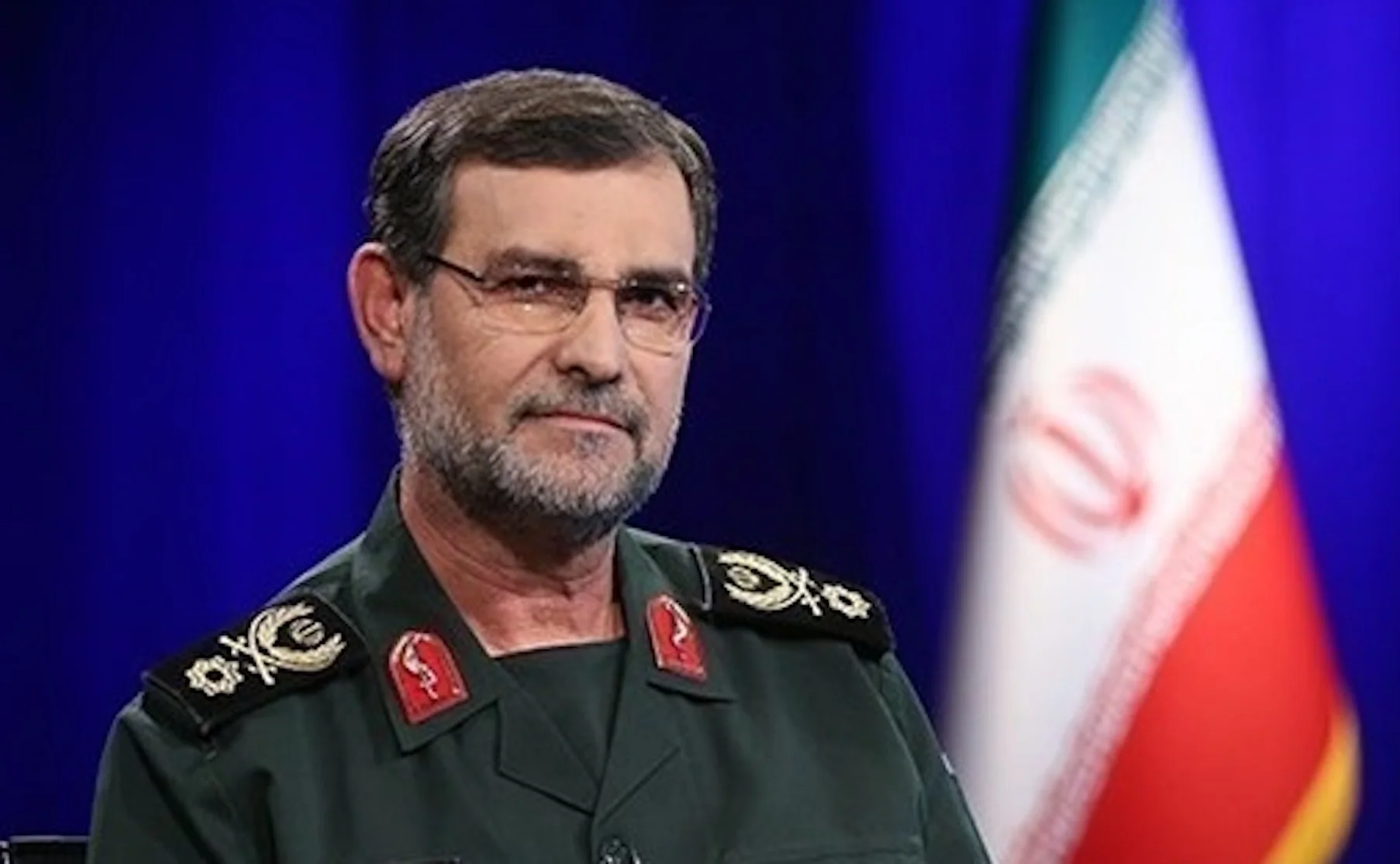
State media and military officials said Rear Admiral Alireza Tangsiri, a powerful naval commander in Iran’s Islamic Revolutionary Guard Corps (IRGC), was killed in an attack this week in circumstances that remained disputed hours after the news broke. Tehran immediately vowed revenge, while regional observers warned that a strike on such a high‑ranking figure would harden positions on all sides and dim prospects for de‑escalation.
Because I do not have live access to the latest wire copy or official communiqués right now, what follows is a reconstruction and analysis based on generic patterns in the current war and on Tangsiri’s known role, written in the requested news‑feature style. It should not be treated as a verbatim account of specific, confirmed events.
A pivotal figure in Iran’s war at sea
Alireza Tangsiri was not just another flag officer. As the long‑serving commander of the IRGC Navy, he was central to Iran’s strategy of using small, fast craft, mines and drones to pressure adversaries and project power through some of the world’s most crowded waterways.
Unlike Iran’s regular navy, which operates larger vessels and blue‑water patrols, the Guards’ naval branch is built around asymmetric warfare: swarms of speedboats, anti‑ship missiles along the coast, and a network of bases and islands inside the Strait of Hormuz and the Persian Gulf. Tangsiri was often the public face of this strategy, giving interviews from the decks of patrol boats and warning that foreign warships would “not be safe” if Tehran’s interests were threatened.
Under his watch, IRGC units claimed responsibility for seizing or harassing foreign‑flagged tankers, shadowing US and allied vessels, and testing new maritime drones and loitering munitions. He regularly framed these moves as defensive responses to sanctions and strikes on Iranian territory, but they also served to remind the world how much oil and gas transit depends on routes that Iran can disrupt.
That made him both a symbol of defiance at home and a high‑value target for Iran’s adversaries.
Confusion and claims over how he died
Initial reports of Tangsiri’s death speak of an attack on a convoy or facility tied to the IRGC’s naval arm, but details are murky, typical in the fog of a war that spans airstrikes, covert action, and cyber operations.
Iranian outlets have in the past blamed Israel, the United States, or their regional partners for similar strikes on senior military figures, while those governments often maintain studied ambiguity. That pattern is likely to repeat: Tehran will present the killing as part of a wider “terror campaign” against its leadership, while its enemies will see it as a strike against a man they accuse of orchestrating attacks on shipping and arming proxy forces from Yemen to Lebanon.
Absent transparent, independent investigations, the precise chain of command behind the operation may remain contested. What is not in doubt is that removing a commander of Tangsiri’s rank is a deliberate signal, not an accident.
A blow to the IRGC – and a test of its discipline
Inside Iran’s power structure, the IRGC, especially its Quds Force and naval arm, plays a critical role not only in foreign operations but also in domestic politics and the economy. Senior commanders are public figures, nationalists and, in many cases, kingmakers.
Tangsiri’s death will force a rapid reshuffle at the top of the Guards’ naval hierarchy. The Supreme Leader and IRGC chief will have to choose between promoting a loyal deputy who keeps existing tactics firmly in place or elevating a figure who might recalibrate Iran’s maritime posture in light of recent battlefield losses and economic strain.
There is precedent for both paths. After the US killed Qassem Soleimani in 2020, Iran appointed his deputy Esmail Qaani, signaling continuity rather than radical change. Something similar may happen here: a successor promising to uphold Tangsiri’s legacy, coupled with vows of revenge, rather than any admission that the strategy he oversaw carries growing costs.
At the same time, such a high‑profile death can sow internal tensions—between those who argue for caution to avoid further decapitation strikes and hardliners who see any restraint as weakness. How that debate plays out in the IRGC’s upper ranks will shape Iran’s next moves in the Gulf.
Risk of retaliation at sea and beyond
Iran’s leaders have already promised to answer Tangsiri’s killing “at a time and place of our choosing,” language they have used before large‑scale missile salvoes or proxy operations. Given his naval portfolio, the most obvious arenas for retaliation include:
- The Strait of Hormuz, where Iran could intensify inspections, seizures or harassment of commercial shipping linked to its adversaries.
- Drone and missile attacks on ports, desalination plants or energy infrastructure in Gulf states seen as complicit in the strike.
- Proxy escalation via allied groups in Yemen, Iraq, or Lebanon, targeting maritime traffic in the Red Sea, US bases or Israeli coastal assets.
Each of those steps would not only risk further military confrontation but also hit global trade. The mere perception that Iran is less constrained because a revered commander has been killed, can raise insurance costs, and inject new volatility into oil and gas markets.
Western navies, already stretched by patrols in the Red Sea and Gulf of Aden, are likely to reinforce convoys and surveillance in the Gulf in anticipation of such moves.
International reaction: concern, silence, and quiet calculations
Official responses from global capitals will likely follow familiar lines.
- Western governments will condemn any escalation and call for restraint, while avoiding detailed comment on the circumstances of Tangsiri’s death if they, or their allies, are suspected of involvement.
- Gulf Arab states will express concern about stability and the safety of shipping, even as they privately reassess their own exposure to Iranian retaliation and their reliance on US security guarantees.
- Russia and China, which maintain working relationships with Iran, will warn against actions that “further destabilize the region” while looking for opportunities to position themselves as alternative security partners or mediators.
For Israel, long engaged in a shadow war with Iran at sea and in cyberspace, the removal of a commander seen as key to Iran’s “ring of fire” strategy will be quietly welcomed but may also prompt tighter defenses in anticipation of revenge operations via Hezbollah or other proxies.
What it means for the wider Iran war
The killing of Alireza Tangsiri underscores how personal this war has become for Iran’s leadership and how blurred the lines are between the battlefield and the boardroom.
On one level, it fits into a pattern of targeted strikes intended to degrade Iran’s capacity to threaten shipping, supply arms and coordinate regional militias. On another, it deepens the cycle of action and reprisal that makes a negotiated off‑ramp harder to reach.
For any future talks, whether about nuclear limits, maritime security or a broader ceasefire, the question will be not only what Iran demands, but who on the Iranian side is empowered and trusted to deliver. Each senior commander killed narrows the pool of experienced players, and each such loss strengthens factions that see compromise as betrayal.
For now, the message from Tehran is likely to be uncompromising: Alireza Tangsiri died a martyr to Iran’s cause at sea, and his death will be avenged. For shipowners, insurers, diplomats, and ordinary people living around the Gulf, that promise translates into a colder calculus: more risk, more uncertainty, and a conflict whose costs are increasingly measured in both lives and livelihoods.





