
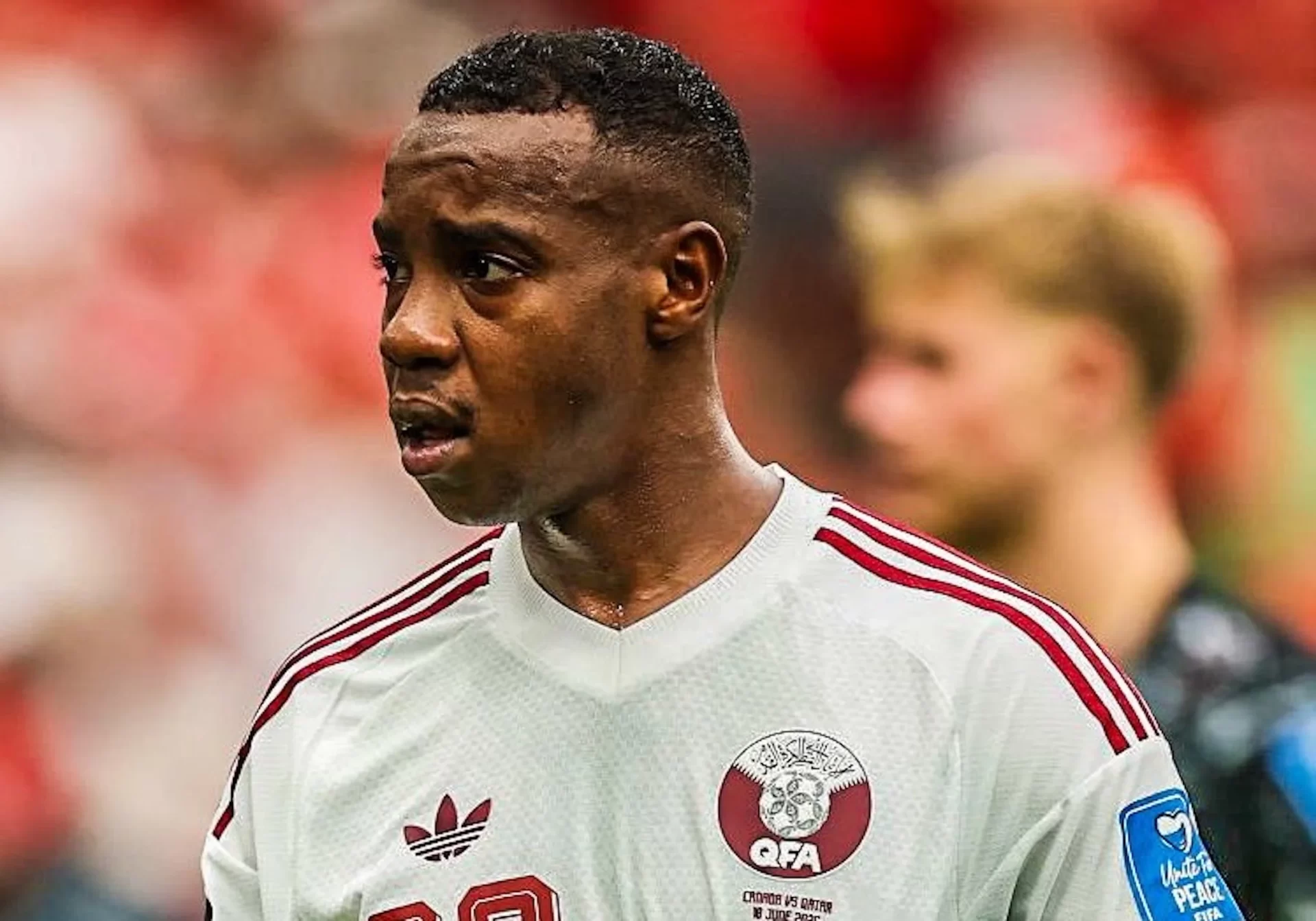
Qatar midfielder Assim Madibo has been handed a five‑match suspension for the tackle that broke the leg of Canada’s Ismaël Koné at the 2026 World Cup, a punishment that will rule him out for the rest of this tournament and carry over into future internationals in what FIFA has called a clear case of “serious foul play.” The incident, which occurred during Canada’s 6–0 win over Qatar in Vancouver, has revived long‑running debates about player safety, the line between recklessness and malice, and how far disciplinary bodies should go in calibrating bans to the severity of an injury.
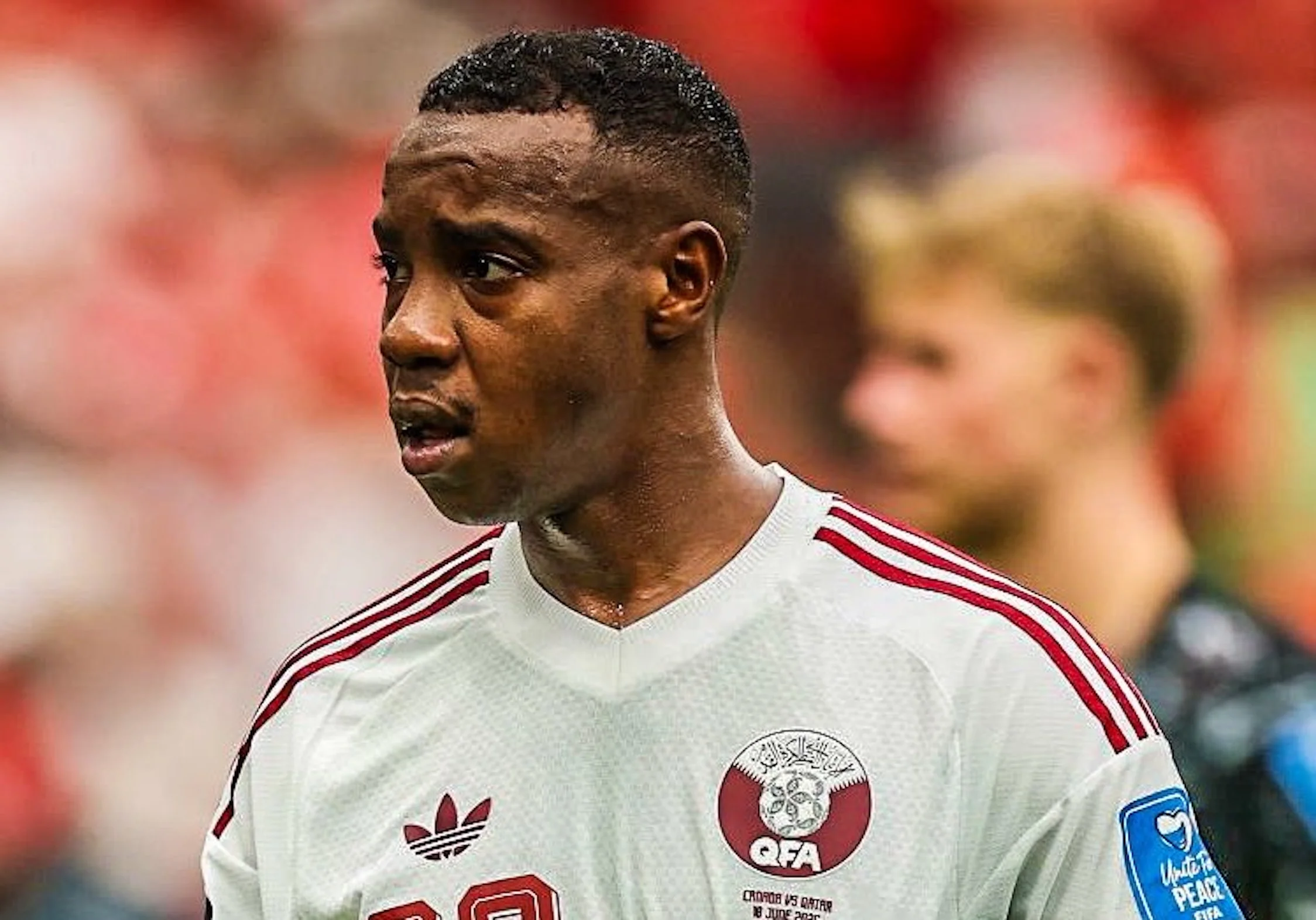
The incident: a “horrific” tackle in Vancouver
The foul that led to the ban came in the second half of Canada’s group‑stage match against Qatar at BC Place in Vancouver on 18 June. With the hosts already leading comfortably, Koné received the ball near midfield before being hit from behind by Madibo in what multiple outlets described as a “hard” or “horrific” challenge.
ESPN reports that Koné immediately fell to the turf clutching his lower left leg, with players from both sides frantically waving for medical staff as they realized the severity of the injury. Fox News and video footage show his leg bent at an unnatural angle, prompting some teammates to look away in distress.
Referee Cristian Garay initially showed Madibo a yellow card, but after a VAR review the booking was upgraded to a straight red for serious foul play, leaving Qatar with nine men following an earlier dismissal for teammate Homam Al‑Amin. Canada went on to win 6–0.
Koné was taken off on a stretcher to applause from the home crowd, waving to fans as he left the field. Canada Soccer said the following day that he had “underwent successful surgery to repair a lower limb fracture” and would miss the remainder of the World Cup, though he is expected to make a full recovery.
FIFA’s decision: five games for “serious foul play”
On Wednesday, FIFA’s disciplinary committee announced that Madibo’s punishment would go far beyond the automatic one‑match suspension that accompanies a red card.
In a brief statement cited by ESPN, BBC Sport and multiple wire services, the committee said Madibo had been banned for five matches for “serious foul play” under Article 12 of the FIFA Disciplinary Code. The decision, it stressed, is subject to appeal to the FIFA Appeal Committee.
Flashscore and Deccan Herald add that the committee took into account both the nature of the tackle, a clumsy, studs‑up lunge from behind, and the severity of Koné’s injury, which was confirmed as a broken leg requiring surgery. USA Today and Yahoo Sports describe the sanction as among the stiffest handed down for an on‑field challenge at a men’s World Cup in recent memory.
Because Madibo already missed Qatar’s 3–1 defeat to Bosnia and Herzegovina through suspension, four matches remain on his ban. With Qatar bottom of Group B and eliminated from this World Cup, those games will carry over into future competitive internationals, such as Asian qualifiers or regional tournaments.
Koné’s injury and Canada’s reaction
For Canada, the disciplinary decision comes as cold comfort in the face of losing a key midfielder to a long‑term injury. Koné, 24, has become a central figure for the co‑hosts and was expected to play a major role in their home tournament.
ESPN’s match report notes that Koné was “stretchered off with a broken leg” and that his absence forces coach Jesse Marsch to reconfigure a midfield that had been built around his energy and passing range. Sportstar and other outlets report that he underwent immediate surgery in Vancouver, with initial indications he will be sidelined for months rather than weeks.
The emotional impact was obvious. Canada captain Alphonso Davies called the tackle “tough to see” and said the whole squad was “devastated” for Koné. In an interview cited by USA Today, Marsch emphasized that Madibo had come into the Canadian dressing room after the game to apologize in person, and that Koné told his teammates he had accepted that apology.
“Let me be clear, the player apologized to Ismaël,” Marsch said. “I don’t think that he meant such a gruesome tackle or a gruesome situation.” That nuance, distinguishing intent from outcome, would become central to subsequent debate over FIFA’s sanction.
Qatar’s response: remorse and hospital visit
Qatar’s camp has tried to balance public contrition with support for Madibo. Deccan Herald reports that the Qatar Football Association said Madibo and the country’s sports minister visited Koné in hospital in Vancouver to “check on his health” and offer best wishes for his recovery.
Images and video from the match showed Madibo in tears on the pitch after realizing the extent of the injury, even before the VAR review upgraded his card to red. Qatari officials have not contested the sending‑off, and there is no indication yet that they will appeal the five‑match ban, though they retain that right.
In a brief comment carried by some Arabic‑language outlets and summarized by Rediff and Yahoo, Madibo described the challenge as “a terrible mistake in timing” and said his “heart is with Ismaël and his family.” Qatar’s coach, Carlos Queiroz, framed it as an “unfortunate, late tackle” rather than an act of malice, while acknowledging that “the consequences were horrific” for Koné.
Debate over the length of the ban
The severity of the suspension has sparked debate among pundits and former players. Some argue it sends a necessary message about player safety; others believe FIFA has effectively punished the result, a broken leg, more than the intent.
An opinion piece in The Athletic, summarized in its news feed, called the five‑match ban “absurd,” arguing that “FIFA reacted to the result of his tackle rather than the nature of the challenge.” The author noted that comparably reckless tackles at past tournaments have drawn two‑ or three‑match bans, and worried that calibrating suspensions to injury severity could lead to inconsistent outcomes.
On the other side, commentators on Fox Sports and CBC pointed out that the sport has pledged repeatedly to crack down on tackles from behind that endanger opponents, especially at showpiece events like the World Cup. For them, a five‑game ban in a case where a player’s leg was broken is “the least the authorities can do” to deter similar challenges.
FIFA’s own statement did not explicitly address how much weight was given to Koné’s injury, beyond citing “serious foul play,” a catch‑all category that covers both reckless and brutal challenges. But in practice, injury often informs perception: what might otherwise have been remembered as a late, clumsy tackle is now indelibly associated with one of the tournament’s worst injuries.
Player safety and the World Cup stage
Beyond the specifics of Madibo’s case, the incident has sharpened focus on player safety at a tournament already marred by a heavy schedule and high physical demands. FIFPro, the global players’ union, has warned that congested calendars and travel can increase fatigue and the risk of mistimed challenges, even if it has not weighed in publicly on this particular ban.
Koné’s injury joins a grim list of high‑profile World Cup casualties over the years, from broken legs to serious head injuries, that have prompted calls for stricter officiating and harsher post‑match sanctions where necessary. Law‑makers have already tightened rules on tackles from behind, studs‑up contact and challenges that endanger an opponent’s safety; Madibo’s ban is likely to be cited as a benchmark in future disciplinary deliberations.
For Qatar, the fallout is twofold. On the field, they have lost an experienced midfielder for a long stretch of international fixtures. Off it, their disciplinary record, two reds in a 6–0 defeat, followed by a landmark ban, has raised questions about their temperament at the highest level.
For Canada, the loss of Koné is a sporting blow and an emotional one, cutting short the World Cup of a player who had become a symbol of the program’s new generation. In the longer run, his recovery and return will be watched as closely as any disciplinary appeal.
Whether the five‑match ban stands or is trimmed on appeal, the episode has already achieved one thing FIFA says it wants: it has made clear, on the sport’s biggest stage, that tackles which risk breaking an opponent’s leg will not be treated as just another bad foul.



