
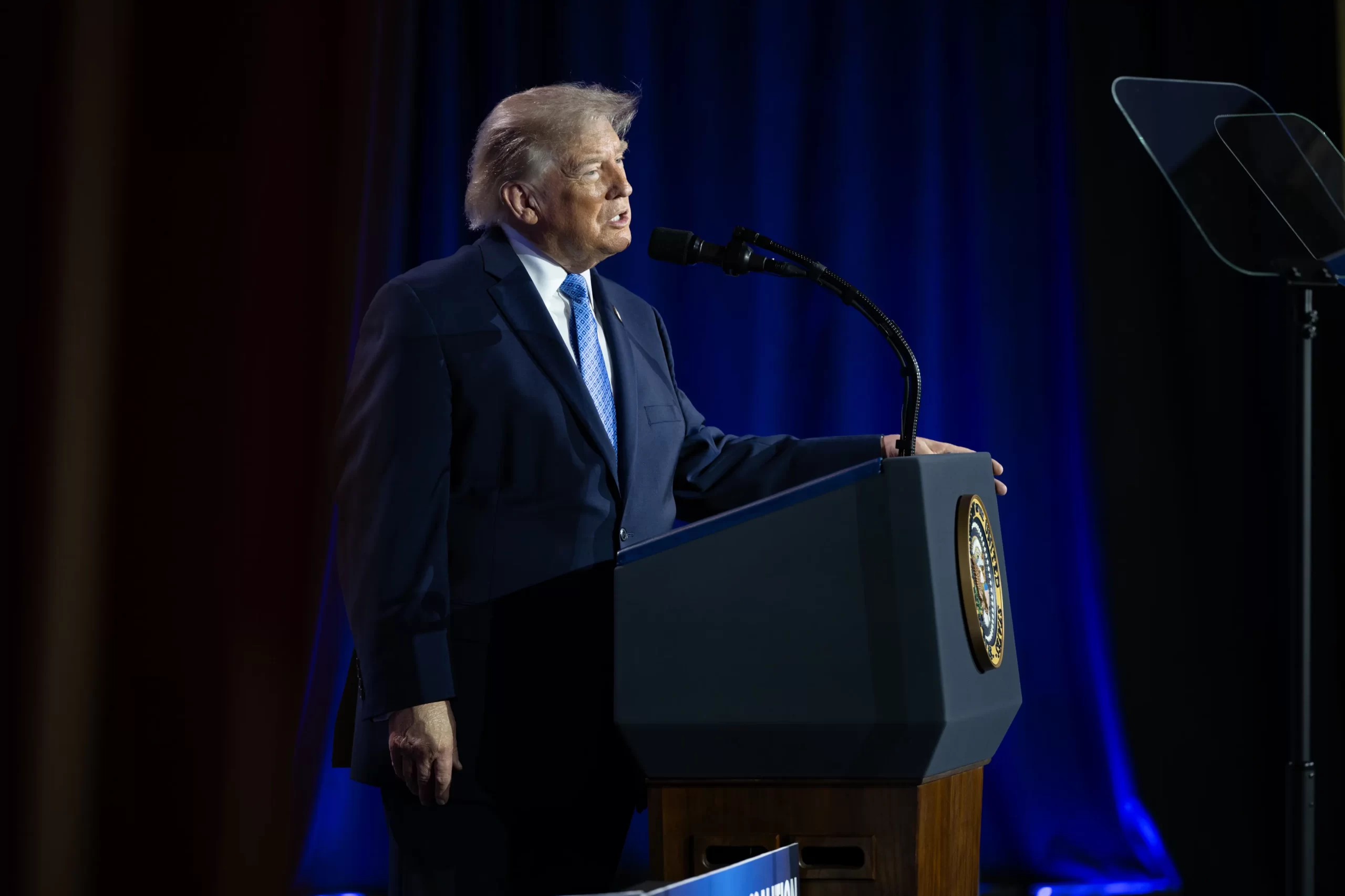
President Donald Trump used the nation’s 250th Independence Day anniversary to mix patriotic ceremony with campaign-style politics, underscoring a speech that celebrated American history while sharply attacking his opponents and pushing his legislative priorities. The most important takeaway is that the address was less a traditional unity speech than a Trump rally wrapped in national symbolism, with history, military honor and election politics all folded into one stage-managed moment.
Patriotism and pageantry
The first takeaway is that Trump leaned heavily into American symbolism. PBS reported that he opened with broad praise for U.S. exceptionalism, while the New York Times live coverage described a stage filled with flags, historical references, and veterans. Newsweek’s transcript-based report said he called the anniversary “one of the most joyous and glorious milestones of all time,” framing the country’s founding as a source of national pride and resilience.
Trump also made a point of honoring veterans from several generations, including World War II servicemen and early Black Special Forces leadership, according to Newsweek. That emphasis gave the event a more formal patriotic edge than some of his more improvisational rallies, even if the overall tone remained unmistakably Trumpian.
The symbolism mattered because the occasion itself was historic. The 250th anniversary of Independence Day invited a unifying, reflective message. Instead, Trump used the setting to present patriotism as proof of national superiority, a theme that has become central to his political identity.
Politics over unity
The second takeaway is that the speech quickly shifted from celebration to politics. USA Today said Trump blended “history, military, politics,” and the New York Times noted that he derided his foes even as fireworks capped the evening. PBS described the address as “darkly political,” saying the president veered into attacks on Democrats and other adversaries after his historical remarks.
Newsweek reported that Trump renewed his support for the SAVE America Act, election legislation aimed at tightening voting rules. That push is politically significant because it ties an anniversary speech to a legislative agenda that remains divisive even among Republicans.
Trump also returned to familiar themes: warnings about communism, criticism of political opponents and appeals to a hard-edged version of national strength. The speech showed no interest in tempering those themes for the holiday. Instead, it used the holiday to amplify them.
Military and national power
A third takeaway is that Trump placed the military at the center of the national story. Coverage from the New York Times and Newsweek noted that he honored veterans onstage and spoke about American military achievements as part of the nation’s rise over 250 years.
That framing does two things at once. It associates national greatness with military strength, and it allows Trump to present his own presidency as a period of restored force and readiness. The New York Times reported that he suggested the military had been revitalized during his first term and joked about a “third term,” a line that kept the speech rooted in his own political mythology.
The military theme also fit the setting. The National Mall and the broader Washington, D.C., commemorations placed the speech in a landscape of federal memory, where veterans and historic artifacts helped provide legitimacy for the event.
History as political theater
The fourth takeaway is that Trump used historical storytelling as a political device. Newsweek said the ceremony featured historic flags connected to Abraham Lincoln’s casket and the Wright brothers, while Trump also referenced figures like Annie Oakley, Buffalo Bill and Lewis and Clark. The New York Times noted he described artifacts and stories that tied the founding era to later American triumphs.
This kind of historical framing is not unusual in presidential speeches, but Trump’s version was less academic than theatrical. It transformed the past into a sequence of patriotic symbols that reinforced his argument that America is exceptional because it is resilient, victorious, and strong.
The effect was to make the speech feel more like a curated show than a civic address. Rather than inviting shared reflection, the historical references served as evidence in a larger case for Trump’s own political project.
The weather delay and stagecraft
A fifth takeaway is how much the event itself was shaped by spectacle and contingency. The New York Times said severe weather forced a roughly two-hour evacuation of the National Mall before Trump returned to speak. Newsweek similarly reported that storms delayed the ceremony, but Trump pressed on once the event resumed.
The delay did not weaken the theatrical feel of the night. If anything, it heightened it. The crowd’s endurance, the flags, the fireworks, and the late start all contributed to a sense of endurance and drama that fits Trump’s public persona.
The logistics also underscored the care taken by organizers. Newsweek said White House-aligned organizers played a central role in the festivities, effectively replacing a bipartisan America250 structure established by Congress. That detail suggests the celebration was not merely ceremonial but institutionally reshaped to fit Trump’s imprint.
Election law and culture war
A sixth takeaway is the way Trump used the speech to fold social and legal issues into a patriotic frame. Coverage from the New York Times and Newsweek said he attacked Democrats and pushed for legislation that would complicate voting access. He also repeated anti-communist language and leaned into broader culture-war themes that have long defined his rallies.
This matters because it shows how the anniversary speech was not meant only to commemorate the past. It also served as a conduit for current campaign themes, particularly those concerning elections, ideology, and national identity.
For supporters, that may have made the speech feel forceful and unfiltered. For critics, it likely confirmed their view that Trump cannot separate public ceremony from partisan combat.
What the speech says about America 250
The final takeaway is that America 250 is becoming a political story as much as a commemorative one. The speech marked the opening of a yearlong semiquincentennial celebration, yet the reporting shows Trump turning that celebration into a statement about his own leadership style.
That is significant because the 250th anniversary was an opportunity for a broad national message about democracy, sacrifice and civic identity. Instead, the address revealed how deeply Trump has personalized public ritual. Even while celebrating the nation, he used the moment to frame American greatness through his own lens of conflict, strength, and victory. The broader takeaway is simple: the speech honored the country, but it also showcased the president’s instinct to make every stage his own.