Bad Bunny has made Grammy history, winning album of the year for Debí Tirar Más Fotos and becoming the first artist to take music’s most coveted prize with an all‑Spanish‑language album. The victory at Sunday’s 68th annual Grammy Awards capped a three‑year run that has turned the Puerto Rican star into a global headliner, and underscored how Latin music now sits at the center, not the margins, of pop.
A historic win for a Spanish‑language album
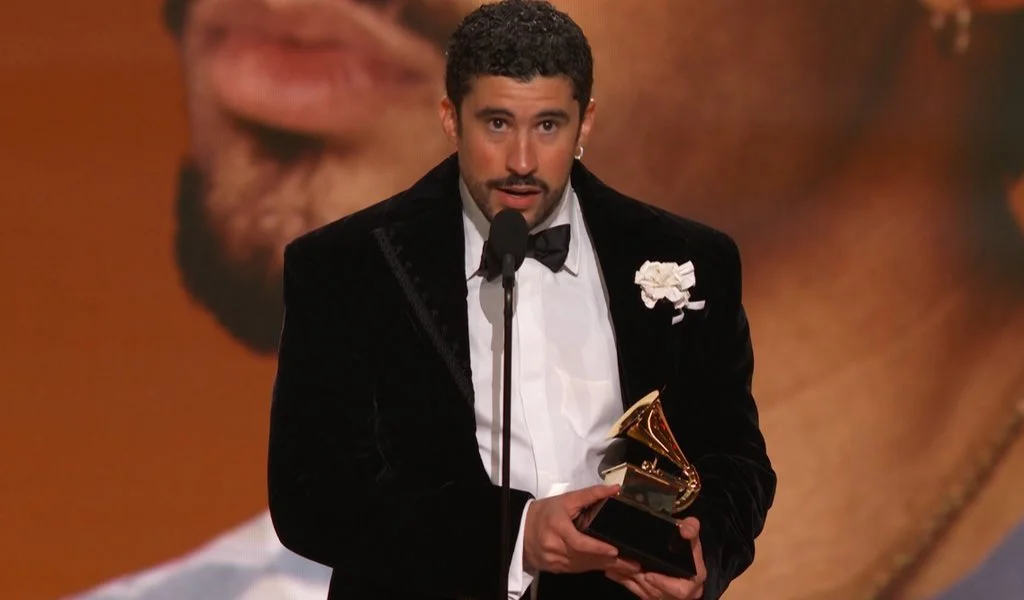
When Trevor Noah read out Debí Tirar Más Fotos as album of the year at Los Angeles’ Crypto.com Arena on Sunday night, Bad Bunny rose slowly from his seat and walked to the stage alone, visibly emotional. The 31‑year‑old, born Benito Antonio Martínez Ocasio, delivered his remarks almost entirely in Spanish, a deliberate choice on a night that sealed his status as the most influential Latin artist of his generation.
“I want to dedicate this award to all the people who had to leave their homeland to follow their dreams,” he told the crowd, which gave him a standing ovation. “To all the Latinos in the world and all the artists who came before who deserved to be on this stage getting this award, thank you.”
“Puerto Rico, believe me when I say we are so much bigger than 100 by 35 and there is nothing we can’t accomplish,” he added, referencing the island’s dimensions. “Thank God, thank you to the Academy, thank you to all the people who have believed in me throughout my whole career. Thank you, mami, for giving birth to me in Puerto Rico.”
The win makes Debí Tirar Más Fotos the first all‑Spanish‑language album ever to secure the Grammys’ top honor. Until now, only two Latino artists had come close: Mexican‑born guitarist Carlos Santana, who won album of the year in 2000 with the mostly English‑language Supernatural, and rapper Cardi B, nominated in 2019 for Invasion of Privacy.
Bad Bunny had been here before: in 2023, his blockbuster Un Verano Sin Ti became the first Spanish‑language project nominated for album of the year but lost out. Sunday’s result closes that loop and, in the eyes of many fans and critics, corrects an overdue omission.
The album that got him there
Released in January 2025, Debí Tirar Más Fotos (I Should Have Taken More Photos) is Bad Bunny’s sixth studio album and, critics say, his most ambitious. It blends reggaeton and Latin trap with traditional Puerto Rican styles, including plena, salsa and jíbaro folk motifs—into a dense, nostalgic soundscape anchored in the island’s sonic history.
The Los Angeles Times describes the record as “intricately arranged with the sounds of the singer and rapper’s native Puerto Rico,” an album that “reconnects Bad Bunny with the streets and stories that raised him” even as it plays to stadium‑size crowds. NPR calls it “genre‑defying,” an “expressive tribute” to Puerto Rico that pushes urbano production beyond the formulas that made him a streaming giant.
Commercially, Debí Tirar Más Fotos has been a juggernaut. It debuted at No. 1 on the Billboard 200, spent four weeks on top, and sent all 17 tracks onto the Billboard Hot 100, making Bad Bunny the first Latin artist in history with more than 100 entries on that chart. Five songs reached the top 10 of Hot Latin Songs, cementing his dominance across streaming platforms.
He turned the album into an event at home before taking it abroad. A 30‑date residency titled No Me Quiero Ir de Aquí at San Juan’s José Miguel Agrelot Coliseum sold out repeatedly, while the subsequent Debí Tirar Más Fotos world tour, which began in November and runs through July, has skipped US stadiums in favour of Latin America and Europe. In an interview, he said part of that decision reflected concerns that US immigration agents might appear at shows, a reminder that his politics and profile remain entangled with the broader debate over migration.
A politically charged Grammys night
Bad Bunny’s win capped a ceremony in which immigration and identity threaded through multiple speeches.
Earlier in the night, after taking Best Música Urbana Album, he used the stage to call out the Trump administration’s immigration enforcement. “Before I thank God, I want to say ICE out. We are not savages. We are not animals. We are not aliens. We are human beings, and we are Americans,” he said to loud applause. “Hate grows stronger with more hate. The only force that can surpass it is love.”
Others echoed his themes. Olivia Dean, who won Best New Artist, told the audience, “I stand here as the granddaughter of an immigrant. I wouldn’t be here without that legacy. I’m a product of courage, and those individuals deserve to be honoured.” Billie Eilish, accepting Song of the Year for “Wildflower,” added: “No one is illegal on stolen land … F*** ICE,” drawing a mix of cheers and gasps.
In that context, Bad Bunny’s choice to speak in Spanish and dedicate his biggest award to people who “had to leave their homeland” landed as both a personal statement and a political one, at a
time when immigration policy and ICE’s expanded powers have become central flashpoints in US politics.
Who he beat – and what it signals
The album of the year field was one of the strongest in recent memory, featuring:
- Justin Bieber – Swag
- Sabrina Carpenter – Man’s Best Friend
- Clipse – Let God Sort ’Em Out
- Lady Gaga – Mayhem
- Kendrick Lamar – GNX
- Leon Thomas – Mutt
- Tyler, the Creator – Chromakopia
Kendrick Lamar, who led the night in total wins, added five Grammys to bring his career tally to 27, the most for any rapper. Lady Gaga took Best Vocal Pop Album for Mayhem and delivered a blistering rock performance of “Abracadabra,” while Sabrina Carpenter extended her breakout year with multiple nominations.
Against that backdrop, the Recording Academy’s choice of an all‑Spanish album marks a clear statement about the center of gravity in global pop. Latin music’s streaming numbers have rivalled or surpassed English‑language peers for years; Sunday’s result aligns the Grammys with a reality long reflected in charts and tours.
It also extends a trend of the award going to projects that expand, rather than simply mirror, mainstream pop. In 2025, Beyoncé won album of the year with Cowboy Carter, a radical, country‑rooted reimagining of American music history. With Debí Tirar Más Fotos, the Academy has now consecrated an album that re‑centers Puerto Rico in the global soundscape.
From Grammys to Super Bowl, and beyond
Bad Bunny’s night at the Grammys doubles as a prelude to an even bigger stage. Next Sunday, he will headline the Super Bowl LX halftime show in Santa Clara, California, another first for a Puerto Rican urbano artist. The back‑to‑back platforms, music’s top prize and America’s most watched television event illustrate how far he has travelled from posting SoundCloud tracks a decade ago.
For Latin artists and fans, the album of the year win is already being framed as a watershed. Commentators in US and Latin American media say the barrier now broken may change how labels, radio and awards bodies think about language and genre, especially for future generations who toggle between Spanish and English as easily as between reggaeton and pop.
As he left the Grammys stage, trophy in hand, Bad Bunny kept his message simple. “There’s nothing we can’t do,” he had said moments earlier. For an artist who just turned an album steeped in Puerto Rican rhythms into the Recording Academy’s album of the year, and who is about to bring that sound to the Super Bowl, that line no longer reads as bravado. It reads like a statement of fact, delivered in Spanish, to a global audience finally listening.