Key Facts
- The U.N. General Assembly’s High-Level Week runs from Sept. 22 through Sept. 29 in New York, with the General Debate taking place Sept. 22-26 and Sept. 28.
- Nearly 130 heads of state and government are expected as wars involving Iran and Ukraine, AI risks, climate change and a stressed multilateral system dominate the agenda.
- President Donald Trump is scheduled to address the General Assembly on Tuesday, following Brazil under the longstanding opening tradition.
- Ukrainian President Volodymyr Zelenskiy, Israeli Prime Minister Benjamin Netanyahu, Iranian President Masoud Pezeshkian and Russian Foreign Minister Sergey Lavrov are among the expected speakers or participants.
- Chinese President Xi Jinping is expected to skip New York and instead meet Trump in Washington on Sept. 24.
- The meeting takes place during the final year of U.N. Secretary-General António Guterres’ second term, which ends Dec. 31, 2026.
UNITED NATIONS — Nearly 130 world leaders are arriving in New York this week for the United Nations General Assembly, confronting a global agenda dominated by war, economic instability, artificial intelligence, climate pressure and growing doubts about whether the international system can still manage crises that cross borders.
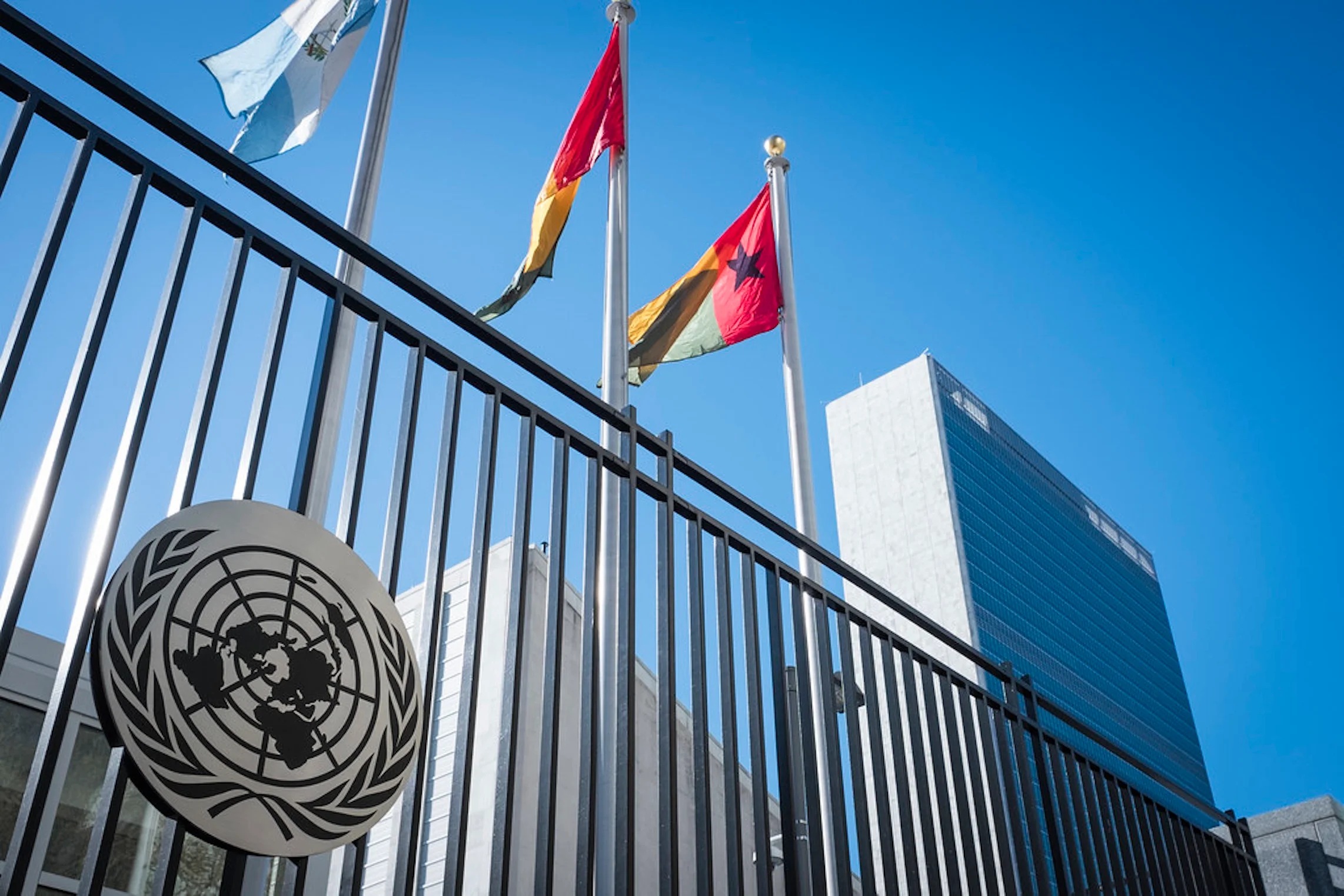
The General Debate of the U.N. General Assembly’s 81st session opens Tuesday, Sept. 22, at U.N. headquarters in Manhattan. For several days, presidents, prime ministers and senior diplomats will take turns at the organization’s green marble podium, delivering speeches that set out national priorities and grievances.
But the most consequential diplomacy will take place in private rooms, hotel suites, bilateral meetings and hastily arranged gatherings on the margins of the assembly.
President Donald Trump will return to the U.N. stage for the second consecutive year, seeking to advance a U.S. agenda that includes the Iran conflict, trade, artificial intelligence and negotiations over Ukraine. He is expected to meet leaders from the United Kingdom, Japan, Venezuela and Gulf states, according to the U.S. ambassador to the United Nations.
The gathering comes at a difficult moment for the organization itself. The U.N. is facing financial stress, major-power divisions and questions about its relevance as conflicts continue in Ukraine, the Middle East and Sudan. Secretary-General António Guterres is entering the final months of his second term, with an international search already underway for his successor.
This year’s official theme, “Restoring Trust, Managing Transformation: A United Nations That Delivers for All”, captures the gap between the institution’s ambition and the political reality confronting its members.
The world’s annual diplomatic crossroads
The General Assembly is the only forum where all 193 U.N. member states can address the world in the same setting.
Each country has one vote in the Assembly, regardless of its size or military power. The speeches are largely symbolic, but the week gives leaders an unusual opportunity to meet allies, rivals, investors, diplomats and international organizations without traveling across the world for separate summits.
The diplomatic choreography follows longstanding tradition.
Brazil speaks first because its delegation volunteered to open the debate in the early years of the United Nations, when other countries were reluctant to do so. The United States speaks second as the host country. Leaders then take the podium based largely on seniority and order of registration. Heads of state generally speak before heads of government, ministers and lower-ranking delegations.
Leaders are asked to limit speeches to 15 minutes, though the rule is voluntary. The U.N. has a long history of speeches that stretch far beyond that time. Cuban leader Fidel Castro spoke for about four and a half hours in 1960, while Libya’s Muammar Gaddafi spoke for more than 90 minutes in 2009.
The public addresses matter because they define diplomatic positions. But the real value of the week is proximity.
A president can meet several counterparts in a day. Foreign ministers can negotiate language for a resolution. Security officials can discuss a crisis. Business leaders can pursue investment deals. Countries with no formal diplomatic relations can hold quiet talks through intermediaries.
For a United Nations under strain, that convening power remains one of its most important assets.
Trump returns as U.N. faces pressure
Trump’s appearance will be among the week’s most closely watched events.
He is set to address the assembly Tuesday, then hold meetings with global leaders. U.S. Ambassador Mike Waltz said Trump plans to meet British Prime Minister Andy Burnham, Japanese Prime Minister Sanae Takaichi and Venezuela’s interim President Delcy Rodríguez. Trump is also expected to participate in a multilateral meeting with Gulf leaders from Bahrain, Kuwait, Oman, Qatar, Saudi Arabia and the United Arab Emirates.
The meeting with Rodríguez would be the first face-to-face encounter between Trump and Venezuela’s interim president since the U.S. operation that captured Nicolás Maduro, according to ABC News.
Trump’s presence also comes as the United States has cut contributions to U.N. bodies and withdrawn from dozens of international organizations and initiatives, adding pressure to an institution that depends heavily on member-state funding and political support.
His administration has frequently questioned the value of multilateral institutions and emphasized national sovereignty, bilateral deals and U.S. economic leverage. At the same time, Trump is using the U.N. gathering to pursue precisely the kind of leader-to-leader diplomacy the annual assembly makes possible.
The contrast is central to this year’s meeting. Trump can criticize the international system from its most visible stage while relying on its convening power to hold talks on Iran, trade, Ukraine and regional security.
Iran and the Middle East dominate
The conflict involving Iran is expected to dominate much of the week’s diplomacy.
Iranian President Masoud Pezeshkian is scheduled to address the General Assembly on Wednesday, seven months after the United States and Israel went to war with Tehran. But uncertainty remains over the Iranian delegation’s visas and final travel arrangements. Iran’s chief of protocol said this week that it was unclear how many delegation members would receive U.S. visas and when.
Trump, Israeli Prime Minister Benjamin Netanyahu and leaders of several countries trying to mediate an end to the conflict are all expected in New York. Yet diplomats do not expect a breakthrough.
The war has disrupted oil supplies, intensified tensions in the Gulf and contributed to inflation concerns beyond the region. It has also strained relationships between Washington and key partners, including Gulf states that are trying to prevent a wider regional escalation while protecting energy infrastructure and shipping routes.
The U.N. Security Council may hold an informal meeting with Arab leaders during the week, with Iran expected to be a central subject.
Trump’s planned meeting with Gulf Cooperation Council leaders is expected to focus on the next phase of the Iran war and a possible postwar strategy. The six GCC members are Bahrain, Kuwait, Oman, Qatar, Saudi Arabia and the United Arab Emirates.
The discussions may cover military security, energy markets, shipping routes and what form a future political settlement could take. But the gap between the parties remains wide, and the U.N. lacks the power to force a resolution on its own.
Ukraine remains unresolved
Russia’s war in Ukraine will also be a major focus.
Ukrainian President Volodymyr Zelenskiy is scheduled to address the assembly Wednesday. He is expected to use the week to maintain international support for Kyiv as Trump continues efforts to broker an end to the war more than four years after Russia’s invasion.
Russian Foreign Minister Sergey Lavrov is due to speak Saturday. The contrast between the two appearances will underscore the deadlock that has defined the war: Ukraine seeks stronger support and security guarantees, while Russia remains a permanent member of the Security Council with veto power over U.N. action.
The Security Council is expected to hold a high-level meeting on Ukraine, but diplomats do not expect it to produce decisive action because Russia can block resolutions that conflict with its interests.
Trump has expressed frustration that his effort to broker a deal has not produced an agreement. He spoke with Russian President Vladimir Putin earlier this month, but it remains unclear whether Trump will meet Zelenskiy during the U.N. week.
The uncertainty reflects a broader problem: the U.N. can provide a forum for diplomacy, document violations and coordinate humanitarian assistance, but it cannot resolve a war when one of the parties holds a veto in the Security Council.
For Ukraine, the gathering will be as much about coalition maintenance as negotiation. Zelenskiy will seek to keep attention on military assistance, reconstruction, sanctions and Russia’s continued attacks.
Israel, Palestinians and a two-state push
The Israeli-Palestinian conflict will be another central issue.
Netanyahu is scheduled to address the General Assembly on Thursday. Palestinian President Mahmoud Abbas will not attend in person because the United States has again declined to issue him a visa, according to Reuters. He is expected to appear by video, as he did last year.
The U.N. is expected to host a high-level meeting on the sidelines of the assembly to promote a two-state solution. Diplomats do not anticipate a breakthrough.
The meeting comes amid continued conflict, humanitarian concern and intense global disagreement over Gaza, Israeli military action, Palestinian statehood and the role of outside powers.
Netanyahu is wanted by the International Criminal Court on allegations of war crimes and crimes against humanity in Gaza, allegations Israel denies. The issue may lead to protests in New York, where Mayor Zohran Mamdani has said he respects the right to demonstrate but does not plan to attend anti-Netanyahu protests himself.
The General Assembly cannot impose a settlement. But its debates will reveal the depth of international frustration over the lack of progress toward Palestinian statehood and a durable regional peace.
AI moves to the diplomatic agenda
Artificial intelligence will receive unusual attention during this year’s high-level week.
The U.N. Security Council may meet on AI, diplomats said, after several industry leaders warned that increasingly powerful systems could improve themselves, be misused for cyberattacks or become difficult to control.
Guterres said the warnings “cannot be ignored” and called for countries at the frontier of AI development to establish common guardrails.
“We need to avoid this race to the bottom that could lead one day to a gigantic disaster at the global level,” he said.
The issue has become more urgent as AI systems move beyond chatbots toward agents that can write code, operate software, analyze data and perform multi-step tasks. Governments are trying to balance economic opportunity, national-security competition and the risks of misuse.
The U.S.-China rivalry complicates the discussion. Washington wants to maintain a technological lead, while Beijing is building its own AI capabilities and promoting its regulatory approach. Other countries worry that they will be left out of the economic benefits while facing the effects of job disruption, misinformation and concentrated corporate power.
The assembly is unlikely to produce a binding global AI treaty. But it could advance discussions about common testing standards, human control over high-risk systems, cyber safeguards and communication channels for AI-related incidents.
Climate, health and development
The U.N. agenda extends beyond conflict.
On Tuesday, Guterres will convene a high-level event on climate action and a “just transition,” focusing on renewable energy, climate finance and support for countries already experiencing the effects of global warming.
A meeting on sea-level rise follows Wednesday. Small island states and low-lying coastal countries are expected to press for financing, adaptation support and greater international urgency as rising seas threaten homes, infrastructure and freshwater supplies.
On Thursday, heads of state and government will discuss pandemic prevention, preparedness and response. The session will revisit lessons from COVID-19, including unequal access to vaccines, medicines and public-health resources.
Other high-level events include:
| Date | Meeting | Main focus |
|---|---|---|
| Sept. 22 | General Debate begins | National priorities, global conflicts and diplomacy |
| Sept. 23 | Right to Development anniversary | Equity, participation and economic opportunity |
| Sept. 23 | Climate Action and Just Transition event | Renewable energy, climate finance and resilience |
| Sept. 24 | Sea-level rise meeting | Adaptation and support for vulnerable states |
| Sept. 25 | Pandemic preparedness meeting | Health systems, equity and global readiness |
| Sept. 28 | Durban Declaration anniversary | Racism, discrimination and xenophobia |
| Sept. 29 | Nuclear-weapons elimination meeting | Disarmament and nuclear risk |
The schedule reflects the U.N.’s broad mandate. It also highlights the difficulty of the institution’s task: wars dominate headlines, but climate change, disease, inequality and nuclear risk continue even when major powers are focused elsewhere.
The U.N.’s leadership transition
This will be the final General Assembly high-level week that begins under Guterres’ leadership.
His second five-year term ends Dec. 31, 2026. The process of selecting his successor is already underway, though no clear frontrunner has emerged. The next secretary-general will take office Jan. 1, 2027.
The selection is politically sensitive.
The Security Council must recommend a candidate to the 193-member General Assembly. That means all five permanent members, the United States, China, Russia, Britain and France, must agree, because any one of them can veto a candidate.
The succession discussion will take place in private conversations rather than formal public debate. But it will shape the atmosphere in New York.
The next secretary-general will inherit an organization facing financial constraints, growing geopolitical fragmentation and mounting demands to address conflicts that the Security Council has been unable to resolve.
The U.N.’s defenders argue that no other institution can convene all countries, coordinate humanitarian relief and establish global norms. Its critics argue that it has become too slow, too bureaucratic and too constrained by the veto powers to deal effectively with modern crises.
Both views will be present in New York this week.
What success would look like
The General Assembly is unlikely to end the wars in Iran, Ukraine or Gaza. It will not resolve the U.S.-China rivalry. It will not suddenly provide enough climate finance or create a global AI rulebook.
Success will be more limited.
It could mean:
- Keeping diplomatic channels open between adversaries.
- Building support for humanitarian aid.
- Preventing regional conflicts from widening.
- Reinforcing support for Ukraine.
- Maintaining attention on Sudan and other underreported crises.
- Creating momentum for climate and health commitments.
- Advancing practical conversations on AI safeguards.
- Identifying viable candidates for the next U.N. secretary-general.
The value of the assembly often lies in preventing further deterioration rather than producing dramatic agreements.
This year, that may be especially true.
With nearly 130 leaders in one city, the week will offer rare opportunities for dialogue. It will also expose the limits of dialogue when major powers disagree over war, territory, trade and technology.
Trump’s return to the U.N. podium will add another layer of uncertainty. His speech and meetings may reveal whether the United States intends to use the assembly as a platform for deals, confrontation or both.
The United Nations was founded on the idea that countries are safer when they talk rather than fight. Eighty-one sessions later, the organization’s annual gathering remains a test of whether that idea can survive a world of widening wars and shrinking trust.