
WASHINGTON — President Donald Trump announced Friday that the United States, Denmark and Greenland have reached a security agreement that would expand the American military presence on the Arctic island, bar U.S. adversaries from establishing bases there and restrict sensitive foreign investment.
The agreement falls well short of Trump’s long-standing demand that the United States acquire Greenland. Instead, it preserves Denmark’s sovereignty over the self-governing territory and recognizes Greenlanders’ right to determine their own political future, including the possibility of independence.
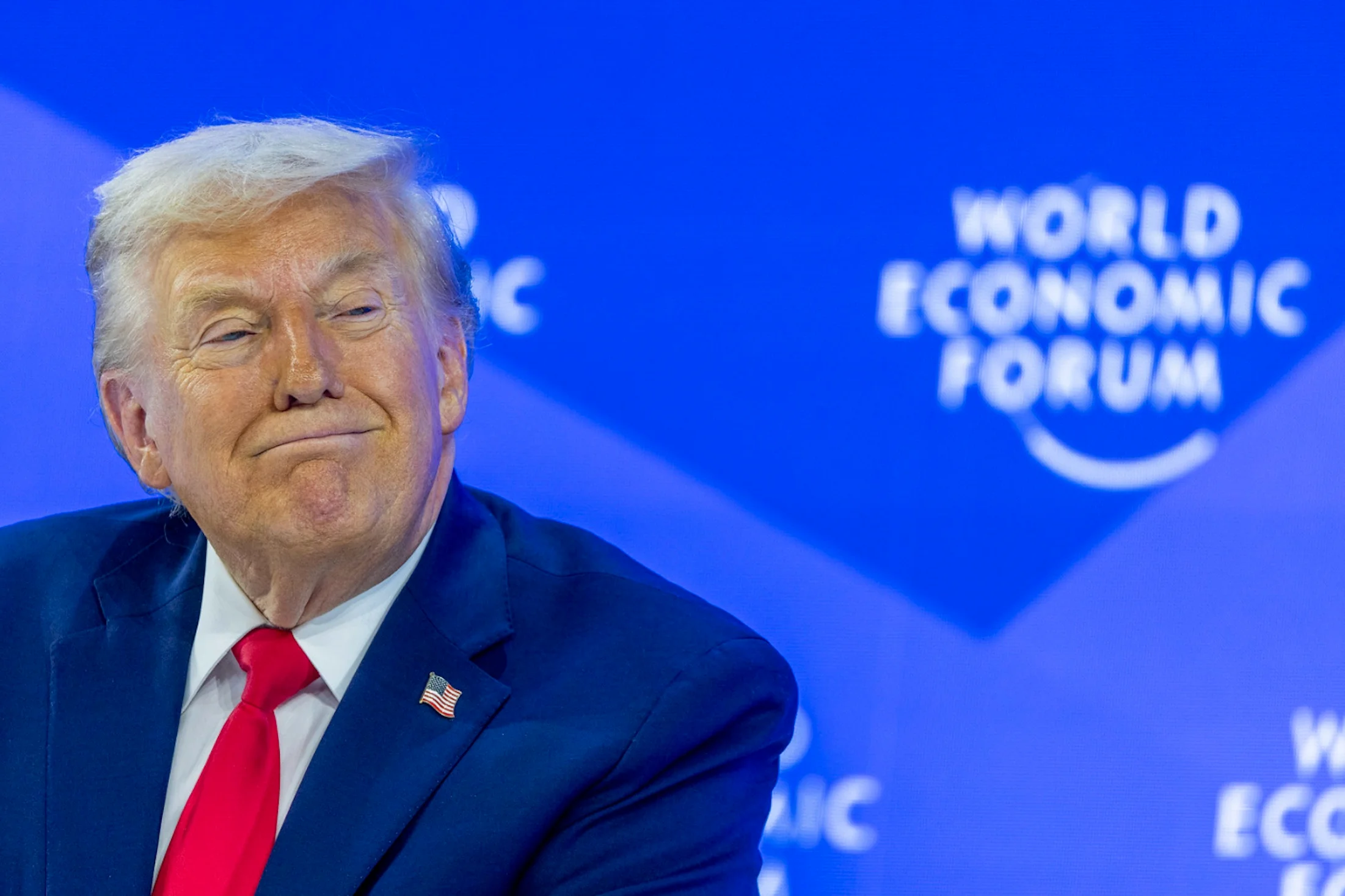
Trump described the accord as giving the United States “permanent control over security, and all other needs, in Greenland.” But officials familiar with the arrangement said its practical effect is to secure permanent U.S. access, basing and overflight rights while preventing non-NATO countries from building military facilities or making unspecified “sensitive investments” without U.S. approval.
The agreement is expected to be signed next week on the sidelines of the United Nations General Assembly in New York. It still requires parliamentary action in Denmark and Greenland before it can be enforced, according to Danish Prime Minister Mette Frederiksen’s office.
The deal could ease a transatlantic dispute that had strained relations between Washington, Copenhagen and other NATO allies. But much remains unclear, including whether new U.S. bases will be built, how investment screening will operate and what “all other needs” means in the language Trump used to describe the agreement.
What the deal does
The agreement centers on Arctic and North Atlantic security.
According to Trump’s announcement and a State Department official briefed on the terms, the deal includes several core elements:
- Permanent U.S. access to Greenland.
- Permanent U.S. basing rights.
- Permanent overflight rights.
- The ability to expand the U.S. military presence.
- A ban on non-NATO countries building military bases in Greenland.
- Restrictions on “sensitive investments” by U.S. adversaries.
- A guarantee that the arrangement would remain in force even if Greenland becomes independent.
The most direct target is China and Russia.
A State Department official said the agreement explicitly prevents non-NATO countries from building bases in Greenland and allows only the United States and its allies to make certain sensitive investments.
Trump said no U.S. adversary would be able to establish a base, maintain a military presence or make sensitive investments in Greenland without “express written approval” from the United States.
The agreement does not transfer territory to the United States. Greenland remains an autonomous territory within the Kingdom of Denmark, and the Danish and Greenlandic governments say the deal recognizes sovereignty, territorial integrity and self-determination.
| Deal element | What it means |
|---|---|
| U.S. basing rights | The United States can maintain and potentially expand military facilities in Greenland |
| Permanent access | U.S. forces retain access regardless of future Greenland political status |
| Overflight rights | U.S. military aircraft can operate through Greenlandic airspace |
| Non-NATO base ban | China, Russia and other non-NATO states cannot establish military bases there |
| Sensitive-investment restrictions | Foreign investments in strategic sectors could face U.S. and allied scrutiny |
| Greenland sovereignty | No territory is transferred to the United States |
| Greenland self-determination | Greenlanders retain the right to decide their political future, including independence |
The language reflects a compromise. Trump can claim a major security victory and an expanded American role in Greenland. Denmark and Greenland can say they protected sovereignty and avoided a sale or annexation of the island.
What the deal does not do
The agreement does not make Greenland part of the United States.
It does not give Washington ownership of the island, direct authority over Greenland’s civilian government or control over its natural resources. It does not create U.S. citizenship for Greenlanders, and it does not replace Denmark as the sovereign state responsible for the territory.
The distinction is important because Trump had repeatedly called for the United States to acquire Greenland and, at times, declined to rule out using force to obtain it. Those statements created alarm in Denmark and across Europe because Denmark is a NATO ally.
The deal is therefore a diplomatic retreat from the most extreme version of Trump’s earlier position.
Instead of ownership, the United States receives strengthened security rights. Instead of annexation, it receives a framework for military expansion and restrictions on Chinese and Russian activity.
Reuters described the agreement as falling short of Trump’s long-held goal of acquiring Greenland.
The scope of the military expansion remains unclear. The agreement could authorize new bases, new facilities at existing sites, expanded radar or surveillance systems, more personnel, new air-defense installations, logistics hubs or other projects. But none of those details had been publicly released as of Friday night.
Trump’s claim that the United States now has control over “all other needs” is broader than the specific details released by U.S., Danish and Greenlandic officials. Readers should treat that phrase as the president’s political description, not a complete legal definition of the agreement.
Why Greenland matters to the United States
Greenland’s importance is geographic, military, economic and increasingly environmental.
The island sits between North America and Europe, with more than two-thirds of its territory inside the Arctic Circle. It is the world’s largest island and lies along the shortest air routes between the United States and Russia.
That location has made it important to North American defense for decades.
The United States operated multiple military facilities in Greenland during the Cold War. Today, it maintains Pituffik Space Base in northwestern Greenland, which supports missile warning, missile defense, space surveillance and communications operations for the United States and NATO.
The base can help detect missile launches and track objects in space. Its location makes it particularly valuable for monitoring threats approaching North America across the Arctic.
The Arctic’s strategic importance has increased as climate change opens sea routes that were once inaccessible for much of the year. Russia has expanded its military activity in the Arctic, while China has increased its interest in Arctic shipping, research, minerals and infrastructure.
Trump has repeatedly argued that the United States needs stronger control over Greenland to counter Russian and Chinese activity. Danish and Greenlandic officials have said they are willing to work with Washington on security but have rejected any transfer of sovereignty.
The new agreement appears to build on that shared interest: more U.S. and NATO security capacity without changing Greenland’s political status.
China, Russia and critical minerals
The restrictions on non-NATO bases and “sensitive investments” are not only about military installations.
Greenland has significant deposits of rare earth elements and other critical minerals that could be important for electric vehicles, renewable energy, electronics, defense systems and advanced manufacturing. The island’s mineral potential has attracted interest from Western governments and Chinese companies alike.
The agreement is expected to give the United States and allied governments greater influence over who can invest in strategic sectors such as mining, ports, telecommunications, energy infrastructure and data networks.
This is part of a broader shift in global economic policy. Governments are increasingly treating investment in critical infrastructure and minerals as a national-security issue rather than simply a commercial matter.
For the United States, blocking Chinese or Russian involvement in strategic Greenland projects could reduce the chance that adversaries gain access to Arctic infrastructure, sensitive data or mineral supply chains.
For Greenland, the issue is more complicated. The territory wants economic development and greater self-sufficiency, particularly if it eventually seeks independence. Foreign investment is one way to finance mines, roads, airports, ports and public services.
Restrictions on Chinese and Russian investment could limit some sources of capital. They could also encourage more investment from the United States, Denmark, the European Union, Canada, Japan and other allies.
Whether that produces genuine economic benefits for Greenlanders will depend on the terms of future projects, environmental safeguards, local participation and the distribution of revenue.
How the agreement differs from existing U.S. rights
The United States already has substantial military rights in Greenland.
A 1951 defense agreement between the United States and Denmark gave Washington broad authority to establish and operate military facilities in Greenland, subject to coordination with Denmark. The treaty was concluded during the Cold War, when the Arctic was central to U.S.-Soviet strategic competition.
Reuters reported that the United States already has nearly total overflight and basing rights under that earlier agreement.
That raises a natural question: What is new?
The answer appears to be a combination of permanence, political clarity and additional authority over adversary access and sensitive investment.
The new agreement reportedly:
- Reaffirms U.S. access even if Greenland becomes independent.
- Creates a formal barrier to non-NATO military bases.
- Establishes a framework for reviewing or blocking sensitive foreign investment.
- Opens the door to a “significant” expanded U.S. military presence.
- Provides a political settlement to a dispute that had strained the NATO alliance.
Imran Bayoumi, a former Pentagon official now with the Atlantic Council, told Reuters that it would be significant if the agreement allows the United States to build bases without Danish or Greenlandic approval. But he also said the United States could have achieved many of its stated objectives through diplomacy without straining the U.S.-NATO relationship.
That observation captures the deal’s dual nature. The military changes may be incremental compared with existing U.S. rights. The diplomatic change is more dramatic because it ends — or at least pauses, an extraordinary conflict between NATO allies over the future of Greenland.
Denmark and Greenland’s response
The Danish government welcomed the agreement cautiously.
Frederiksen’s office said the deal would strengthen security in the North Atlantic and Arctic while recognizing Danish and Greenlandic sovereignty, territorial integrity and the right to self-determination.
Greenland Prime Minister Jens-Frederik Nielsen said the emerging agreement recognized Greenland’s interests and its role in international cooperation.
“This benefits us all,” he said, according to Reuters.
The support matters because Greenland’s population has been strongly resistant to the idea of U.S. ownership.
Greenland has roughly 56,000 residents, most of them Inuit. The territory has its own parliament and government and manages many domestic affairs, while Denmark remains responsible for defense, foreign policy and certain other areas.
Many Greenlanders support eventual independence from Denmark, but that does not mean they want to become part of the United States. The agreement’s recognition of self-determination appears designed to address that concern.
It remains unclear how the deal will be received by the broader Greenlandic public. Trump’s earlier language about acquiring the island created resentment and concern. Any new military facilities, investment restrictions or infrastructure projects will likely face local scrutiny.
The agreement must also receive parliamentary approval in Denmark and Greenland before becoming enforceable.
Political significance for Trump
The deal gives Trump an opportunity to claim a foreign-policy success after months of tension over Greenland.
He presented the arrangement as a major achievement, calling it a “dream come true for the United States of America” and saying it would have “infinite life.”
The timing is politically useful.
Trump faces midterm elections while managing a continuing conflict with Iran, tensions with China and criticism over relations with NATO allies. A Greenland agreement allows him to say he secured greater U.S. influence in the Arctic without going to war, purchasing territory or breaking the NATO alliance.
Secretary of State Marco Rubio called the accord a “historic deal” and said it permanently addressed U.S. national-security concerns.
“Greenland will forever be part of the strategic defense area of North America and exclude any adversary from it and the surrounding area,” Rubio said.
For Denmark, the agreement offers relief from an existential diplomatic crisis. Trump’s threats to take Greenland by force had raised fears that the United States might treat an ally’s territory as negotiable. The new pact gives Copenhagen a way to cooperate with Washington while preserving formal sovereignty.
For NATO, the agreement could reduce tension inside the alliance at a moment when Arctic security, Russia’s military posture and broader global instability demand cooperation.
The unanswered questions
Despite the announcement, significant details remain unknown.
The governments have not released the full text of the agreement. Without it, it is not possible to assess the exact legal authority the United States receives, the scope of investment screening, the process for approving new bases or the roles of Denmark and Greenland in future decisions.
Key unanswered questions include:
- Can the U.S. build new bases without Danish or Greenlandic consent?
- How many additional troops, aircraft or systems could be deployed?
- Will the deal include missile-defense, radar or space-surveillance expansion?
- Which types of foreign investments will be considered “sensitive”?
- Who decides whether an investment is allowed?
- Will Greenland receive new economic assistance or infrastructure funding?
- What environmental protections apply to military and mining projects?
- How will the deal affect Greenland’s independence movement?
- What costs will the United States, Denmark and Greenland bear?
- What parliamentary votes are required before the agreement takes effect?
Trump said the arrangement would come at “no cost” to the United States. The available reporting does not explain how that claim would apply if the United States expands bases, builds new infrastructure or increases military deployments.
The cost and scale of implementation will likely become clearer only after the agreement is signed and governments release additional documents.
What happens next
The three governments expect to sign the deal next week during the U.N. General Assembly in New York.
That will likely be followed by parliamentary review in Denmark and Greenland, as well as technical negotiations about military facilities, investment screening and operational procedures.
The agreement may also prompt discussions with NATO allies, especially Canada, Norway, Iceland and other countries with direct Arctic interests.
For Washington, the next test is implementation. A security agreement can establish access and intentions, but it does not automatically create bases, build radar systems or solve the logistical challenges of operating in the Arctic.
For Greenland, the next test is whether the agreement brings tangible benefits without undermining local control. Greater U.S. military and commercial interest could create jobs, infrastructure and investment. It could also intensify pressure on a small population that has repeatedly said it wants a voice in determining its future.
For Denmark, the deal offers a chance to repair relations with the United States while maintaining the principle that Greenland is not for sale.
The immediate headline is that Trump did not get Greenland. He got a security arrangement that expands U.S. access, blocks adversary bases and gives Washington a stronger role in the Arctic.
Whether that becomes a durable diplomatic solution or the beginning of a new argument over sovereignty, investment and military control will depend on the details still to come.