
On September 30, 2025, the former president of Democratic Republic of Congo, Joseph Kabila, was sentenced to death in absentia, generating an uproar in African political circles and raising the temperature on an already fiery Congolese political scene. The high military tribunal in Kinshasa issued the unexpected ruling, which is the first time in DRC history a former head of state has been sentenced to death post Presidency.
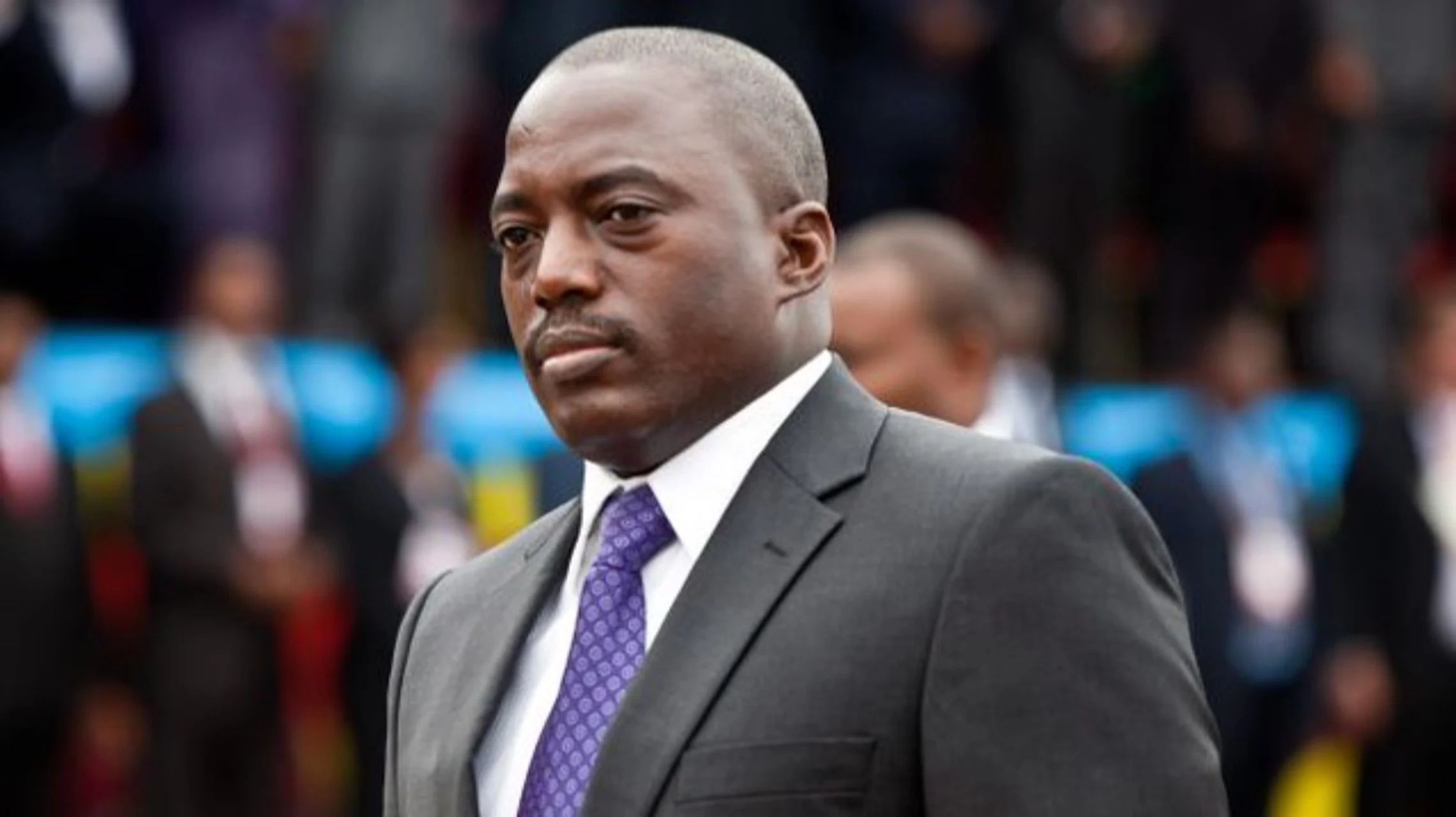
The trial will also resurface grievances from the past, whilst bringing into question the political fate of Africa’s second largest nation, and a very powerful political figure whose legacy continues to echo in the Congo.
The Charges: Treason, Murder, and Alliance with Rebels
Joseph Kabila ruled DR Congo from 2001 until 2019 after the assassination of father, Laurent-Désiré Kabila. Kabila faced a number of charges in a trial described by international observers as one of the biggest civil-military/political contexts in the region, or for the DRC’s 21st century history. While there was a plethora of serious charges against Kabila, the military court found him guilty of violations of treason, murder, sexual violence, torture, war crimes, insurrectionary activities, and terrorism formulation.
The gravamen of the accusations made against Kabila were that he conspired, and materially aided, the M23 rebel group, a Rwanadan backed militia that made a strong push into eastern Congo in the year of Kabila’s trial, capturing a large number of provincial capitals and raising the fear that a broader regional crisis was ensuing. The prosecution provided evidence that Kabila communicated on a near daily basis with M23 leaders, and directed state resources to the rebels, in efforts to thwart national security, and create cycles of conflict, displacement, and atrocity in the valuable mineral’s regions of North and South Kivu.
The Trial in Absentia: Unprecedented Drama
Kabila’s case was litigated in absentia after he departed the DRC in 2023, initially settling in South Africa, later reportedly making fleeting visits to Goma, eastern Congo, then under the control of the M23 group. The military court engaged in the proceedings, citing evidence that encompassed a wide range of evidence from tapped communications to statements of former associates of Kabila who provided testimony, including Eric Nkuba, the former chief of staff to the rebel commander sentenced to insurrection in 2024. Kabila was not represented by counsel, and he neither attended nor made any formal assertions on the record before the court, other than a periodic condemnation of the proceedings as a “tragicomedy” and “instrument of political oppression.”
“In accordance with Article 7 of the Military Penal Code, the court imposes a singular and most severe penalty, namely, death penalty,” the presiding officer, Lt. General Joseph Mut Katali, declared. The ruling came after a hearing of several hours, and observers and the reporting media from inside and outside of the court, reported palpable tension throughout the event. In addition to the death sentence, Kabila received a sentence to the Congolese state for $29 billion compensation and each province that experienced the criminal acts was to be compensated by $2 billion.
Political Context: Precarious Alliances, Revoked Immunity
Kabila’s sentencing comes on the heels of an increasingly combative and preferable legal disposition that began with the DRC Senate’s vote in May to remove Kabila’s immunity, a vote that critics condemned as “dictatorial behavior,” while the government claimed it was needed in order to obtain justice for the crimes that occurred during the Kabila’s rule.
The timing is especially notable just as President Félix Tshisekedi looks to solidify his grip on power as the DRC prepares for the general elections in 2026. For several years, Kabila and Tshisekedi were uneasy coalition partners, however, tensions arose after Tshisekedi refused to adopt the policies Kabila favored and rigorously pursued corruption and war crimes investigations.
Some analysts interpreted the trial and the judgment as part of an overall plan to weaken opposition players in the upcoming electoral cycle. “The problem with this judgment is that Kabila’s supporters may see it as a politically motivated trial.” said Yinka Adegoke, who is the Africa Editor for Semafor.
Divergent Opinions and Regional Threats
International organizations were circumspect. The United Nations had previously accused Rwanda of backing M23, although Rwanda continues to reject any direct involvement. The UN experts report stated that Rwandan military and logistical support, “was critical” to M23 territorial advances, and the findings to embolden the Congolese government to pursue external collusion charges against Kabila.
Diplomats and human rights observers expressed concerns over the trial’s procedures. Observers noted Kabila’s lack of legal representation and his absence from the hearings and have called for broader reform to ensure that the Congolese justice system remains fair and transparent. Still, local organizations heralded the sentence as a historic stand against impunity, arguing it might dissuade political-related violence and collusion with rebels from happening in the future.
The M23 Movement: The Heart of the Verdict
Eastern Congo has experienced decades of violence and ethnic tensions, as foreign-backed militias routinely challenge Kinshasa’s authority. In 2025, the M23 movement occupied key towns, displacing thousands, and threatening gains in regional security. The court cited evidence that Kabila remained in constant communication with rebel leader Corneille Nangaa, who himself was convicted of rebellion last year. These findings corresponded with interviews and intelligence community analysis that Kabila had been instrumental in supporting M23’s rapid advance and attempted derailment of peace efforts.
Kabila’s critics argue that he has instigated instability in the region through alliances both past and present that encourage cycles of violence. Government officials insisted that the sentence could help to close the chapter on politically motivated militarization and to send a message to any future opposition which might pursue similar paths.
Kabila’s Legacy and Political Aftermath
After the assassination of Laurent Kabila, Joseph Kabila took power at age 29. He extended his time in office beyond what was permitted in the constitution, postponed national elections, and oversaw contentious resource deals. Kabila left office in 2019 amidst mass protests and international pressure, and his support base remained intact. As such, Joseph Kabila continued to be a major player, who can act as an opposition mobilizer and can contest Tshisekedi’s agenda.
Kabila’s supporters have decried the verdict as unfair and politically motivated. Emmanuel Ramazani Shadary, who is the permanent secretary of Kabila’s political party, said the verdict was “a political, unjust decision. The government aims [to] eliminate or neutralize a political actor.”
Despite the gravity of the sentence imposed, it is probably unlikely that Kabila will be arrested or extradited, especially given that his precise location is unknown and logistical challenges exists for Congolese or other authorities. If he does appeal the verdict, the military court’s sentence can be challenged only on procedural grounds and not on the substantive elements of the case.
National and Regional Repercussions
Earlier this year, the DRC government lifted a long-standing moratorium on the death penalty, which has not yet resulted in an execution. Analysts warn that the verdict will cause unrest among Kabila’s loyalists, especially in the eastern provinces of DRC where Kabila’s influence is still present. Political analysts suggest the government intends to eliminate a Kabila consolidation of further opposition despite creating a risk of inflaming festering divisions within an already politically divided country.
The story raises wider questions regarding justice and reconciliation in post-conflict African states Transitioning from a cycle of political violence after conflict is difficult, and many Congolese citizens continue to cope with the legacies of war and violence. Others see the ruling as a pivotal break with impunity, while Kabila’s base see it as a politically motivated advance by political adversaries intended to silence dissent.
An Unprecedented Step, Uncertain Future
As Joseph Kabila’s status remains unresolved and his exact location is unknown, the DRC’s political situation is facing ongoing turmoil ahead of coming elections and growing rebel activity in the east. It is not yet clear if the verdict will provide an opportunity for a rehabilitation of justice, or whether it will deepen existing political rifts, but the case has already set a precedent that few persons in Congolese or African jurisprudence would have thought possible.
The death sentence imposed upon Kabila, who does not acknowledge the consequence nor its seriousness, and who is still a relevant player represents an unprecedented break from expected political convention and a new level of confrontation between civilian justice and the historic context of military influence on the state.
For the DRC and its people, the effort to transition away from conflict and division has entered yet another chapter bound to the past, and the giant shadow of Joseph Kabila looms large.



