
The political crisis in the Indian Ocean nation of Madagascar has been initiated, setting a historic precedent in contemporary African politics, as a mass uprising led by their late teenage or twenties’ Generation Z children – and supported by key sections of the military – forced President Andry Rajoelina to flee the country.
The Uprising Intensifies: From Blackouts to Political Earthquake
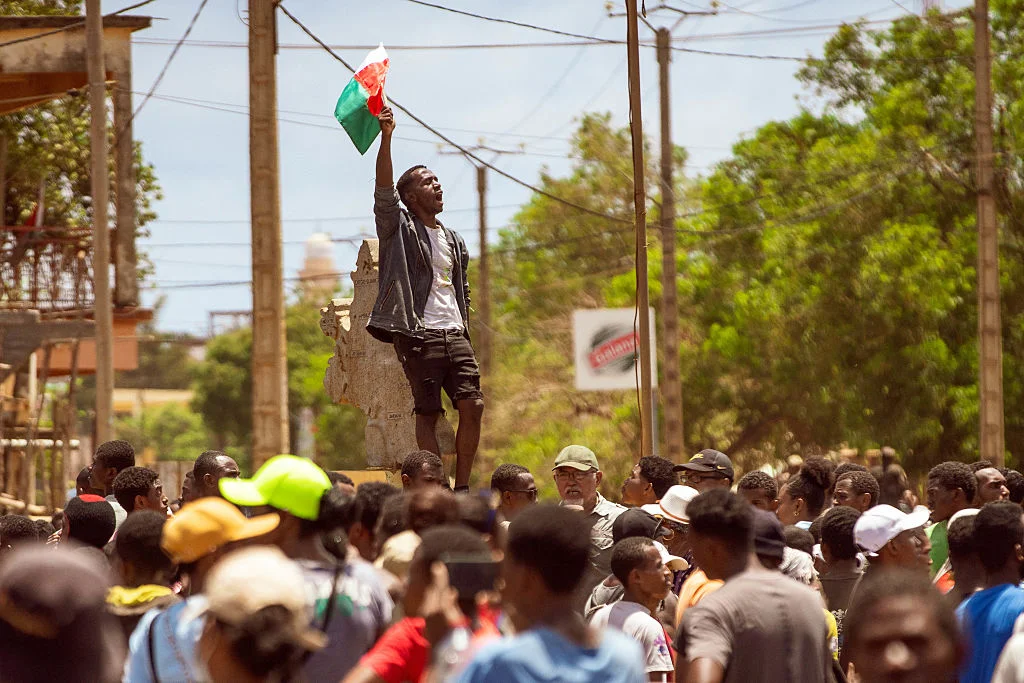
The crisis started with the rolling protests that began in late September over chronic shortages of water and electricity. What began as complaints over rising prices and the lack of basic services expanded into a wider generational push to change how the nation is governed. University students, young graduates, labor groups, and digital activists organized under “Gen Z Madagascar” and mobilized daily in the central roads of the capital, Antananarivo, spreading their call for political accountability and change throughout the nation.
For weeks, President Rajoelina’s government experienced the challenges of balancing its promises of reforms with intermittent crackdowns. However, as public anger grew around social media messaging and viral video clips of those being beaten by the police, the security forces struggled to contain it. By early October, the demonstrations had continued despite curfews in place, closed universities, and the reintroduction of the internet shutdowns.
The Military Breaks Ranks
The tipping point came over the weekend when CAPSAT, the elite military formation that helped Rajoelina rise to power during the 2009 military coup, formally pledged itself to the protestors. Soldiers were greeted as “liberators” after appearing in armored vehicles draped with Madagascar’s national flag at the May 13 Square alongside civilians. CAPSAT, claiming to have control of the armed forces, publicly demanded Rajoelina’s resignation and the establishment of an interim civilian government, an action which reflected the demands of protestors to have an actual democratic reform.
Reports also start to emerge that CAPSAT had opened negotiations with leaders of the protests. The situation was heating up with worries announced over state media channels that CAPSAT could seize government ministries at any moment. Observers in the international media compared the scene with the youth and military-backed revolutions in Tunisia, Egypt, and, more recently, Nepal.
Rajoelina’s Departure: The Making of a Political Exodus
With his government crashing down around him, Rajoelina first removed his cabinet and appointed a new prime minister in hopes of quelling the unrest. When that did not work, unconfirmed reports surfaced on Monday that the president had fled Madagascar—reportedly in a French military plane after speaking with French President Emmanuel Macron. Per his opposition, he fled Sainte Marie Airport with military escort—marking the second time in a fortnight that a world leader was brought down by a Gen Z–driven insurrection.
Rajoelina’s aides could not confirm his whereabouts. Rajoelina had attempted to broadcast a national address, which was delayed over and over further fueling speculation and doubt.
What Remains: A Nation in Limbo
As Madagascar entered into a time of uncertainty, military commanders announced the appointing of General Demosthene Pikulas as chief of staff and reassured citizens the military would try to avoid violence and looting. One CAPSAT spoke to the press and said, “We have listened to the voice of the youth and the people—we will not fire on our own.” They declared their actions were not “a coup,” as they responded to what the population was demanding via new elections and a civilian run transition.
While there was shooting reported sporadically between the soldiers loyal to Rajoelina and CAPSAT, there was no mass bloodshed. Foreign embassies were asking for restraint and called upon nationals to stay inside the embassy due to “volatile and unpredictable” conditions.
Gen Z’s Revolution: social media and Global Echoes
This Madagascar up-rising is unique in where and by whom it was originated. Gen Z digital activists organized rallies via encrypted messaging over social network, inspired by protests in Morocco and Nepal. Videos and infographics documenting alleged corruption of the regime, stagnant economy, and elite privilege spread like wildfire on digital platforms.
The demonstrators expressed demands for accountability from the governing, jobs, electoral transparency, and more youth representation—all under the auspices of civil resistance and nonviolence. One viral post stated: “This is the Madagascar of tomorrow—we are not going back.”
International Response and Path Forward
Nearby African states and international powers were paying attention. The African Union, United Nations, and France all called for calm and dialogue, while NGOs urged all sides to respect humanitarian needs during this uncertain transition.
Analysts comment that while the immediate military-youth alliance has ended Rajoelina’s 15-year reign, history is not always a clear indicator of next steps. Will a civilian provisional authority oversee new elections? Will division within the opposition or divisions within the military create new instability? If the international Gen Z wave—so effective at mobilizing for change—can raise the specter of change without the portal of protest, they will have to negotiate governance, not just resistance.
Madagascar’s Tumultuous Political History
Uprisings and revolutions are not new to Madagascar. Since independence in 1960, the nation has experienced coup, transitions, and presidential exile. Rajoelina first came to power as a result of another military-backing revolution in 2009. However, Rajoelina’s departure ends not just a reign but an era. Given that over half of the island’s population of 31 million people is under 25, they are trying to articulate a vision that will reflect their priorities and leadership.
What Comes Next for Madagascar?
The coming days are likely to be decisive. Both the military and leadership of the protests must be aware of the real challenges of previous political transitions – vengeance, fragmentation of factions, and prolonged power vacuums. The protesters stress that any process moving forward must be open, representative, and grounded in the notions of accountability and justice that fueled the protests.
For Gen Z activists across Africa and around the world, the sweeping shift of power in Madagascar signals that their voices and votes matter—and a digital organized movement infused with courage and solidarity can topple even some of the oldest regimes.