
In June 2025, devastating flooding from torrential rain in South Africa’s Eastern Cape province became a natural disaster that has claimed at least 78 lives and left hundreds more displaced across the region.
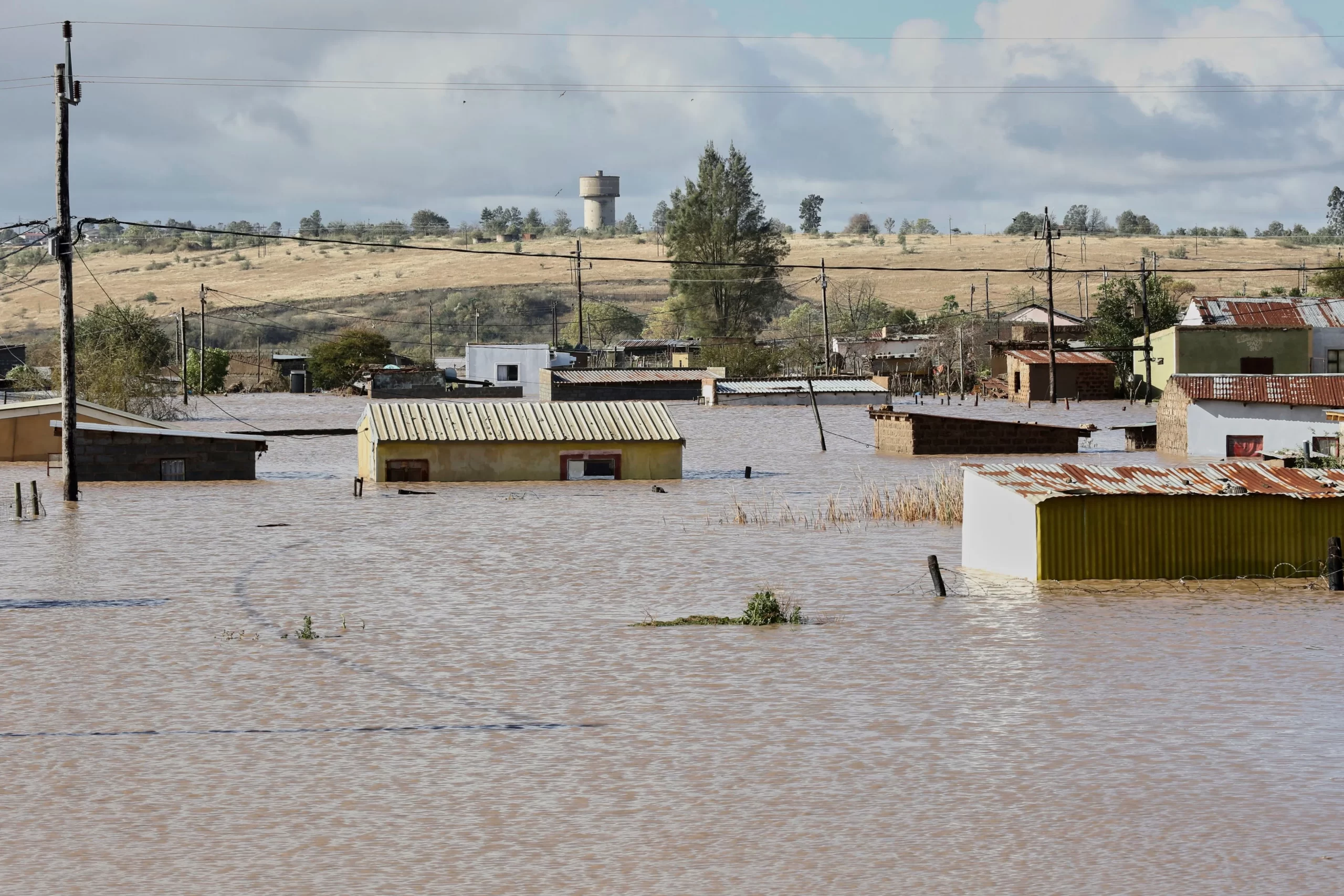
Officials have described the flooding that occurred in South Africa as “unprecedented.” The intensity and extent of the flooding has exposed severe infrastructure and emergency response vulnerabilities, while amplifying the vulnerabilities facing communities impacted by climate change.
Unrelenting Rain and Rising Death Toll
The crisis began on June 9, when a significant winter storm brought continued severe rain to the Eastern Cape, with Mthatha—the region’s largest town—recording 129 millimeters of rain—almost double the previous record. The Elliot weather station nearby recorded 160 millimeters of rain, which is roughly four times more than the previous record for the location of 40 millimeters recorded in 1997. Due to the continued precipitation and a combination of severe winds and some snowfall, rivers were overrun and outsized floodwaters of nearly 4 meters (13 feet) inundated some communities.
By June 13, officials verified fatality counts of at least 78, and cautioned the count could still rise as search and rescue operations continued. Among the deceased were young students; six died when floodwaters carried away their school bus, which was near to a river.
There are still four students unaccounted for while three students were able to cling on to trees for several hours, calling for help until they were rescued.
Humanitarian Crisis and Response from the Community
The South African floods left devastation behind, destroying homes, damaging at least 127 schools and 20 health care facilities, and forcing an estimated 1,000 people temporarily to community shelters. Images from the affected areas reveal informal settlements are submerged, families are trapped on the roofs of their homes, and survivors have been calling for help for hours or longer prior to rescue.
Hundreds of thousands of households are now without power or clean water, compounding the distress for people living in poverty.
The humanitarian response was hurt by a significant shortage of assets. Eastern Cape, one of South Africa’s poorest provinces, has just one official rescue helicopter that had to be flown in from a city that was more than 500 kilometers away.
The region also lacked specialist rescue divers and K-9 units, meaning authorities had to seek additional assistance from other locations. “When things like this happen, we are always found wanting. We become paralyzed”, East Cape Premier Oscar Mabuyane said.
Government and International Response
South African President Cyril Ramaphosa has announced that he plans to visit the disaster zone indicating he wanted “to see exactly how our people are suffering in the area” in addition to expressing condolences and support to families in mourning.
In a statement, Ramaphosa offered his “sincere condolences” to families who had been affected and advised that he had activated the National Disaster Management Centre for relief efforts.
Nonetheless, government explanations have also faced criticism from opposition parties and civil society, who argue that years of neglect and underinvestment in infrastructure and emergency planning have exposed communities to such peril. The far-left Economic Freedom Fighters party went on to characterize the tragedy as a result of “government neglect” in areas of the Eastern Cape.
Climate Change and the Future of Disaster Preparedness
The South Africa floods are just the newest of a number of extreme weather events to hit the country in recent years. In April 2022, a storm that hit the East Coast left roughly 400 dead and thousands displaced.
Experts and officials alike suggest such disasters are increasing in frequency and intensity due in part to climate change. “We have never experienced disasters like these, but now the reality of climate change and global warming has to be faced,” Mabuyane said.
A Call for Resilience and Solidarity
As rescue teams are working hard to find the missing and provide assistance to those affected, the people of South Africa are working together in solidarity.
Emergency relief centers began operating to assist those displaced by the floods, while community members and NGOs provided food, medical care, clothing and blankets to those affected by the floods.
The floods across South Africa are a reminder of the need for enhanced disaster preparedness, resilient infrastructure, and global action on climate change.
For the families of the deceased and families and communities moving to rebuild, there remains a march to building back. In the face of adversity, the human spirit remains resilient and filled with hope.
Deaths have exceeded 78 and thousands have been displaced in the June 2025 floods in South Africa, with more deaths anticipated as search and rescue efforts continue. The floods have revealed problematic emergency response and infrastructure vulnerabilities, while signalling an increasing threat in relation to climate change.
In the wake of mourning and subsequent rebuilding efforts, the call for resilience, and solidarity, and urgent response could not be more timely.