
New York’s familiar blue-and-yellow MetroCard is finally punching out. Beginning January 1, 2026, riders will no longer be able to buy or refill the plastic fare card that has defined city commuting for more than three decades, as the Metropolitan Transportation Authority completes its switch to OMNY, a tap‑and‑go payment system that now accounts for more than 90 percent of subway and bus trips. Existing MetroCards will still be accepted into 2026 for a limited period, but OMNY, through bank cards, phones, smartwatches or a dedicated OMNY card, will become the default way New Yorkers pay to ride.
Farewell to the MetroCard
Introduced in 1994 to replace metal tokens, the MetroCard brought swipe technology to one of the world’s oldest subway systems, eventually becoming as recognizable a symbol of New York as yellow cabs or paper coffee cups. Over 31 years, billions of rides were taken by swiping the magnetic strip through turnstiles, along with all the frustrations of misreads, demagnetized cards and end‑of‑month uncertainty about remaining balances.
The MTA’s “MetroCard Farewell” campaign confirms that December 31, 2025, is the last day for riders to buy or refill MetroCards at station vending machines and booths. After that, unused balances can still be used for several months, but no new value can be added; the authority will announce a final acceptance date later in 2026. For a dwindling group of riders still swiping, the change is both practical and emotional. “I feel like a piece of my childhood is fading away,” one commuter told a TV crew near Times Square. “Don’t push us aside and make it like we don’t count.”
How OMNY Works
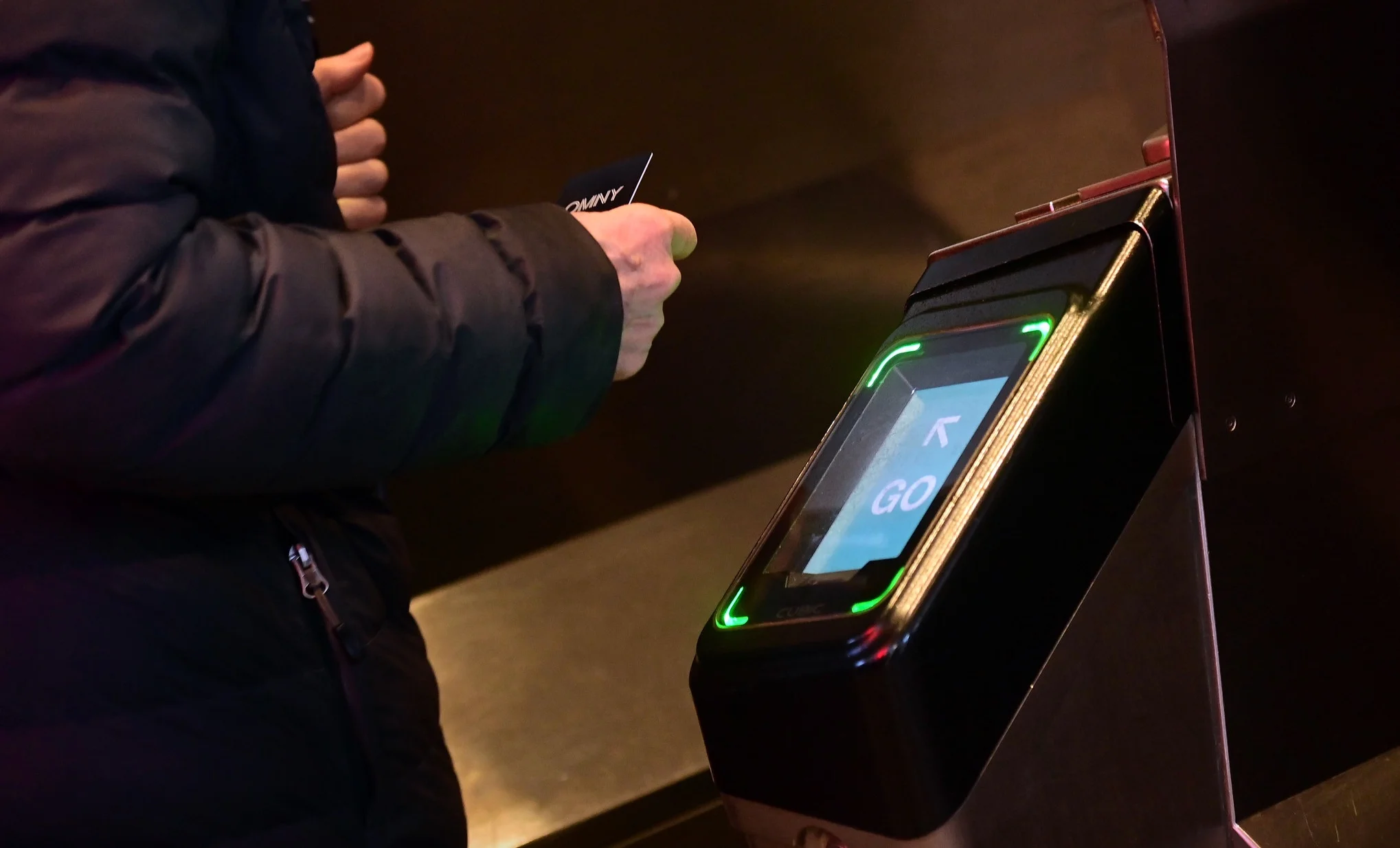
OMNY, short for One Metro New York, has been rolled out gradually since 2019 and is now installed at every subway turnstile, MTA bus door and on affiliated systems such as Westchester’s Bee‑Line. Instead of swiping a card, riders tap a contactless credit or debit card, smartphone, smartwatch or an OMNY card on a reader at the turnstile or bus door, much like paying in a supermarket.
For those who do not want to link a bank card or phone, the MTA sells a reusable OMNY card for cash at station vending machines and selected retailers, the spiritual successor to the MetroCard, but with a built‑in chip instead of a magnetic stripe. The card currently costs $1, though the MTA has signaled that the fee will rise to $2 once MetroCards are fully retired, citing the greater durability of the contactless cards.
An OMNY account at omny.info is optional but useful for tracking trips, managing fare capping, and registering multiple cards; for now, it is the only way to see detailed payment history until a dedicated OMNY app arrives, which the MTA says is planned for 2026. Behind the scenes, OMNY is supplied by Cubic Transportation Systems, the company that also built London’s Oyster network, and is designed to support future integrations across regional transit.
Fare Capping and Cost Savings
For many riders, OMNY’s most consequential change is not the tap itself but what happens after a dozen rides. Since 2022, the MTA has used OMNY to offer weekly “fare capping”: once a rider pays for 12 single rides in a Monday–Sunday period, the rest of that week’s trips are free, automatically converting those taps into the equivalent of an unlimited weekly pass. With the base fare set to rise to $3 in January, that cap will hit at $35 per week.
Unlike the old system, where riders had to decide up front whether to buy pay‑per‑ride MetroCards or commit to a 7‑day or 30‑day unlimited, OMNY automatically calculates the best deal based on usage. “Tap‑and‑go has transformed the experience for everyday riders and visitors, eliminating the uncertainty of the most cost‑effective fare package,” MTA chief customer officer Shanifah Rieara said when the phase‑out was announced.
For the MTA, the transition also comes with financial upside. The agency estimates it will save at least $20 million a year by ending MetroCard production and distribution, cutting down on vending‑machine maintenance and reducing the costs and risks of handling cash. OMNY’s back‑end makes fare inspection and anti‑evasion efforts more efficient, as inspectors can verify payments via handheld devices linked to the system.
Winners, Worriers, and the Digital Divide
Although OMNY is already used for more than 90 percent of trips on subways and buses, according to transit officials, the final push away from MetroCards has revived concerns about who gets left behind.
Advocates warn that “cashless by stealth” policies risk excluding unbanked and underbanked New Yorkers, an estimated hundreds of thousands of residents who lack credit or debit cards. While OMNY cards can still be purchased and reloaded with cash at station machines and retail outlets, critics fear that future shifts away from cash sales would “effectively alienate” those riders. Elderly riders also report difficulty navigating new vending‑machine menus designed for OMNY rather than MetroCard. “It’s hard for the elders,” a 70‑year‑old Manhattan resident told local news. “You push these machines away, you push us away.”
Privacy advocates have raised separate concerns about OMNY’s data collection, noting that every tap with a registered card can be tied to an account, potentially creating detailed records of movement. The MTA says riders can tap anonymously without creating an account or linking a name, and that data is subject to its existing privacy policies, but some civil‑liberties groups are pressing for stronger protections and clearer deletion rules.
At the same time, many commuters say the shift has been smoother than the MetroCard’s own rollout in the 1990s. “It’s just like everything else, just something to get used to,” one Port Authority rider told reporters. “Once I get used to it, I think it’ll be okay.”
Beyond the Subway: A Regional OMNY Network
OMNY is not stopping at the five boroughs. Westchester County announced that its Bee‑Line bus system will officially launch OMNY tap‑and‑ride on January 4, 2026, with scanners installed across the fleet. Riders there will be able to use the same bank cards, phones or OMNY cards they use in the city, with MetroCard sales ending December 31 and reloads disabled thereafter. Existing, unexpired MetroCards will still be accepted on Bee‑Line buses for a limited time, and the county is running a mobile sales van to help riders transfer balances onto OMNY cards.
The MTA has signaled that commuter railroads, Long Island Rail Road and Metro‑North Railroad, will deepen OMNY integration in the coming years, moving toward a seamless regional fare system for trains, subways and buses. That aligns New York with other global cities, from London to Singapore, that have converged on account‑based, contactless fare systems.
A New Icon, Same Daily Ride
For New Yorkers, the transformation at the turnstile is both mundane and symbolic. On one level, the daily act of paying for a ride is now as simple as the supermarket checkout: tap, beep, walk through. On another, the retirement of the MetroCard, the scuffed, bent rectangles that lived in wallets, coat pockets and the bottoms of tote bags, closes a chapter in the city’s visual and emotional history.
The MTA is leaning into that nostalgia, selling commemorative MetroCard‑OMNY memorabilia and urging riders to share memories under a farewell campaign. Yet its strategy is firmly future‑facing: a cleaner, cheaper, more flexible fare system that fits an era of phones, wearables, and algorithmic pricing.
Whether OMNY becomes as beloved an icon as the MetroCard, or remains an invisible layer beneath the city’s larger dramas, may depend less on the tap than on what riders experience after the gate: train frequency, safety, accessibility and price. But as of the end of 2025, one thing is clear underground: the era of the swipe is over; the age of the tap has arrived.





