
Venezuelan President Nicolás Maduro is in U.S. custody after an overnight special‑operations raid that followed large‑scale American air and missile strikes across Venezuela, President Donald Trump and senior U.S. officials say, marking an extraordinary escalation in Washington’s years‑long effort to topple the socialist leader.
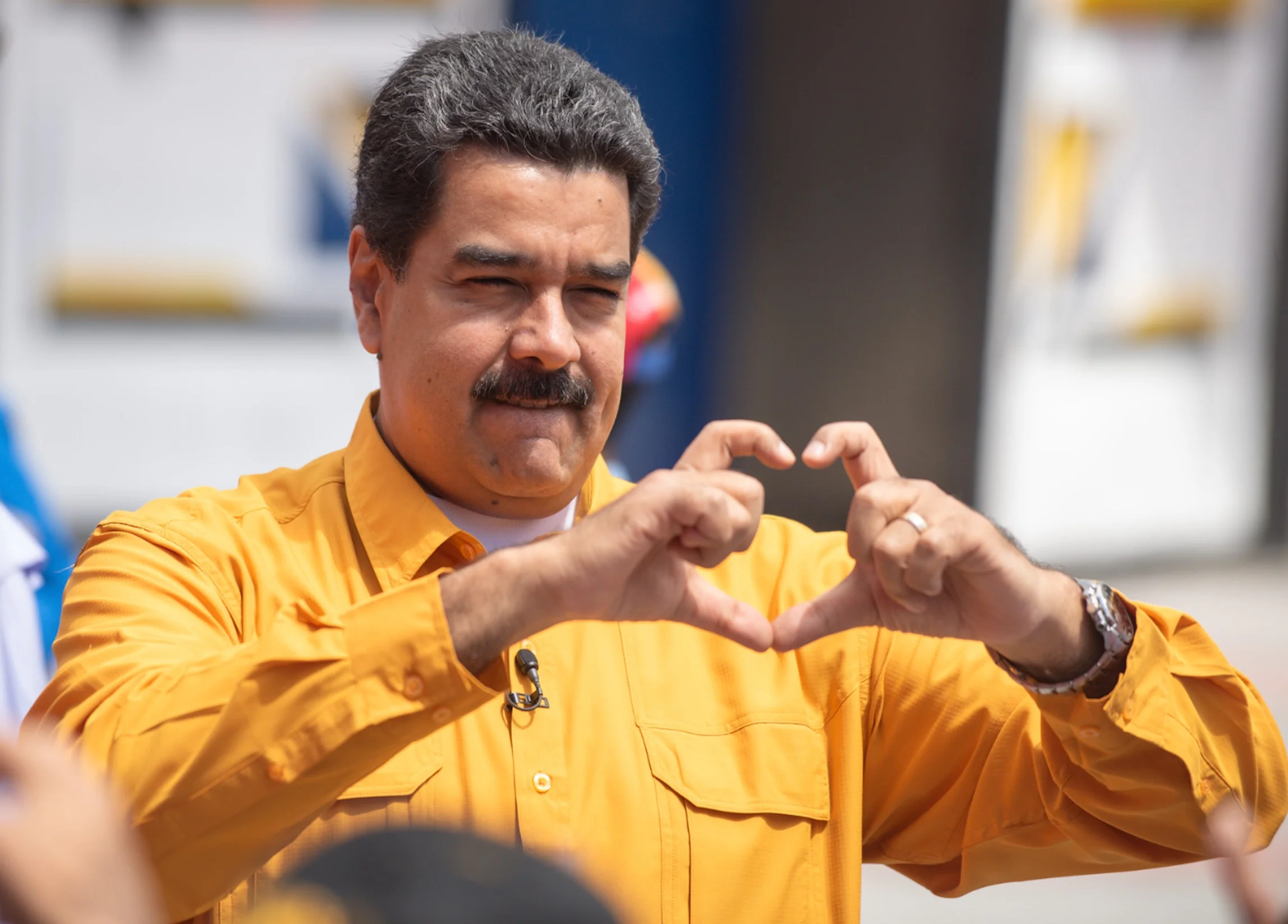
Caracas has confirmed that Maduro and his wife, Cilia Flores, are missing and has demanded “proof of life,” denouncing what it calls an “imperialist attack” and declaring a national emergency as explosions and blackouts hit military and government sites.
A “large‑scale strike” and a midnight raid
Reports of low‑flying aircraft, explosions and power cuts in Caracas and other parts of Venezuela began circulating on social media in the early hours of Saturday, local time, with witnesses describing missile blasts near military installations and heavy anti‑aircraft fire. Colombian President Gustavo Petro posted that “someone [was] bombing Caracas,” while Venezuelan officials accused the United States of attacking “civilian and military facilities” across several regions.
At 5:21 a.m. in Venezuela, Trump posted on Truth Social that the United States had “successfully carried out a large-scale strike against Venezuela and its leader,” and that Maduro and Flores “have been, along with his wife, captured and flown out of the Country.” He added that U.S. law‑enforcement agencies had been involved but gave no operational details.
CBS News, citing U.S. officials, reports that the mission to seize Maduro was carried out by the Army’s Delta Force, the elite special‑operations unit previously used in high‑profile raids such as the 2019 operation that killed Islamic State leader Abu Bakr al‑Baghdadi. The unit is said to have moved under cover of the wider air campaign targeting Venezuelan command‑and‑control sites.
By Saturday morning, U.S. Senator Mike Lee said on X that Secretary of State Marco Rubio had personally informed him that “Nicolás Maduro has been arrested by U.S. personnel to stand trial on criminal charges in the United States,” describing the strikes as “kinetic action” to protect forces executing a long‑standing arrest warrant. Rubio, a long‑time Venezuela hawk, “anticipates no further action in Venezuela now that Maduro is in U.S. custody,” Lee added.
From bounty target to prisoner: the legal backdrop
Maduro, 63, has been under U.S. indictment since March 2020, when federal prosecutors in New York accused him and more than a dozen associates of “narco‑terrorism,” alleging that he used Venezuela to ship tons of cocaine to the United States as part of a conspiracy with Colombian rebels. Washington has long offered a multimillion‑dollar reward for information leading to his capture, doubling the bounty to $50 million last year.
In recent months, the Trump administration tightened sanctions and maritime enforcement around Venezuela, seizing Iranian‑Venezuelan oil tankers and announcing a “total and complete blockade” for sanctioned vessels in and out of the country. U.S. officials and allied lawmakers portrayed those moves as part of a pressure campaign aimed at forcing Maduro from power after widely disputed elections in 2024.
The U.S. recognized opposition candidate Edmundo González as the legitimate winner of that vote and imposed sanctions on Venezuelan election officials it accused of rigging the result, but Maduro was nonetheless sworn in for a third term in January 2025. Efforts to oust him via domestic protests and external pressure faltered—until the overnight operation that now appears to have removed him physically from Venezuela.
According to Senator Lee’s account, the administration is framing the raid as an enforcement action of existing indictments rather than a move to change Venezuela’s government by force, arguing that Trump acted under his article II authority to protect U.S. personnel and interests. Rights advocates and international lawyers are already questioning that justification, noting that Maduro was the sitting head of state of a country with which the U.S. is not formally at war.
Caracas: explosions, blackouts, and uncertainty
Inside Venezuela, the strikes and apparent decapitation of the regime have thrown the country into confusion. Residents in southern Caracas reported loud blasts and gunfire overnight, while photos and video showed smoke rising from a military hangar and at least one base without electricity. The government has declared a national emergency and says it has activated “all defensive systems” to resist “foreign aggression.”
Vice President Delcy Rodríguez said in a televised address that authorities “do not know the whereabouts of President Nicolás Maduro and First Lady Cilia Flores” and demanded “immediate proof of life” from Washington, accusing the U.S. of kidnapping Venezuela’s head of state. State media broadcast images of troops patrolling Caracas streets and urged citizens to mobilize in defense of the “Bolivarian homeland.”
There were no immediate reports of widespread civilian casualties, but Venezuelan officials said some residential areas had been hit by shrapnel and shockwaves and that several people were injured. Opposition figures, long at odds with Maduro, responded cautiously, with some celebrating the end of his rule while expressing concern that U.S. military action could deepen instability or provoke internal violence.
World reaction: allies alarmed, Washington defiant
The operation has drawn sharp reactions across Latin America and beyond. Colombia’s Petro condemned the strikes and called for an urgent United Nations meeting, warning against “bombing Caracas” and urging regional diplomacy instead. Cuba and other traditional allies of Caracas denounced what they called an “imperialist attack” and demanded Maduro’s release.
European governments were more cautious, with some expressing relief at the prospect of Maduro facing trial on drug charges but also concern about the precedent of a unilateral armed raid on a sovereign state. Human rights organizations have called on the U.S. to publicly confirm where Maduro is being held, guarantee his access to legal representation, and ensure that any trial meets international standards of fairness.
Trump, for his part, has cast the strike as a major foreign‑policy victory. In his social‑media post and subsequent comments previewed by U.S. broadcasters, he linked Maduro’s capture to a broader fight against “narco‑terrorists” and foreign adversaries, comparing the Venezuelan leader to high‑profile targets like Baghdadi. He is expected to give more details at a press conference in Florida later Saturday.
What happens next in Venezuela, and in U.S. courts
With Maduro gone, at least physically, the immediate question is who governs Venezuela. Trump officials have previously recognized González and the opposition‑led National Assembly as the country’s legitimate leadership, but there has been no formal announcement yet about a transition plan in Caracas, nor clarity on whether the Venezuelan military will accept new civilian authority or fracture.
Analysts warn of several scenarios:
- A negotiated interim government led by the opposition, backed by Washington and some regional players, if parts of the security apparatus decide continuing Maduro’s rule without Maduro himself is untenable.
- A power struggle among regime insiders, military commanders or rival factions who may view Maduro’s removal as an opening to consolidate their own control.
- Increased internal repression, at least in the short term, if hard‑liners seek to demonstrate that foreign strikes have not weakened their grip.
In the United States, Maduro is expected to be brought before a federal court to face the existing narco‑terrorism and drug‑trafficking charges. Prosecutors have alleged that he “deliberately deployed cocaine as a weapon” against the U.S., accusations he has long denied as politically motivated. A high‑profile trial would offer Washington a platform to air detailed evidence about the inner workings of his government, but defense lawyers are likely to challenge the legality of his capture and transfer.
Rubio has told allies that, with Maduro in U.S. custody, he expects “no further action in Venezuela,” suggesting the administration aims to pivot from military strikes to courtroom proceedings and diplomatic pressure on Caracas’s remaining power brokers.
A seismic moment in a long crisis
For Venezuelans who have lived through hyperinflation, mass emigration, rolling blackouts and contested elections, the news that Maduro has been captured abroad, rather than forced out at home through votes or protests, underscores both the depth of the country’s institutional collapse and the reach of U.S. power.
The aftermath of the overnight raid will determine whether it marks the start of a new era of uncertainty and foreign intervention in Venezuela or a turning point toward a more democratic and stable country. This will depend on how Washington handles Maduro’s prosecution, how Caracas’s elites and security forces react, and whether regular Venezuelans see any improvement in their daily lives as 2026 begins.