
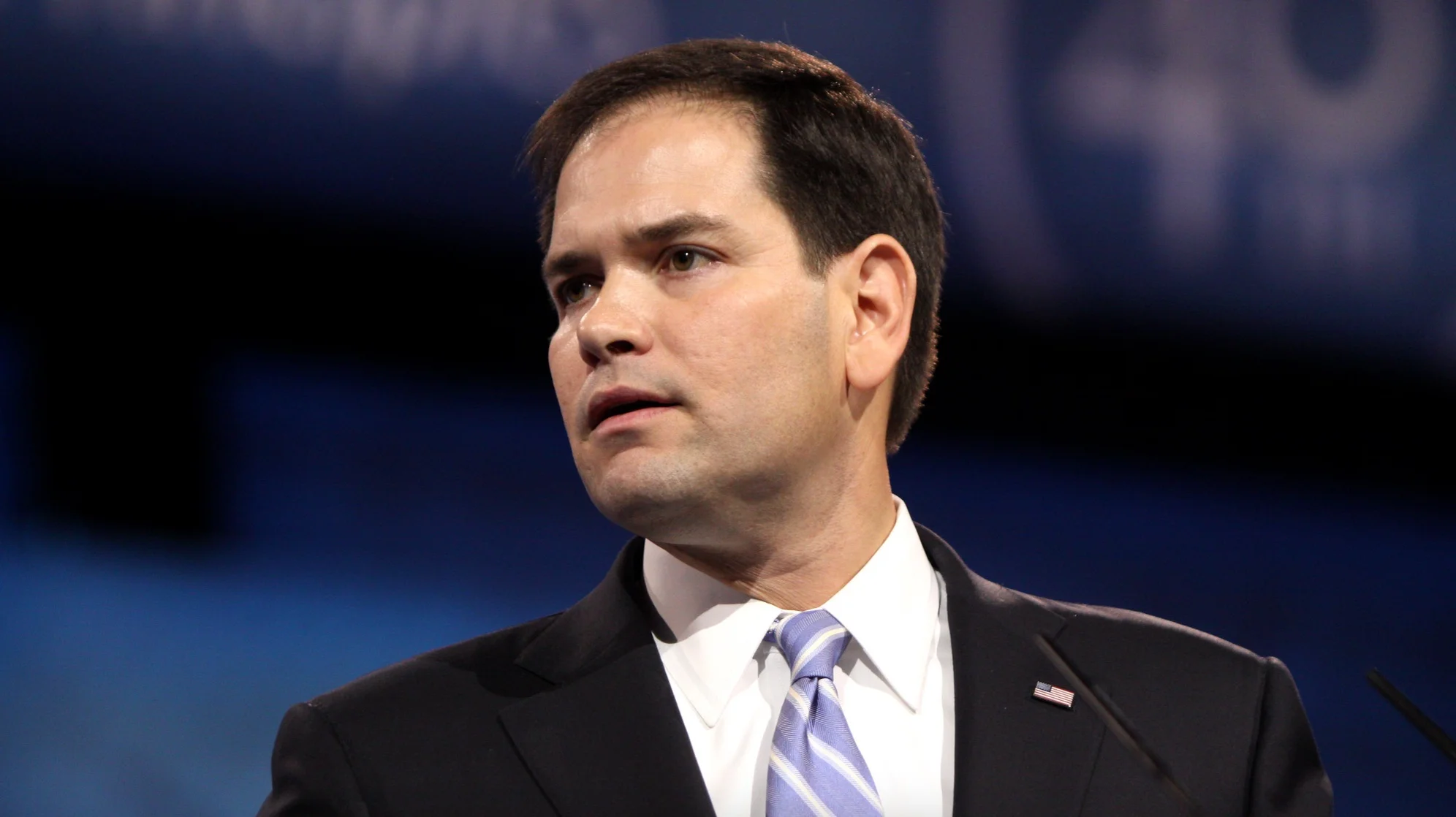
US Secretary of State Marco Rubio used a high‑profile speech at the Munich Security Conference to reassure European allies that Washington still wants a strong transatlantic partnership, even as he demanded a break with what he called the “post‑war delusions” of globalization, mass migration and over‑powerful international institutions. His remarks, delivered in the packed main hall of the Bayerischer Hof hotel, drew a cautiously relieved response from many European officials, who heard a warmer tone than last year’s incendiary address by Vice President J.D. Vance but also a clear warning that the United States expects Europe to change.
A “new era” message with an old‑alliance frame
Rubio arrived in Munich casting his trip as a turning point, telling reporters beforehand that the world was entering “a new era of geopolitics” that would force both sides of the Atlantic to rethink their roles. In his speech, he opened by anchoring that new era in old history.
“We gather here today as members of a historic alliance, an alliance that saved and changed the world,” he said, recalling how the first Munich security meetings took place on a continent divided between communism and freedom. He repeatedly stressed the shared heritage between Europe and the United States, calling America “a child of Europe” whose culture and institutions were forged on the continent.
Rubio’s central reassurance to nervous partners was clear:
- The US does not seek to “separate” from Europe, he said, but to “revitalize” the transatlantic relationship.
- “We do not want our allies to be weak, because that makes us weaker. We want allies who can defend themselves, so that no adversary will ever be tempted to test our collective strength.”
Those lines landed better than Vance’s 2025 speech, which stunned many in the room with its blunt attacks on European democratic culture. Euronews and other outlets described Rubio’s tone as more conciliatory, even as his underlying arguments stayed close to the administration’s nationalist script.
Attacking “post‑war delusions”: migration, climate, and globalization
Much of Rubio’s address was devoted to what he described as a set of “post‑war delusions” shared by European and American elites that, in his telling, have weakened Western societies from within.
According to live reports and transcripts, he argued that after 1945:
- Western countries “outsourced their sovereignty” to multinational institutions, investing faith in rules and courts that adversaries do not respect.
- Governments built “massive welfare states” “at the cost of maintaining the ability to defend themselves”, a reference to European defense spending.
- A “dogmatic vision of free and unfettered trade” hollowed out domestic industries in the name of efficiency.
- In “a pursuit of a world without borders,” leaders opened the door to “an unprecedented wave of mass migration that threatens the cohesion of our societies, the continuity of our culture and the future of our people.”
Al Jazeera, which characterized the speech as “more amicable” than Vance’s but still confrontational, noted that Rubio explicitly lashed out at what he called a “climate cult” that he claims is impoverishing ordinary citizens through higher energy costs and regulations. Domestic political allies back home praised that rhetoric; the White House published a glowing statement calling the address a “landmark” defense of Western civilization, and conservative commentators hailed it as “pitch perfect.”
For many European listeners, those passages amounted to a pointed critique of their migration, climate, and social policies, dressed in the language of civilizational self-defense.
NATO, defense and burden‑sharing
At the core of Rubio’s Munich message was a demand that Europe take on more of its own defense.
Rubio insisted that Washington wants “allies who can defend themselves” so that “no adversary will ever be tempted to test our collective strength.” That aligns with President Donald Trump’s long‑running complaints about NATO burden‑sharing, as well as his more recent threats to withhold protection from members who “don’t pay.”
US media covering the trip framed Rubio as the administration’s attempt to repackage that pressure in a more diplomatic key. Fox News noted that Trump has “leaned on him to carry Vance’s populist message abroad,” combining a harder line on migration and institutions with assurances that the US still values the alliance.
Rubio’s argument to Europeans was that:
- Weak defense budgets and reliance on US power are no longer sustainable in an era of war in Ukraine and rising Chinese assertiveness.
- The answer is not to end NATO, but to reindustrialize and rearm together, rebuilding defense industries on both sides of the Atlantic.
In one of the speech’s more forward‑looking sections, he called for an alliance that “boldly races into the future” instead of being “paralyzed into inaction by fear, fear of climate change, fear of war, fear of technology.” That line drew applause in the hall, even as many European officials privately bristled at the implication that their climate and tech policies are driven by fear rather than strategy.
A broadside at the UN and “abstractions of international law”
Rubio also took aim at the United Nations and the wider rules‑based system, echoing a theme that has become common in Trump‑era foreign‑policy speeches.
According to Euronews and excerpts published by the conference, he argued that institutions like the UN have been “powerless” in the face of wars in Gaza and Ukraine, allowing aggressors to “shield themselves behind abstractions of international law which they themselves routinely violate.” In a perfect world, he said, strong resolutions would solve such crises, “but we do not live in a perfect world.”
He stopped short of calling for the dismantling of the post‑1945 order, but his message was that the “global order” can no longer be placed above “the vital interests of our people and our nations.” That formulation, preserving cooperation, downgrading law — sums up the administration’s approach to multilateralism: useful when it serves national priorities, suspect when it seems to constrain them.
The tone contrasted sharply with UN Secretary‑General António Guterres’s own message to the African Union just days earlier, in which he framed UN reform as a way to strengthen rules, not escape them. In Munich, Rubio’s focus was firmly on making sure those rules do not bind the United States or its allies in ways he sees as dangerous.
Russia, Ukraine, China, and Iran: continuity under new management
On specific crises, Rubio largely stayed within established US talking points, but with the populist edge that marks the Trump administration’s foreign policy.
- Russia and Ukraine: Rubio reaffirmed support for Ukraine’s survival as a sovereign state and said Washington would keep working for “just and sustainable” conditions to end the war. At the same time, he warned Europeans that US resources are not unlimited, a point flagged in earlier coverage of his visit.
- China: He told the conference that the US has a responsibility to manage its relationship with Beijing even when their interests diverge, signaling ongoing competition rather than a lurch toward rapprochement.
- Iran: Rubio said President Trump’s “inclination is to secure a deal with Tehran,” but added that achieving such an agreement is “very hard to do,” given Iran’s regional behavior and nuclear advances.
CNN’s live blog described the overall effect as “some reassurance, but no retreat from underlying US demands”: a promise to remain engaged, coupled with a request that Europe adjust more to Washington’s preferences than the other way around.
European reaction: relief at the tone, concern at the content
Initial European reactions mixed public relief with private concern.
The New York Times reported that many leaders in Munich were simply glad not to be on the receiving end of another Vance‑style broadside against liberal democracy and welcomed Rubio’s repeated references to shared history and Western civilization. Some central and eastern European officials, worried about Russia, were particularly keen to hear that the US does not plan to abandon NATO or “separate” from Europe.
But the same reporting noted that “the trans‑Atlantic rift remained,” with diplomats unsettled by:
- Rubio’s harsh language on migration and climate, which many see as domestic culture‑war issues dressed up as security doctrine.
- His skepticism toward the UN and international law at a time when European governments still view those forums as central to managing crises.
- The underlying message that Europe must spend more, accept more risk, and change its policies to keep America engaged.
In Washington, Republicans praised Rubio’s performance. A White House readout touted the speech as a “bold reaffirmation” of Trump’s vision; conservative lawmakers called it a “tour de force” and “historic,” urging Europeans to listen. That political backdrop matters for European capitals trying to judge how much of what they heard in Munich reflects a durable shift, and how much might change again after the next US election cycle.
For now, Rubio’s appearance at the Munich Security Conference crystallized the state of the relationship: an America that still needs Europe, but on different terms, and a Europe that still wants US protection, but is increasingly unsure about the long‑term price.