KYIV, Ukraine — Ukraine’s recently ousted defense minister, Mykhailo Fedorov, has called for the country to hold elections despite the ongoing Russian invasion, mounting the most direct public political challenge to President Volodymyr Zelenskyy’s wartime leadership since the full-scale conflict began.
In a video address published Tuesday, Fedorov said Ukraine must restore its democratic process even under the conditions of a prolonged war. He argued that elections should not remain suspended indefinitely because of Russia’s invasion.
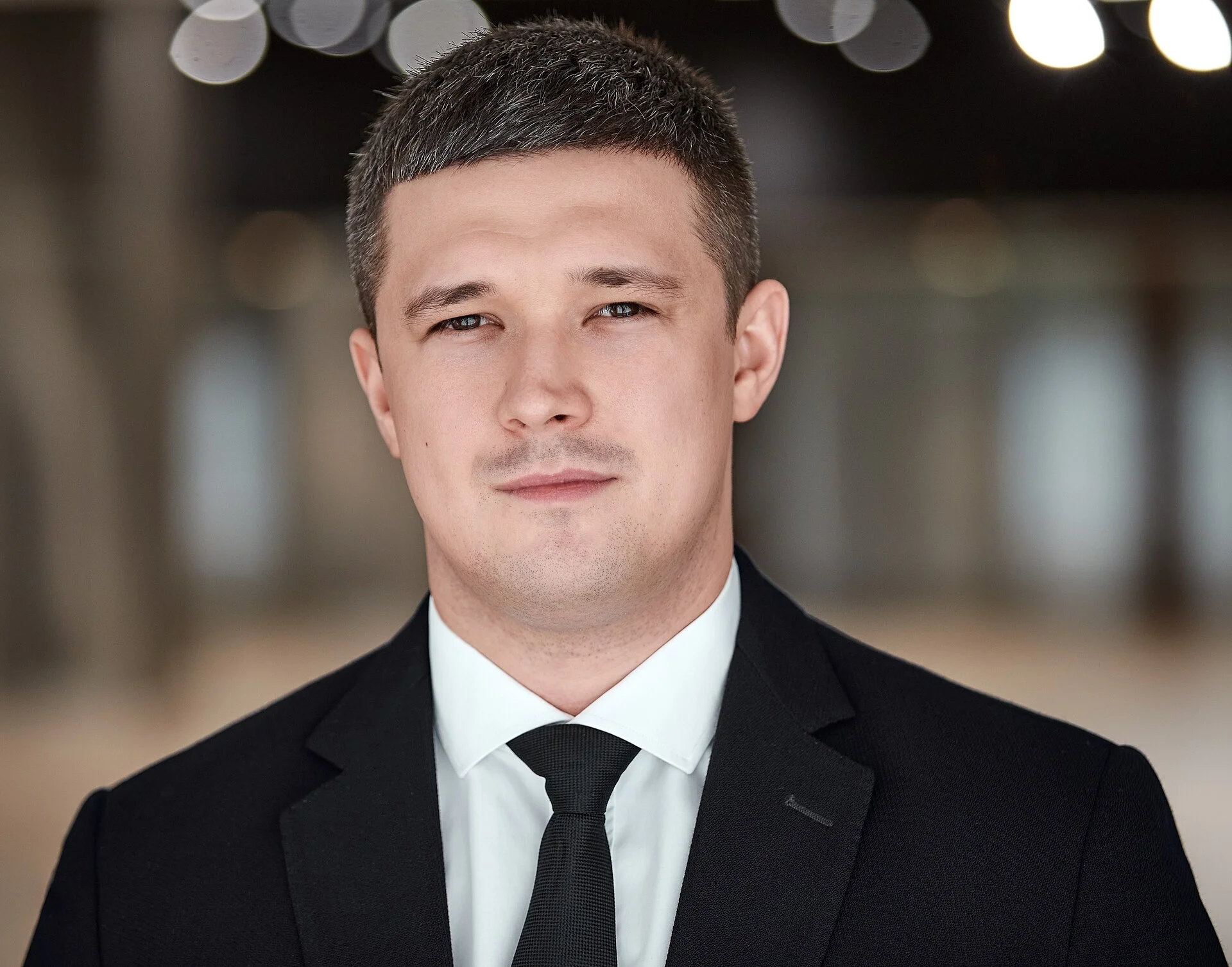
“Democracy cannot be held hostage by Russia,” Fedorov said. “We must find a legal, safe and realistic mechanism that will allow Ukraine to renew its full democratic process even in the conditions of a long war.”
Fedorov did not announce a presidential bid or set a timetable for an election. But his intervention was immediately seen as a significant shift in Ukrainian politics, where major political figures have largely supported the suspension of nationwide voting under martial law.
Ukraine’s laws currently prohibit elections while martial law is in effect. The country has remained under martial law since Russia launched its full-scale invasion in February 2022.
The challenge is both constitutional and practical. Millions of Ukrainians live abroad, large numbers of citizens serve in the military, some territories remain occupied by Russia and communities near the front line continue to face missile, drone and artillery attacks. Those conditions make organizing a national vote exceptionally difficult.
Fedorov’s call came hours after Zelenskyy formally nominated acting Defense Minister Yevhen Khmara to permanently replace him, a move that appeared to close the door on Fedorov’s return to the government.
A challenge to wartime political consensus
Since Russia’s full-scale invasion, Ukraine’s political leadership has largely maintained a public consensus that national elections should be postponed until conditions permit a safe and credible vote.
The country was scheduled to hold a presidential election in 2024, but it was not conducted because martial law prevents elections during wartime. Parliamentary elections, also due during the war period, have likewise been postponed.
Zelenskyy has said in the past that he is open to elections once security and legal conditions allow. But his government has maintained that holding a nationwide vote under invasion would be difficult to organize fairly and safely.
Fedorov’s statement does not directly accuse Zelenskyy of seeking to remain in power. But it challenges the underlying assumption that war itself makes elections impossible.
“We are fighting precisely to remain a free European state,” Fedorov said in his address. “We should not let Putin decide when Ukrainians can choose their government.”
The remarks amount to the first major public demand by a prominent Ukrainian political figure for an active plan to resume national voting during the war.
Fedorov also said Ukraine was facing a “systemic crisis of governance,” citing corruption and resistance to change as problems that could weaken the country’s war effort.
The statement is politically sensitive because Ukraine depends on foreign military, financial and diplomatic support. Zelenskyy has made anti-corruption reforms and institutional credibility central to Kyiv’s argument that it is fighting not only for territorial survival but also for democratic values.
Fedorov’s removal from the Defense Ministry
Fedorov, 35, was dismissed from the Defense Ministry in July after serving in the post for about six months. He had been a longtime ally of Zelenskyy before his removal.
Reports have said Zelenskyy cited an unresolvable conflict between Fedorov and the commander in chief of Ukraine’s armed forces, Gen. Oleksandr Syrskyi, as the reason for the dismissal.
The firing triggered protests in several Ukrainian cities, reflecting Fedorov’s popularity among some segments of the public. He had been associated with efforts to modernize the government and defense institutions, and his removal was interpreted by supporters as a setback for reform-minded leadership.
Fedorov’s call for elections followed Zelenskyy’s decision to nominate Khmara, the acting defense minister and a career intelligence officer, to take the position permanently.
The timing is notable. By making the appointment, Zelenskyy signaled that Fedorov would not return to the ministry. Fedorov’s subsequent appeal for wartime elections moved the dispute from an internal personnel disagreement into a broader debate over democracy, accountability and political legitimacy during war.
Fedorov has not said that he will run for president if elections are held. In earlier comments, he said he would return to government only as defense minister, according to CBS News.
However, some polls suggest that Fedorov could be a competitive candidate if a presidential race were conducted. He is younger than most of Ukraine’s senior political figures and has built a reputation around digital modernization, defense reform and a more technocratic style of public administration.
Legal barriers to a wartime vote
Ukraine’s legal framework poses the first major obstacle to Fedorov’s proposal.
Under Ukraine’s constitution and laws governing martial law, national elections cannot be held while the country is under martial law. The restriction is intended to prevent voting from taking place when large parts of the population may be displaced, occupied, mobilized, or unable to participate safely.
Changing that framework would require legal action by parliament and potentially constitutional interpretation or amendment. Any such process would likely be politically contentious and would need broad support to be considered legitimate.
Even if the law changed, logistical problems would be formidable.
Millions of Ukrainians have fled the country since Russia’s invasion and now live across Europe and elsewhere. A national election would need to provide secure and accessible voting for those citizens while preventing fraud, coercion or manipulation.
Ukraine would also need a plan for members of the armed forces. Hundreds of thousands of soldiers are serving in active combat zones, stationed away from their home districts or performing duties that cannot be paused for voting.
Then there are residents of Russian-occupied territories. Any election excluding them would raise questions about representation. Any attempt to organize voting in those areas would be impossible without a major change in military control and security conditions.
Communities near the front line face a different problem: physical safety. Polling stations could become targets for Russian attacks. Election workers, observers and voters could be exposed to danger, while communications disruptions might affect registration, ballot distribution and vote counting.
Fedorov acknowledged the difficulty. He did not call for an immediate election or provide a detailed technical blueprint. Instead, he argued for a process to develop a lawful and secure mechanism that would allow Ukraine to restore democratic competition during a prolonged conflict.
The democratic argument
Fedorov’s core argument is that democracy should not be indefinitely suspended because of a war initiated by Russia.
That position has emotional force in Ukraine, where political identity has become closely tied to resistance against Russian aggression and defense of European democratic values. Ukraine’s leaders routinely frame the war as a struggle for national sovereignty and the right of Ukrainians to choose their own future.
Fedorov’s argument turns that language inward. If Ukraine is fighting to remain a democracy, he contends, the country must find a way to preserve meaningful electoral accountability even in wartime.
Supporters of his position may argue that long periods without elections can weaken public trust, limit competition, reduce scrutiny of officials and make corruption harder to challenge. They may also say that a credible wartime election would demonstrate Ukraine’s democratic resilience to allies and adversaries alike.
Critics would counter that a flawed election could do more harm than a delayed one. If millions of displaced citizens, soldiers and people in occupied territory cannot vote equally, the result could be challenged as unrepresentative. A campaign conducted under air raids and security restrictions could favor incumbents, limit opposition activity and create opportunities for Russian disinformation.
The debate is therefore not only about whether Ukraine should hold an election. It is about what kind of election would be sufficiently free, fair, secure and inclusive to strengthen, rather than undermine, democratic legitimacy.
Zelenskyy’s position and political pressures
Zelenskyy has not publicly responded to Fedorov’s video address.
The president faces competing pressures. He must maintain national unity during a war, preserve the confidence of foreign partners, manage a large military operation, and respond to public frustration over corruption, mobilization, economic hardship, and the pace of reform.
The absence of elections has allowed Zelenskyy’s government to focus on the war effort without the disruption of national campaigning. But it has also created a political vulnerability. Russia and some foreign critics have used the suspension of elections to question Zelenskyy’s legitimacy, despite the legal basis for the postponement under Ukrainian martial law.
Ukraine’s government rejects those claims, arguing that the constitution and security situation make a wartime election impossible. The country’s allies have generally accepted that position, while emphasizing the importance of democratic institutions, media freedom, anti-corruption measures, and rule of law.
Fedorov’s intervention could make the issue harder to avoid. It gives domestic political weight to a question that had largely been discussed among analysts, activists, and foreign observers.
His message may also reflect broader public unease about governance. Ukraine has made progress in anti-corruption reforms, but corruption scandals and institutional disputes remain a source of public concern, particularly when they involve military procurement or reconstruction spending.
What comes next
Fedorov’s call does not create an election. The government, parliament, and legal institutions would all need to act before a nationwide vote could be scheduled.
But the statement has changed political conversation. It has introduced a public argument that Ukraine should begin planning for democratic renewal even if the war continues for years.
The immediate response from Zelenskyy’s administration will be closely watched. The president could reject the proposal as legally and operationally unrealistic, signal openness to a future process or seek to avoid a direct confrontation while focusing on the war.
Parliament may also face pressure to discuss possible mechanisms, including absentee voting for soldiers, overseas voting for refugees, secure digital voting, extended voting periods, or a phased approach tied to changing security conditions.
All options are fraught with danger. Given Russia’s history of cyber operations against Ukraine, there are cybersecurity worries about digital voting. Voting abroad would require extensive coordination with host countries. Special arrangements for soldiers would need to protect secrecy and access without disrupting military operations.
Fedorov’s address did not solve those problems. It placed them at the center of Ukraine’s political agenda.
For Zelenskyy, the challenge is no longer only managing a war against Russia. It is managing the democratic expectations of a population that is fighting for freedom while living under the extraordinary restrictions of martial law.