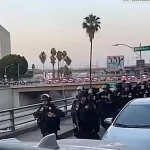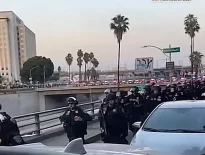
In early June 2025, the United States had an explosion of public demonstrations as protests erupted against President Donald Trump’s immigration regime and enforcement actions in cities across the U.S.
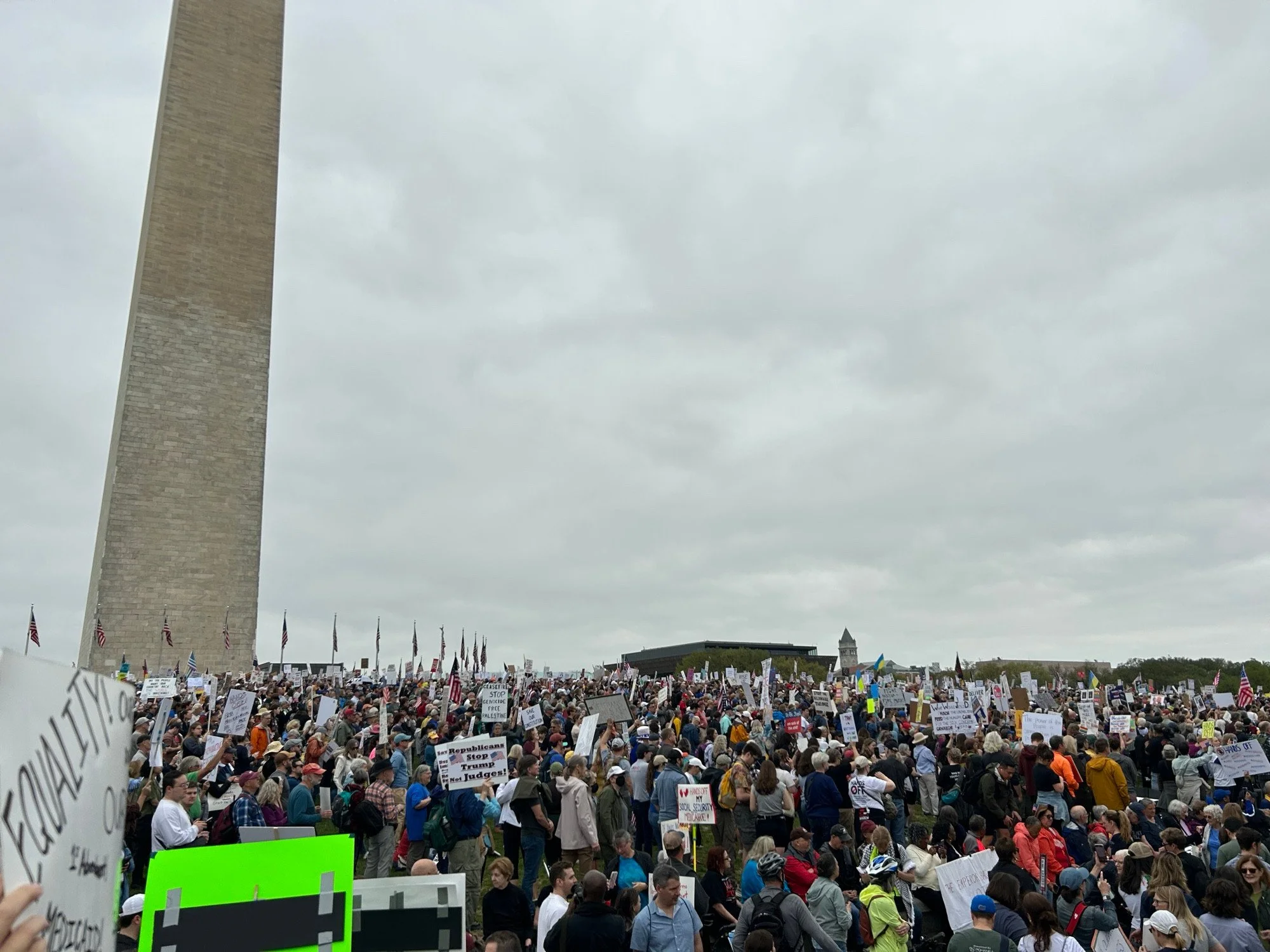
The protests were fueled by anger over the dizzying pace of ICE raids and the presence of federal troops in Los Angeles.
The protests have grown from a local community response to a national outrage, uniting groups of diverse communities into a movement demanding justice, dignity, and immigrant rights.
What began as a spark in Los Angeles ignited a national movement.
The protests began in Los Angeles on June 6 after a series of high-profile Immigration and Customs Enforcement (ICE) raids occurred at targeted businesses and neighborhoods with high numbers of immigrants.
The ICE raids were part of the Trump enforcement regime’s strategy to ramp up deportations, resulting in mass arrests and outrage from the community, activists, and local officials.
The climate escalated in tension when the federal government announced the deployment of thousands of National Guard troops and hundreds of Marines to Los Angeles, leading to the voices of condemnation from California Governor Gavin Newsom and Los Angeles Mayor Karen Bass.
Protests Spreading to Major Cities
By midweek, what began as a local response developed into a national movement. Protests were reported in New York City, Chicago, Seattle, San Francisco, Boston, Dallas, Atlanta, Washington, D.C., and other locations.
In New York a march of 1000+ people – many (but not all) calling themselves “families” – marched to demonstrate against problems, chanting “ICE out of New York!” to protest outside the ICE field office.
“There are many voices in my community that can’t be here today out of fear of what the administration is doing, so I want to be here for them,” said Jeanet, a 19-year-old protester who requested to remain anonymous for safety reasons.
In Chicago, Seattle, and Dallas, people participated in rallies outside of courthouses and federal buildings expressing their anger and solidarity with those affected by the raids.
In Boston 200+ members of a union and supporters rallied after a widely known labor leader was arrested, and in Washington, D.C. crowds marched to the Department of Justice and FBI buildings, calling for an end to aggressive immigration enforcement.
Escalation and Confrontation
While the majority of the demonstrations were peaceful, some resulted in police confrontations.
For example, Austin, Texas police declared an unlawful assembly and released tear gas and pepper rounds to disperse crowds near the J. Pick Federal Building and arresting demonstrators.
In Dallas, a protest that started peacefully went awry when a firework lit near officers and arrests ensued. Also in New York, there were more than 30 arrests including demonstrators that were inside Trump Tower.
Despite some confrontations with law enforcement, the protests still successfully communicated a clear message: we oppose mass deportation, support immigrant communities, and demand humane, just immigration policies.
Wider Political and Social Context
As these protests grow, they become points in a national discourse about immigration, federal authority, and civil liberties.
Notably, the Trump administration faced backlash for their decision to federalize the National Guard and send Marines into Los Angeles without the consent or warning to state officials. Many saw it as an abuse of executive authority and lawsuits have been filed against the government with the California Attorney General Rob Bonta seeking to stop the federal troop deployment.
At the same time, activists are organizing even bigger protests — these include the “No Kings Day” protests that are scheduled for this weekend and will likely draw thousands across the country.
These protests hope to coincide with President Trump’s military parade that he plans to have in Washington, D.C., and serve to demonstrate a strong resistance to what many consider authoritarian tactics.
The Human Element to the Protests
In between the headlines and political rhetoric are real people – immigrants, families, students, and allies – all of whom are taking to the streets as a result of fear, frustration, and hope.
While at a protest in Texas, immigrant activist Iba Khan, an organizer with the Party for Socialism and Liberation stated, “immigrants are the backbone of our society.
Once again, they speak for all of us. They are our family. They are part of the community.”
Looking Forward
While protests increase throughout the U.S., a crossroads is being reached. The movement represents deep divisions over immigration and federal power, yet reveals the persistence and solidarity of our communities demanding justice and human rights.
Be it through marches, lawsuits, or civil disobedience, many in America are manifesting their voices—and the tale is not finished.
Protests have increased throughout the U.S. as a reaction to the Trump administration’s immigration enforcement agenda, and deployment of boots on the ground in Los Angeles by federal troops.
From NY to Seattle, demonstrators are demanding justice, dignity, and the protection of immigrant rights, while recognizing the limits of federal power and the significance of developing solidarity in communities.
As the movement has grown, it signifies the continuing power of grassroots organizing groups in moving the direction the nation will take going forward.