
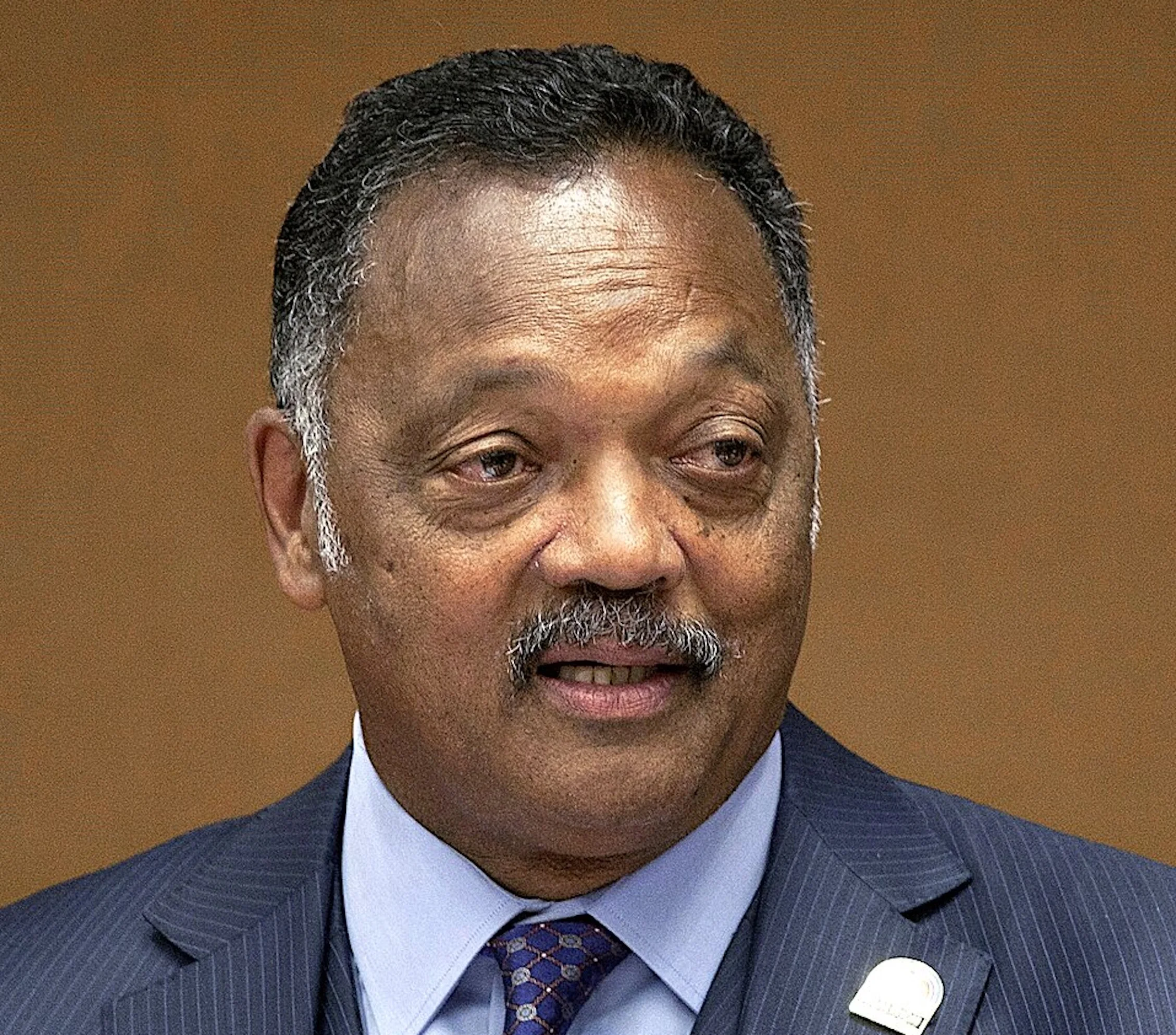
The Rev. Jesse Jackson, a towering figure of the US civil rights movement whose pulpit grew into a national and global platform for racial justice, economic equality, and political power, has died at the age of 84. His family said in a statement that he “died peacefully” on Tuesday, surrounded by relatives, after a years‑long battle with Parkinson’s disease and progressive supranuclear palsy, a rare neurodegenerative disorder that had slowly diminished his once‑thunderous voice and energy.
From segregated South to King’s inner circle
Jesse Louis Jackson Sr. was born on October 8, 1941, in Greenville, South Carolina, and grew up in the rigid racial hierarchy of the Jim Crow South. After excelling as a student‑athlete, he left the University of Illinois for North Carolina A&T, a historically Black college, where he joined sit‑ins and protests that pushed desegregation in Greensboro.
Drawn to the ministry, Jackson enrolled at Chicago Theological Seminary but soon left to work full‑time with the Southern Christian Leadership Conference (SCLC) under the Rev. Martin Luther King Jr. He joined King in Selma, Alabama, during the 1965 voting‑rights campaign and later took charge of Operation Breadbasket in Chicago, an SCLC initiative that used selective boycotts to pressure companies to hire and contract with Black workers and businesses.
By April 1968, Jackson had become part of King’s close circle. He traveled with him to Memphis, Tennessee, to support a sanitation workers’ strike, and was standing on the balcony of the Lorraine Motel when King was assassinated. A now‑famous photograph shows Jackson on the balcony with King and other aides the day before the murder; the next evening, he was among those who rushed to the fallen leader’s side.
King’s death left both a moral and organizational vacuum. Jackson’s relationship with the SCLC leadership frayed amid disputes over authority and strategy, and in 1971 he broke away to find his own group, Operation PUSH, People United to Save Humanity in Chicago.
Building Operation PUSH and the Rainbow Coalition
From a modest headquarters on Chicago’s South Side, Jackson turned Operation PUSH into a base for campaigns that mixed civil‑rights rhetoric with hard economic demands: jobs, contracts, bank loans and investment in Black neighborhoods. Weekly Saturday morning meetings became a platform for sermons that were part revival, part political rally, broadcast nationally on radio and television.
In 1984, he launched the National Rainbow Coalition, a political organization aimed at stitching together a “rainbow” of constituencies, Black, white, Latino, labor, farmers, peace activists and others, into a force inside the Democratic Party. The Rainbow Coalition focused on voter registration, representation, and progressive policy goals, from sanctions against apartheid South Africa to divestment from companies doing business there.
The two groups eventually merged into the Rainbow PUSH Coalition in 1996, a hybrid civil‑rights and advocacy organization Jackson led from Chicago for decades. Through it he pressed corporate America on hiring and boardroom diversity, organized boycotts against firms accused of discrimination and fought for access to credit for Black families and small businesses.
Trailblazing runs for the White House
Jackson moved from movement politics to electoral politics in the 1980s, mounting two Democratic presidential campaigns that forced his party to grapple with Black aspirations for national power.
In 1984, running on a platform of economic justice, anti‑apartheid sanctions, and a more dovish foreign policy, he won more than 3 million votes and a string of primary victories and strong finishes, becoming the first Black candidate to be a serious contender for a major‑party nomination. Four years later, his 1988 campaign performed even better, capturing around 7 million votes, 11 contests and nearly a third of the delegates to the Democratic convention.
Those campaigns did not deliver the nomination, but they rewrote expectations: Jackson helped normalize the idea of a Black candidate competing nationwide, laid groundwork for later figures including Barack Obama, and won concessions from the Democratic Party on representation and rules.
His soaring convention speeches, denouncing “greed, racism and war” and urging people to “keep hope alive” became part of the canon of modern US political oratory. At the same time, he faced criticism for controversial remarks, sharp rhetoric on Israel and internal tensions within his own organizations. Jackson typically dismissed his detractors by describing himself as a “tree‑shaker and a jam‑breaker,” someone whose role was to unsettle the status quo.
A global voice, and back‑channel diplomat
Jackson’s profile extended well beyond US borders. Leveraging his moral authority and fame, he took on informal diplomatic missions that produced concrete results, sometimes ahead of official US efforts.
In early 1984, while running for president, he traveled to Syria and negotiated the release of a captured US Navy pilot, Lt. Robert Goodman, who had been shot down over Lebanon, a breakthrough that regular diplomacy had failed to achieve. He later helped secure the release of political prisoners in Cuba and played a role in persuading Iraqi President Saddam Hussein to free Western hostages held before the Gulf War.
Those interventions earned him both praise and suspicion: admirers saw an independent humanitarian using his credibility to save lives, while critics accused him of freelancing foreign policy. Yet they confirmed his status as a leading African American voice on the global stage, invited into palaces and presidential offices from Havana to Khartoum.
Personal struggles and late‑life activism
Jackson’s public life was not without controversy. In 2001, he acknowledged an extramarital affair that resulted in the birth of a daughter, apologizing in a statement that briefly sidelined him from public view. The revelation dented his moral standing for some followers, even as his organizations and broader activism continued.
His health also steadily deteriorated. In 2017, Jackson disclosed that he had been diagnosed with Parkinson’s disease, a degenerative disorder that affects movement and speech. In 2024, the Rainbow PUSH Coalition said he was also suffering from progressive supranuclear palsy (PSP), a rare neurological condition that can resemble Parkinson’s but tends to progress more rapidly.
In 2021, he and his wife, Jacqueline, were hospitalized with COVID‑19 in Chicago and spent weeks in rehabilitation before returning home. Despite frailty that left him in a wheelchair and rasping, uneven speech, Jackson continued to appear at protests against police violence and at voting‑rights demonstrations; he was arrested twice in 2021 while protesting the US Senate filibuster rule.
He formally stepped down as head of the Rainbow PUSH Coalition in 2023, handing day‑to‑day leadership to new executives but remaining a symbolic presence at key events. In August 2024, he received a prolonged standing ovation at the Democratic National Convention in Chicago as delegates nominated Kamala Harris, the first Black woman to lead a major‑party ticket. Unable to speak, he smiled and waved from his wheelchair, a poignant coda to a career that had helped make that moment possible.
Tributes and an unfinished struggle
News of Jackson’s death prompted tributes from across the political spectrum and around the world. Family members described him as a “servant leader, not only to our family, but to the oppressed, the voiceless, and the overlooked around the world.” They said public memorials would be held in Chicago, the city where he built his organization and from which he launched his presidential bids.
Obituaries in US and international media hailed him as “one of the nation’s most powerful voices for Black Americans,” “a leading African American voice on the global stage” and “a pastor and civil rights icon” whose influence stretched from church pulpits to presidential palaces.
Jackson is survived by his wife, Jacqueline, and their six children. For many younger activists, he leaves a more diffuse inheritance: the idea that coalitions across race, class and geography are not only possible but necessary; that elections are as much a civil‑rights battleground as streets and lunch counters; and that, in his words, people on the margins can form a “rainbow” powerful enough to force its way to the center.
In the final years of his life, as his body slowed and his voice faded, Jesse Jackson’s refrain, “keep hope alive”, migrated fully from chant to credo, invoked by others as they took up causes, he had carried for half a century. His passing at 84 closes a chapter that began in the heat of the Southern freedom struggle, but the questions he spent that lifetime asking about who gets heard, who gets paid, and who gets to govern, remain very much alive.