
The U.S. Supreme Court has struck down President Donald Trump’s executive order seeking to restrict birthright citizenship, in a landmark decision that reaffirms the long‑standing understanding that almost everyone born on American soil is a citizen under the 14th Amendment. By a majority that crossed ideological lines, the court ruled that children born in the United States to undocumented immigrants or parents on temporary visas are “subject to the jurisdiction” of the country and therefore citizens at birth, closing off one of Trump’s most far‑reaching attempts to reshape immigration law by presidential fiat.
What the executive order tried to do
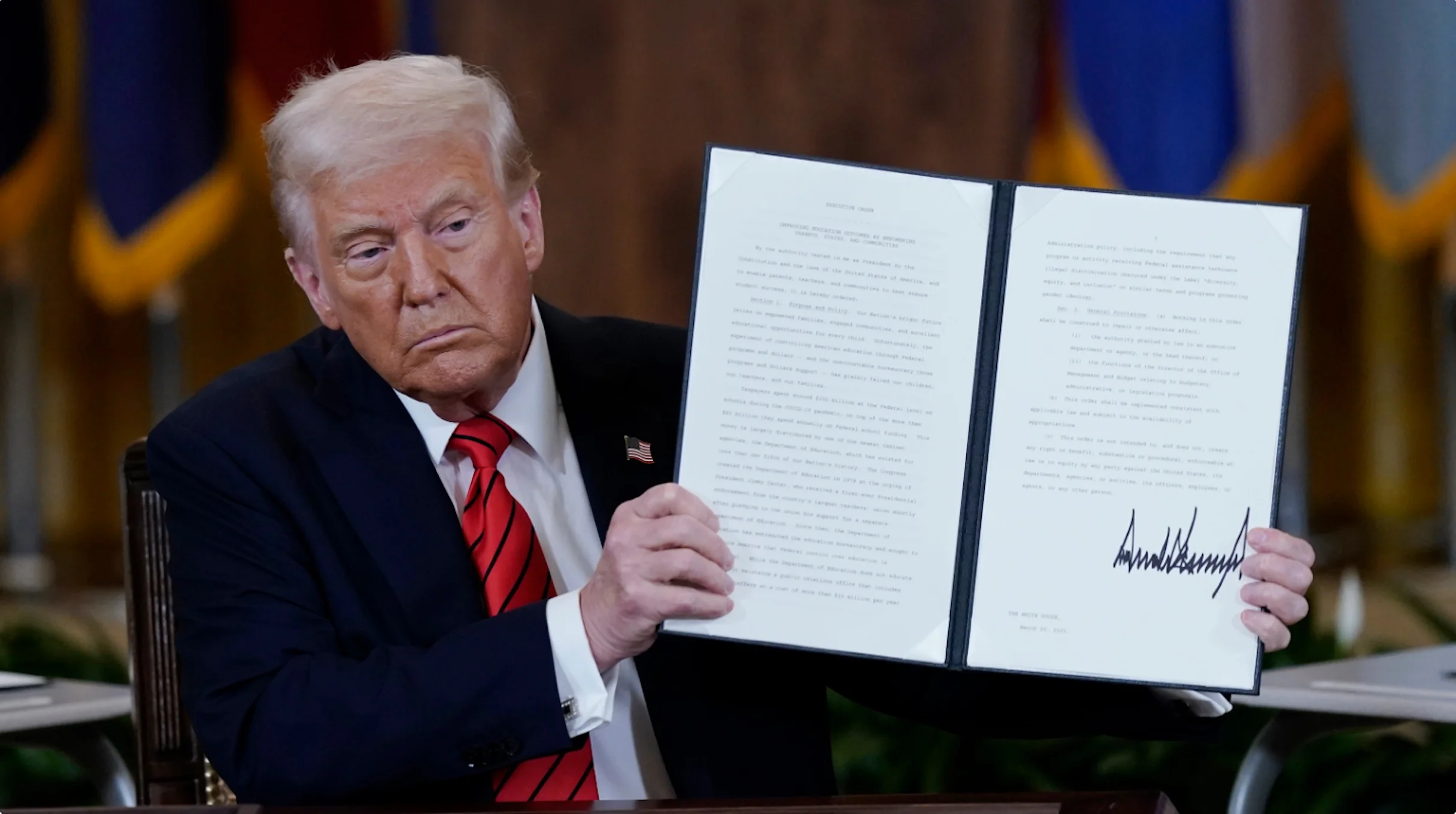
The executive order at the center of the case was signed by President Trump on his first day back in office, part of a broader pledge to crack down on irregular migration and re‑define who qualifies as American by birth. The directive stated that, 30 days after its effective date, children born in the United States would no longer be entitled to citizenship at birth if their parents were in the country illegally or present only temporarily, for example on tourism or student visas.
In practical terms, the order aimed to limit birthright citizenship, long interpreted to cover almost all children born on U.S. soil, to a narrower group whose parents already had legal permanent status or citizenship themselves. Immigration advocacy groups, alongside a coalition of states, immediately sued, arguing that the order violated both the plain text of the 14th Amendment and federal statutes codifying birthright citizenship.
Lower federal courts in New Hampshire and elsewhere blocked the order before it could take effect, issuing nationwide injunctions and repeatedly calling the policy “patently unconstitutional.” In a separate 2025 decision known as Trump v. CASA, the Supreme Court curtailed the ability of district judges to issue broad injunctions against federal policies, a partial victory for the administration that allowed the order to move closer to implementation while leaving its ultimate legality unresolved.
This week’s ruling addresses that unresolved question directly.
The ruling: a cross‑ideological majority reasserts the 14th Amendment
In the latest case, identified by outlets as Trump v. Barbara or as a follow‑on to the CASA litigation, the Supreme Court ruled that the executive order was unlawful, striking it down and preserving the existing framework of birthright citizenship.
Euronews reports that a majority of five justices, Chief Justice John Roberts and Justices Sonia Sotomayor, Elena Kagan, Amy Coney Barrett, and Ketanji Brown Jackson, agreed that Trump’s order violated the 14th Amendment. Justice Brett Kavanaugh concurred in the judgment but wrote separately, saying he did not agree that the order violated the Constitution but did find that it contravened federal statute. Justices Clarence Thomas, Neil Gorsuch and Samuel Alito filed dissenting opinions, arguing that the order fell within the scope of executive authority or should have been upheld on different grounds.
Roberts, writing for the majority, directly addressed the Citizenship Clause, which states that “all persons born or naturalized in the United States, and subject to the jurisdiction thereof, are citizens of the United States.” He concluded: “Children born in the United States to parents unlawfully or temporarily present are ‘subject to the jurisdiction’ of the United States and are citizens at birth under the Fourteenth Amendment’s Citizenship Clause.”
Coverage from the South China Morning Post and LiveMint notes that the court reaffirmed the long‑standing interpretation that nearly everyone born on U.S. soil is a citizen, with only limited exceptions, such as children of foreign diplomats or members of a foreign occupying force. In doing so, the justices anchored their reasoning in decades of precedent dating back to the 1898 United States v. Wong Kim Ark decision, which recognized the citizenship of a man born in San Francisco to Chinese parents ineligible for naturalization under then‑existing law.
The ruling not only blocks Trump’s order from taking effect but also sends a clear signal: altering the core meaning of birthright citizenship is beyond the reach of a single president’s pen.
Executive power and nationwide injunctions: context from earlier cases
The path to this decision runs through an earlier Supreme Court fight over how far lower courts can go in halting presidential policies.
In Trump v. CASA, decided in 2025, the court narrowed the use of nationwide injunctions, holding in a 6‑3 ideological split that district judges generally may not block federal policies for people who are not parties to a particular case, unless they convert suits into class actions. Justice Amy Coney Barrett wrote for the majority that “federal courts do not exercise general oversight of the Executive Branch; they resolve cases and controversies consistent with the authority Congress has given them,” warning that when the executive acts unlawfully, courts should not “exceed their power, too.”
At the time, that ruling was described by Politico and the Texas Tribune as a “partial victory” for Trump, curtailing what the administration saw as an “endless barrage” of injunctions against its immigration agenda. Attorney General Pam Bondi argued that judges would no longer be able to halt Trump’s policies nationwide and predicted that the court would address the underlying question of birthright citizenship in a future term.
That prediction has now been borne out. This week’s ruling effectively completes the legal cycle: first reducing the use of nationwide blocks, then issuing a definitive constitutional judgment on the policy itself. For legal observers, it illustrates how the court is willing both to restrain judicial remedies and to police the outer limits of executive authority.
Legal and constitutional implications
At the legal level, the decision reinforces several key principles.
First, it solidifies the dominant reading of the 14th Amendment’s Citizenship Clause: that “subject to the jurisdiction” covers virtually all children born within U.S. territory, regardless of their parents’ immigration status, save for narrow diplomatic and wartime exceptions. That interpretation has been widely accepted in courts and practice for more than a century, and the ruling makes clear that it remains binding.
Second, it underscores that executive orders cannot unilaterally rewrite constitutional rights or long‑standing statutory frameworks. Kavanaugh’s concurrence, in particular, suggests that even apart from the 14th Amendment, the order conflicted with federal laws that embed birthright citizenship in immigration processing, passports and Social Security records.
Third, the decision clarifies the relationship between the 2025 injunction ruling and substantive constitutional review. While Trump v. CASA limited the scope of injunctions, it did not bless the underlying policy; this week’s case shows that, once fully briefed, and argued, the justices are prepared to strike down executive actions that overstep constitutional boundaries.
For future presidents, the ruling serves as a warning: aggressive use of executive orders in sensitive areas like citizenship may invite not only political backlash but also durable judicial limits.
Policy and human impact
For families and communities, the ruling has immediate and concrete effects.
Euronews and LiveMint note that the decision “preserves automatic US citizenship for children born to undocumented immigrants and temporary visa holders,” preventing what would have been a profound status shift for hundreds of thousands of U.S.‑born children each year. Had the order taken effect, those children could have found themselves stateless or dependent on complex, uncertain pathways to legal status, complicating access to passports, education, and employment.
Immigrant advocacy groups and civil‑rights organizations, which had challenged the order in federal courts, welcomed the ruling as a defense of a “defining principle of what it means to be born an American.” Some conservative commentators, by contrast, lamented the decision as a missed opportunity to restrict what they see as incentives for irregular migration, such as the prospect of having U.S.‑citizen children while in the country unlawfully.
In policy terms, the ruling shifts the focus back to Congress. Any attempt to narrow birthright citizenship would now require statutory change, and likely a constitutional amendment, rather than executive action, a significantly higher bar in a polarized political environment.
The ruling gives corporations, schools, and local governments clarity: children born in the United States will continue to be considered as citizens under the law, making planning easier in areas like employment predictions and education spending.
A defining moment in the immigration debate
The Supreme Court’s decision comes at a time when immigration remains one of the central issues in U.S. politics, and Donald Trump, now in his second term, has made enforcement and restriction a signature theme. In that context, striking down his birthright citizenship order is more than a technical legal move; it is a statement about the limits of unilateral power in redefining who belongs.
Analytically, the ruling preserves a core feature of the American story: that nationality is tied to place of birth as much as to ancestry or paperwork, a principle that has allowed generations of children of immigrants, documented and undocumented alike, to claim full membership in the national community. It also emphasizes how firmly established constitutional principles can influence policy even during times of strong political pressure.
As the dust settles, immigration enforcement will continue, debates about irregular migration and asylum will persist, and new legal battles will arise. But on the question of birthright citizenship itself, the court has now drawn a bright line: an infant’s claim to American citizenship, grounded in the 14th Amendment, is not something a president can take away with the stroke of a pen.