Brazilian playmaker Oscar has announced his retirement from football at 34 after being diagnosed with a heart condition that caused his heart to stop for more than two minutes during a pre‑season test with São Paulo. The former Chelsea and Brazil midfielder, who starred at the 2014 World Cup and won league titles in England and China, said he is “finishing my career here at São Paulo” and will now “continue my life as a fan” following doctors’ advice that he should no longer play professionally.
“My heart stopped for about two and a half minutes”
Oscar’s decision follows a life‑threatening incident during pre‑season fitness testing at São Paulo’s Barra Funda training center in November. While undergoing an exercise stress test on a stationary bike, he suddenly lost consciousness; club staff later said he was unconscious for around two minutes as medical staff performed CPR.
In a video statement released by São Paulo and shared on social media, Oscar described the moment in stark terms. “My heart stopped for about two and a half minutes; it was a shock,” he said. “I took the test, ended up fainting, my blood pressure dropped, and my heart stopped. Then they performed CPR for more than two minutes. I only remember fainting, nothing else.”
Doctors diagnosed vasovagal syncope, a common cause of fainting triggered by a sudden drop in heart rate and blood pressure, but São Paulo also reported “cardiac changes” that required hospitalization and surgery. Oscar spent five days under observation at São Paulo’s Albert Einstein Hospital, including time in intensive care, before being discharged with a clear message: continuing at the highest level would carry unacceptable risk.
Contract terminated, dream curtailed at boyhood club
The 34‑year‑old had returned to São Paulo, the club where he came through the youth ranks, on a free transfer in late 2024 after seven lucrative years with Shanghai Port in China. He signed a three‑year deal running to December 2027 and spoke at the time about “finishing my career at São Paulo” and repaying the fans who had backed him since his teenage days.
Instead, he managed just 21 competitive appearances in this latest spell, scoring two goals and providing five assists before the cardiac incident cut his season short. ESPN and other outlets say Oscar agreed to waive part of the remaining salary and accept a settlement of around €1.7 million to terminate the contract by mutual consent.
“It’s difficult, I wanted to do more for São Paulo,” he said. “I think I had the footballing ability and the age, I could have endured more. But unfortunately, this happened and now I’m going to retire. I’ll continue my life as a fan now.”
In a statement, the club thanked him for “almost 18 years of professional football at the highest level” and said they “respect his decision to prioritize his health and family.”
From Internacional to Chelsea and Shanghai: a career across continents
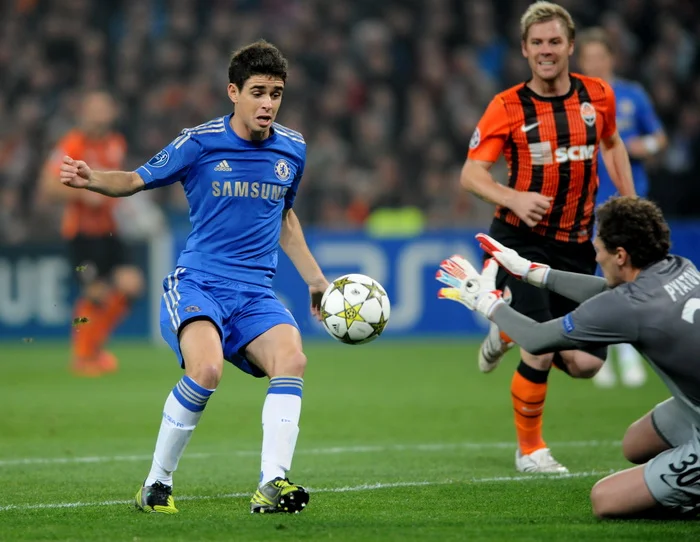
Oscar dos Santos Emboaba Júnior emerged at São Paulo’s academy before making his professional breakthrough with Internacional, helping the Porto Alegre club win the 2011 Recopa Sudamericana. His performances earned him a move to Chelsea in 2012, where he quickly established himself as a creative, hard‑working No. 10 under managers including Roberto Di Matteo and José Mourinho.
During five‑and‑a‑half seasons at Stamford Bridge, Oscar made over 200 appearances and won two Premier League titles (2014–15, 2016–17), the 2012–13 Europa League and the 2014–15 League Cup. He scored 38 goals for the Blues in all competitions, including a thunderous strike against Juventus in the Champions League that became one of his signature moments.
In 2017, still in his mid‑20s, he shocked many in Europe by swapping Chelsea for Shanghai SIPG (now Shanghai Port) in what was then one of the world’s richest transfers, reportedly worth over €60 million. In China he became the face of the Chinese Super League’s star‑signing era, winning three league titles and compiling an impressive tally of 76 goals and 110 assists across all competitions.
Internationally, Oscar earned 48 caps for Brazil, scoring 12 goals. He starred at the 2014 World Cup on home soil, scoring the Seleção’s first and last goals of the tournament, including a late consolation in the infamous 7–1 semi‑final defeat to Germany. He also played in the 2012 Olympic final, where Brazil lost to Mexico at Wembley.
Health scares in modern football: Oscar joins a worrying list
Oscar’s forced retirement adds his name to a growing list of players whose careers have been cut short by cardiac issues. While vasovagal syncope is relatively common and often benign, Reuters and other outlets emphasize that in his case it came with “cardiac changes” serious enough to require hospitalization, surgery, and ongoing monitoring, and to convince club doctors that elite competition was no longer safe.
Recent years have seen Christian Eriksen suffer a cardiac arrest on the pitch at Euro 2020, Sergio Agüero retire after arrhythmia symptoms at Barcelona, and Daley Blind play on with an implanted defibrillator, underscoring both the advances and limits of modern sports cardiology. In Oscar’s case, the decisive moment came off camera, on a training‑ground bike rather than in a televised match, a reminder that underlying vulnerabilities can surface in routine tests as well as in high‑intensity games.
Brazilian outlets note that Oscar’s wife and family strongly urged him to walk away after the November scare, prioritizing his long‑term health over the chance to extend his playing days. “I want to move on with my life as a fan,” he said, thanking São Paulo supporters “for the constant affection, especially in this difficult moment I am facing.”
Legacy of a gifted but sometimes overlooked No. 10
News of Oscar’s retirement prompted a wave of tributes from former clubs and teammates. Chelsea fans shared clips of his outside‑of‑the‑box curlers and tireless pressing; Shanghai supporters posted highlight reels of the through‑balls that helped transform their club into a domestic powerhouse.
Many analysts argue that Oscar’s decision to leave Europe at 25 for China limited his legacy in the eyes of global audiences, even as it secured his family’s financial future and gave him a starring role in a new league. But his technical quality, subtle first touch, vision between the lines, work rate without the ball, made him a key figure in the early 2010s Chelsea side and a mainstay of Brazil’s national team at a time when the No. 10 shirt still carried enormous weight.
“I am ending my career here at São Paulo, a career that has taken me to many places, practically all over the world,” he reflected in his farewell message. “I want to thank everyone for the constant affection.”
His story now joins that of other players whose final whistle was blown by doctors rather than by age or form, a reminder that behind the trophies and transfer fees are human bodies and fragile hearts.