
Google is turning wireless earbuds into live interpreters, using its Gemini AI models to power real‑time translations that flow straight through your headphones. The feature, first showcased on Pixel devices, is now being woven more deeply into Android’s audio stack, promising smoother conversations between people who don’t share a language and signaling how AI is reshaping everyday hardware.
How Google’s Real-Time Translation with Headphones Works
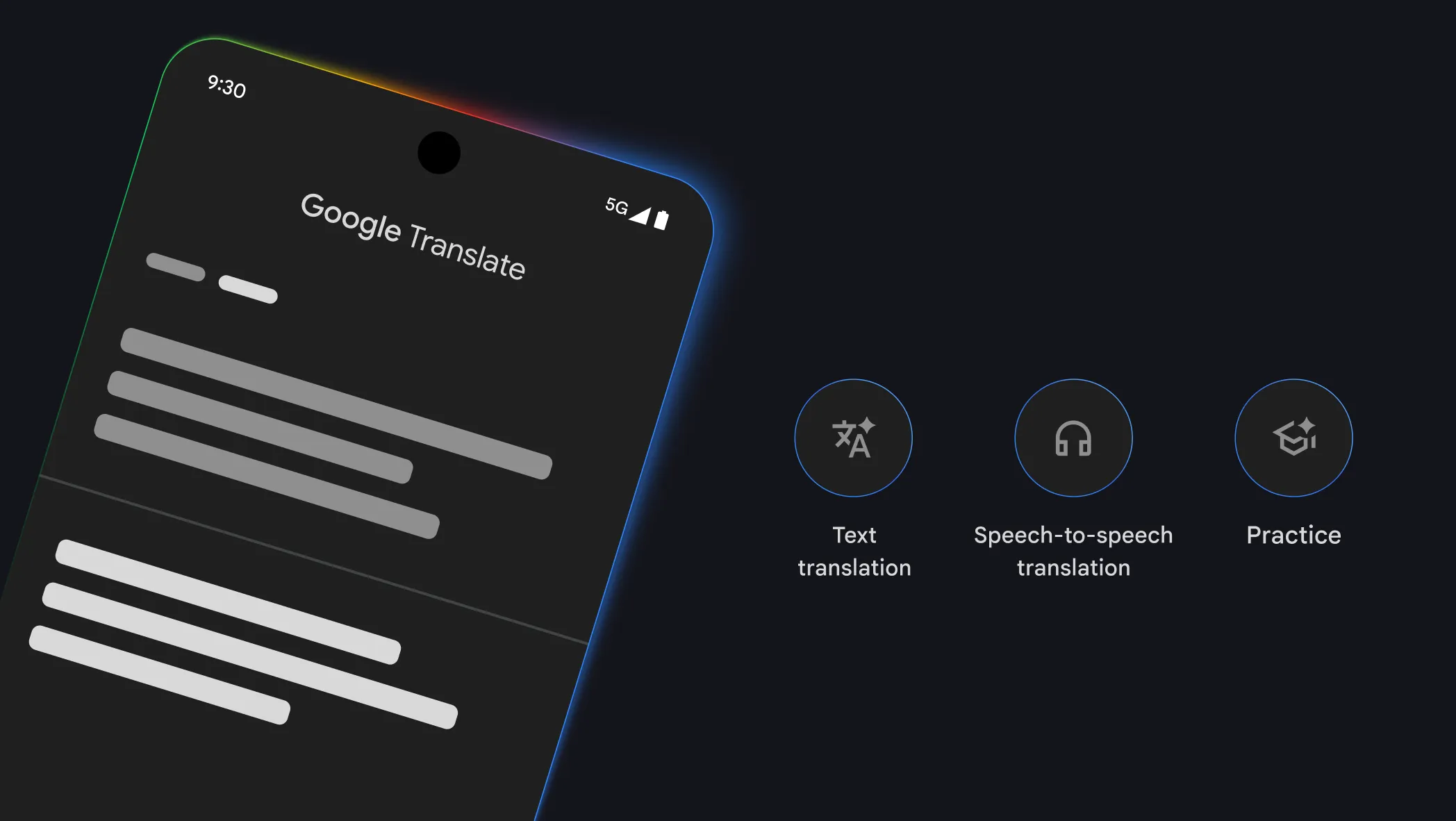
At its core, the system links three pieces: your phone’s speech recognition, Google’s Gemini language models, and a pair of supported headphones. The phone listens to speech through the device microphone, converts it to text, runs translation and interpretation through Gemini, then plays the translated speech back into your ears.
In a typical scenario, you can choose a “Conversation” mode between two languages. One person speaks, their words are transcribed and translated, and you hear the translation through your earbuds while the original speaker can read or hear a translated response on the phone. Gemini’s role is to handle more natural phrasing, context awareness and idioms, moving beyond the robotic phrasing of earlier translation tools.
Crucially, the heavy AI processing happens on the phone and in the cloud, so the earbuds do not need special hardware; they function as low‑latency speakers, while Gemini handles the linguistic heavy lifting.
Why Gemini Makes This Different from Old-School Translate
Google has offered live translation features for years, but Gemini changes both quality and flexibility.
Key improvements include:
- Better handling of messy, real‑world speech, background noise, imperfect grammar, overlapping talk, because Gemini is trained on vast, varied language data.
- More context‑aware output. Instead of literal word‑for‑word translations, Gemini can preserve tone and intent, whether the conversation is a casual chat or a business meeting.
- Faster adaptation to domain-specific language. Over time, the system can better handle slang, technical jargon, or proper names that older models frequently mangled.
From the user’s perspective, the difference shows up in fewer awkward mistranslations, smoother back‑and‑forth and less time staring at a screen instead of the person you’re speaking with.
Supported Devices and Use Cases
The feature is currently focused on modern Android phones with Gemini access and compatible headphones, such as Google’s own Pixel Buds and selected third‑party models with tight Android integration. Users initiate translation from the phone, often through the Google Translate or dedicated interpreter interface, and route audio to their earbuds.
Real‑world use cases include:
- Travelers navigating hotels, restaurants, and transport hubs without always pulling out their phones.
- Cross‑border video calls or in‑person meetings where each participant wears their own earbuds and runs a shared conversation mode.
- Classroom and workplace scenarios where a non‑native speaker follow along more easily in real time.
While not a replacement for professional interpreters in high‑stakes diplomacy or legal proceedings, it can dramatically lower the friction of everyday multilingual interactions.
Limitations, Latency and Privacy Concerns
Despite the marketing gloss, the system is not magic.
Limitations include:
- Latency: Even with optimizations, there is an inevitable lag between someone speaking and the translation reaching your ears. For fast‑paced exchanges, that delay can be jarring.
- Accuracy: Complex topics, thick accents, sarcasm, and cultural references still trip up the AI. Mistakes that are amusing in casual chat can be serious in medical or legal contexts.
- Noise: Crowded environments may reduce transcription quality, which cascades into worse translations.
Privacy is another concern. In many modes, snippets of speech are sent to Google’s servers for processing, raising questions about data retention, consent from people whose voices are captured, and how audio might be used to further train models. Google emphasizes anonymization and security, but users and regulators will likely press for clearer controls and on‑device‑only options where possible.
What It Signals for the Future of Wearable AI
Google’s headphone‑based Gemini translation is part of a broader trend: moving AI from screens into ambient devices.
Several trajectories stand out:
- Headphones as everyday AI terminals, handling not just music and calls but translation, summarization, and live coaching (from language learning to presentations).
- Seamless multi-device experiences, where the same AI assistant follows you from phone to laptop to car, using earbuds as the constant interface.
- Competition with rivals: Apple is expected to deepen its own real‑time translation and personalized audio features in future iOS and AirPods updates, turning translation into a battleground for ecosystem lock‑in.
For now, Google’s Gemini‑powered real‑time translations hint at a near future where language barriers are reduced, but not erased, and where our headphones become a key front line in the race to embed AI into daily life.