
Janeese Lewis George, Ward 4 DC Councilmember, third-generation Washingtonian, Howard University School of Law graduate, democratic socialist and daughter of a union postal worker, won the Democratic primary for mayor of Washington, D.C., on Tuesday, June 17, in what is almost certainly a decisive electoral verdict that will make her the capital’s first new mayor in 12 years and the first avowed democratic socialist to lead an American major city.
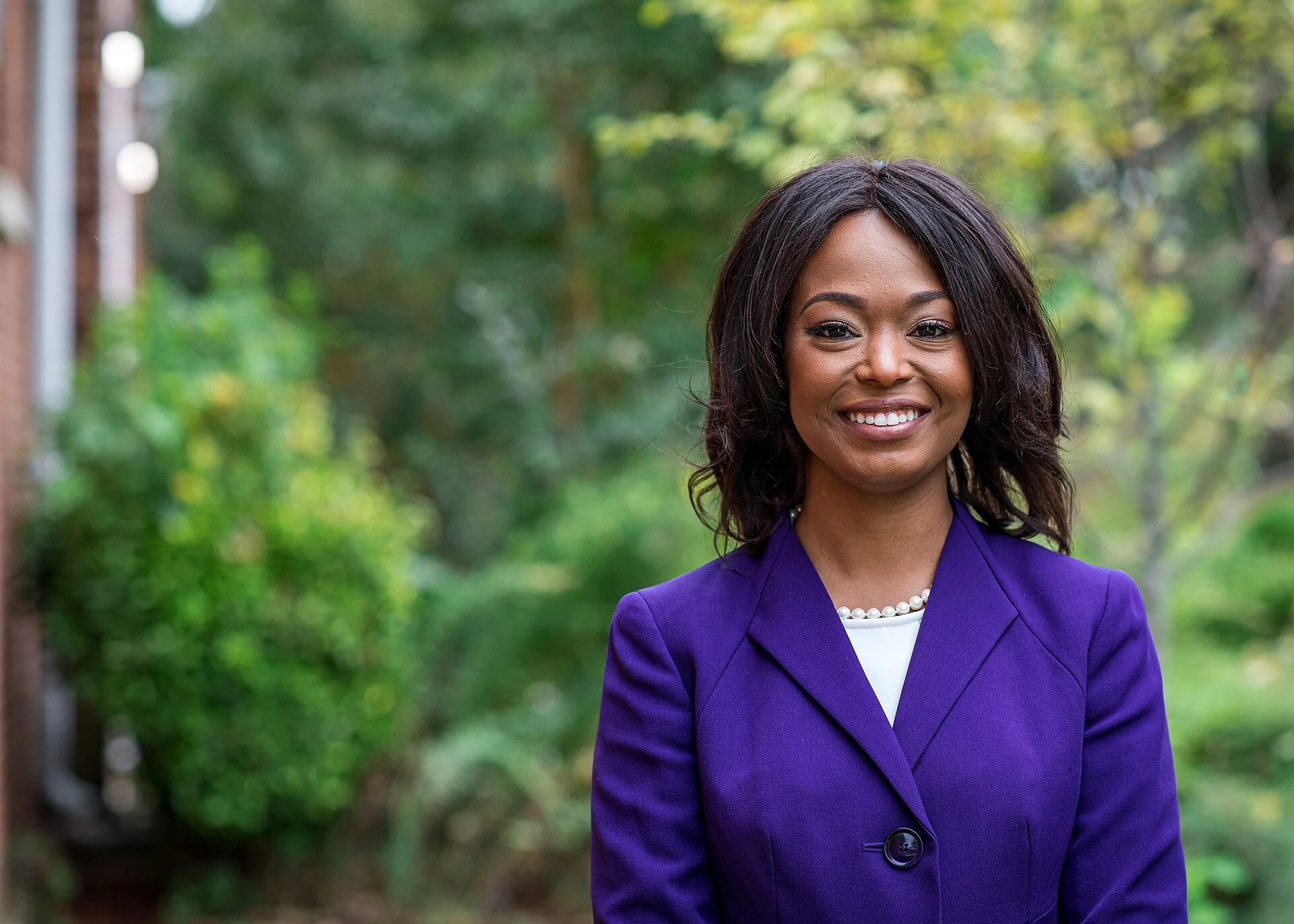
The Night a City Made History
Washington, D.C., is, by most political taxonomies, one of the bluest cities in the bluest corner of the American political map. In the 2024 presidential election, more than 92% of voters in the District cast their ballots for the Democratic candidate, a figure that makes DC’s Democratic primary not merely consequential but functionally definitive.
On the evening of Tuesday, June 17, 2026, the same night the United States and Iran signed their ceasefire memorandum of understanding and the same day Tropical Storm Arthur made landfall on the Gulf Coast, DC voters cast ballots in the city’s Democratic mayoral primary, and did something that had not been done in this particular corner of the American capital’s political history: they selected a democratic socialist as their preferred candidate for mayor.
Janeese Lewis George, the Ward 4 Councilmember who has represented the upper northwest quadrant of the city since January 2021, won the primary, defeating a field that included the more centrist and better-funded candidacy of incumbent DC Attorney General Kenyan McDuffie. The Associated Press called the race Thursday, and McDuffie conceded shortly after.
“I’m elated,” one of Lewis George’s supporters wrote on ABC News’ Facebook feed. “People may be looking at NYC and liking what they’re seeing. Maybe we’ll finally be a true democracy.” In a city as deeply Democratic as Washington, that sentiment, connecting DC’s emerging political shift to the Sanders-aligned progressive surge that has remade several American urban electorates, captured something real about what Lewis George’s win represents.
Who Is Janeese Lewis George?
The Washington Post, whose June 18 feature on Lewis George asked plainly, “How Janeese Lewis George convinced D.C. it was time for a democratic socialist”, offered a portrait of a candidate whose biography is, in almost every dimension, the story of Washington, D.C. itself: not the federal government or the think tanks or the lobbyists, but the city as a place where people are born, go to school, raise families and struggle with the same housing costs, safety concerns and institutional inadequacies as any other American urban community.
Lewis George is a third-generation Washingtonian, her grandparents settled in the District, her parents raised her in Ward 4’s Manor Park neighborhood, and she has never left. Her father was a union postal worker. She attended DC Public Schools from elementary school through high school, graduating from School Without Walls, where she was already participating in student activism and serving as a representative on the DC Board of Education and on the DC Youth Advisory Council. The YMCA named her DC’s Youth Mayor when she was still a teenager.
She left Washington only for university, attending St. John’s University in New York City on a journey that took her through Government & Politics studies, graduating cum laude with a Bachelor of Arts in 2010. She returned to Washington to attend Howard University School of Law, where she served as an editor of the Human Rights & Globalization Law Review and as a member of the Trial Advocacy Team before earning her Juris Doctorate.
Her legal career began in 2014 in Philadelphia, working for the city’s first African-American District Attorney, before she returned to Washington to join DC Attorney General Karl A. Racine’s office as an Assistant Attorney General in the Juvenile Section of the Public Safety Division. There she worked on juvenile justice reform, spearheaded the office’s “I Belong Here” initiative and served on the Human Trafficking Task Force, applying what she describes as “evidence-based practices” to some of the city’s most persistent public safety challenges.
She ran for DC Council Ward 4 in 2020 and won, taking office on January 2, 2021, at a moment when the District, like every major American city, was navigating the overlapping crises of pandemic recovery, economic inequality and a renewed public safety debate in the aftermath of the George Floyd protests.
The Council Record: What She Built in Ward 4
The four-year record Lewis George assembled as Ward 4 Councilmember, representing a ward of approximately 87,000 residents that encompasses Manor Park, Brightwood, Petworth, Takoma, and Colonial Village, formed the empirical foundation for her mayoral campaign.
The AFRO American Newspapers, one of the country’s oldest Black newspapers, documented in 2024 that Lewis George had become “best known for the work she’s done to raise the Supplemental Nutrition Assistance Program benefits throughout the District”, a legislative victory that directly increased food support for tens of thousands of DC residents at a time when inflation was consuming disproportionate shares of working-class household budgets. Her role in that legislation demonstrated both her policy orientation and her ability to move material outcomes through a council structure that does not always reward progressive ambition.
Beyond SNAP, Lewis George has served on the DC Council’s Committee on Transportation and the Environment and the Committee on Facilities, building a record on transit, climate infrastructure and city management that complements her public safety and social equity priorities. Her Ward 4 constituency services operation, which she describes as designed to “make sure government works for all of us”, has earned her a reputation for responsiveness that translates in a mayoral primary context.
“In just four short years, Councilmember Janeese Lewis George has brought a great amount of change to the Ward 4 community,” the AFRO reported in its profile. “Although she represents a small community, the impact she’s making is being felt all across the Washington, D.C. area.”
The Campaign Platform: A Mayor for All Eight Wards
Lewis George’s mayoral platform, published on janeesefordc.com, is explicitly framed around the economics of daily life in a city that has become, for many of its residents, unaffordably expensive.
“Janeese fights for working families in DC because she knows firsthand what working people in DC are up against,” the campaign site states. “Janeese will side with the people to make DC safe and affordable.”
The five pillars of her mayoral agenda are:
- Reduce red tape and rent for all small businesses — streamlining the licensing and regulatory environment that has driven many DC small businesses to close or relocate.
- Excellent schools for all — expanding equitable access to quality public education across all eight wards, with particular emphasis on the east-of-the-river communities that have historically received less school investment.
- Safe communities for all — a public safety framework that combines accountability policing with violence interruption, mental health crisis response and youth investment.
- Stand up for all DC — explicitly framed as a commitment to resist federal overreach into DC governance, defend DC statehood efforts and protect DC residents’ democratic rights under the Trump administration.
- Reliable transportation for all — investment in WMATA, the DC Metro system, bicycle infrastructure and pedestrian safety.
The platform’s consistent “for all” framing is both rhetorical and substantive — a deliberate counter to what Lewis George has described on the campaign trail as a decade of governance that prioritized development interests and wealthier wards over the working-class and lower-income communities she grew up in.
McDuffie Concedes: The Race Is Over
Kenyan McDuffie, the incumbent DC Attorney General, former Ward 5 Councilmember and the candidate most national Democrats had initially considered the probable frontrunner, conceded to Lewis George after the AP called the race Thursday.
McDuffie’s concession was brief and gracious, according to Washington Post reporting, though the competitive dynamics of the primary had been contentious: McDuffie’s campaign had more institutional endorsements and fundraising infrastructure than Lewis George’s, but Lewis George had built a coalition of organized labor, progressive community groups, tenant advocates and neighborhood-level volunteers that proved more powerful at the precinct level.
Fox 5 DC confirmed the AP call, and local DC media across ABC7, Fox 5 and 7 News reported Lewis George had addressed supporters on election night after taking an early lead, “thanking voters and calling for unity and hope.”
The Path to Mayor: November and Beyond
In a city where the Democratic primary has historically been, as the Washington Post described it Thursday, “the election of consequence,” Lewis George’s path to the mayoralty now faces no serious obstacle.
PBS NewsHour noted Friday that Lewis George is “likely to take the top spot in November’s general election, replacing moderate Muriel Bowser, who has held the position since 2015.” She is not facing a major challenger in November, according to Capital Public Radio’s reporting, making her mayoralty-in-waiting effectively confirmed pending the formality of the general election.
If the November outcome follows the trajectory of every DC Democratic primary before it, Lewis George will take office in January 2027 as the first democratic socialist to lead Washington, D.C., the first new mayor of the American capital in 12 years and, according to the Washington Post’s own framing, the mayor who convinced “D.C. it was time.”
She is a Ward 4 native, a Howard Law graduate, a union postal worker’s daughter and a community activist who has spent her life in the city she now stands to lead. Washington, D.C., on Tuesday, decided that was exactly the right preparation for the job.