
Warren Buffett’s decision to end his donations to the Bill & Melinda Gates Foundation is the most dramatic shift yet in one of modern philanthropy’s most important partnerships, driven by a mix of discomfort over Bill Gates’ ties to Jeffrey Epstein and a long‑running desire to give his children control over his fortune. The move does not reduce the scale of Buffett’s giving, but it redirects tens of billions of dollars from the world’s largest private foundation to four family‑run charities that he says better reflect how he wants his legacy managed.
What Buffett announced
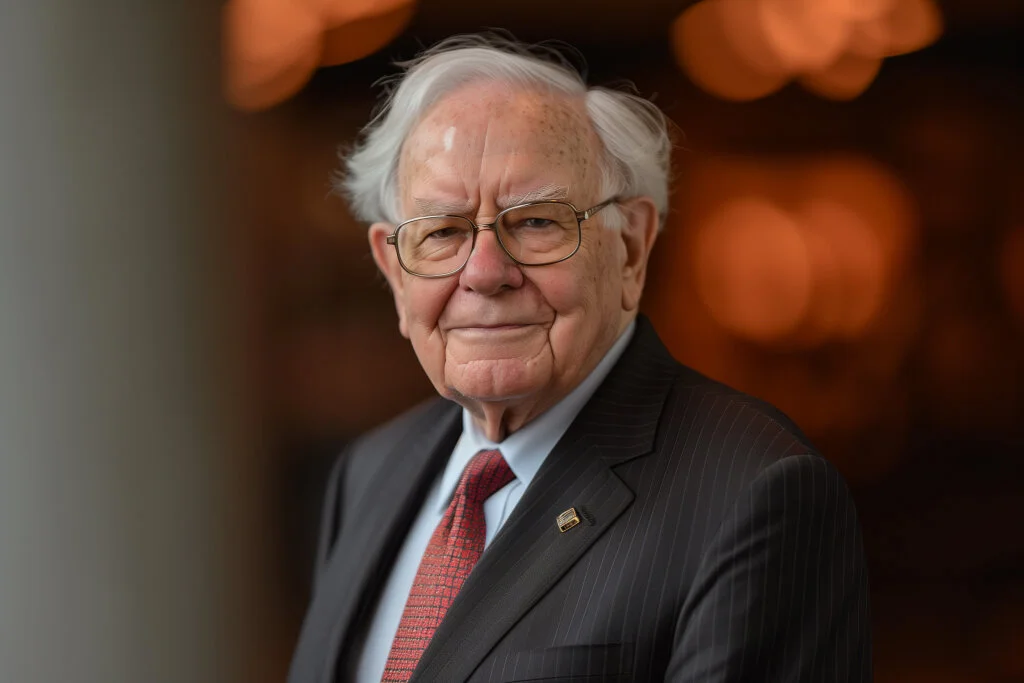
On July 14, Buffett confirmed that this year’s roughly 6 billion dollars of Berkshire Hathaway stock gifts, about 12 million Class B shares, would go entirely to four foundations tied to his family, leaving the Gates Foundation off the list for the first time since 2006. The beneficiaries are the Susan Thompson Buffett Foundation, named for his late wife, and three foundations overseen by his children Susie, Howard, and Peter.
In a statement, the 95‑year‑old said he intends to dispose of all his remaining Berkshire shares “one way or the other” to those four foundations by December 31, 2034. “Of course, mortality is unpredictable,” Buffett wrote, but he wants more than 99% of his estate directed to philanthropy while he can still shape the basic framework.
That accelerates a shift he first signaled in 2024, when he told The Wall Street Journal that the Gates Foundation “has no money coming after my death” and that he would instead let his three children decide how to distribute the rest of his fortune. The decision he announced this week moves that cut‑off from after his death to now.
Epstein revelations and distance from Gates
The timing is not accidental. Buffett’s break comes in the wake of renewed scrutiny of Bill Gates’ relationship with Jeffrey Epstein.
In early 2026, the U.S. Department of Justice released “Epstein files” detailing how Gates held multiple meetings with the convicted sex offender between 2011 and 2014, years after Epstein’s first conviction, to discuss potential philanthropic collaborations. Gates later told Congress he “did not fully understand the extent” of Epstein’s crimes, said he never saw criminal conduct and called the meetings a mistake.
The Gates Foundation responded by hiring law firm WilmerHale to conduct an internal review of any interactions with Epstein, with findings expected this summer. CNN and Fortune report that Buffett initially paused his usual annual gift while he waited for that review, but ultimately chose not to donate at all and instead redirected his stock to family foundations.
Buffett has been unusually blunt about the personal fallout. He told CNBC he has not spoken with Gates since the Justice Department documents were released and said he is “learning things I didn’t know.” In that interview, he added that he did not want to be in a position where he could be called as a witness about Gates’ relationship with Epstein: “I don’t want to be under oath.”
Reuters and the BBC both note that Gates’ congressional testimony and the law‑firm review weighed heavily on Buffett’s thinking. While Buffett has not publicly said the Epstein revelations are the sole reason, he cut off donations, the sequence is clear: his friendship with Gates cooled after the files came out, he paused his gift pending the WilmerHale review, and he has now removed the foundation from his giving altogether.
Trusting his children over preset pledges
The second major factor is structural: Buffett wants living people he trusts, his children, to decide where his money goes rather than binding the future to a single institution or rigid pledge.
In his 2024 letter and subsequent interviews, he said explicitly that the Gates Foundation would receive no money after his death and that the bulk of his estate would be managed by a charitable trust controlled by his three children. “I feel very, very good about the values of my three children, and I have 100 percent trust in how they will carry things out,” Buffett told the Journal.
He also argued that “laws in respect to philanthropy will change from time to time, and wise trustees above ground are preferable to any strictures written by someone long gone,” a line that helps explain why he is unwinding a 2006 “lifetime” pledge to the Gates Foundation. The BBC and ABC News note that in that original pledge, he had promised to donate Berkshire shares annually “throughout my lifetime” to the Gates foundation.
In practice, the new arrangement keeps his money flowing out at roughly the same pace, but through vehicles he and his children control, not through a single mega‑foundation dominated by someone else’s governance. That shift reflects both personal trust and a philosophical preference for decentralizing his giving.
Concern about the Gates Foundation’s direction
Behind those moves lies another, quieter concern: whether the Gates Foundation is still the best engine for the kind of high‑risk, high‑impact philanthropy Buffett wants.
The New York Times, cited by NDTV, reported that by 2024 Buffett had grown uneasy with what he saw as the foundation’s “bloat” and its reduced appetite for taking risks that could lead to more effective philanthropy. Over two decades, the foundation has grown into a vast bureaucracy with a staff of thousands and a complex governance structure, raising questions about agility.
Buffett himself has said he does not regret the more than 47 billion dollars he has already given the foundation since 2006. But NDTV notes that he also hinted he wished “certain things hadn’t happened,” a broad phrase that can encompass both Epstein‑related reputational damage and concerns about institutional drift.
By contrast, the Susan Thompson Buffett Foundation, and his children’s foundations, though significant, are smaller and more focused. Redirecting his giving there allows Buffett to support education, reproductive health, and other causes in a way that he and his family can adjust over time.
A decades‑long partnership ends
The break with Gates is notable not only for its financial scale but also for what it says about the end of a long partnership.
Since 2006, Buffett’s annual gifts of Berkshire stock helped turn the Gates Foundation into the world’s largest private charitable organization, with an endowment approaching 70 billion dollars. Reuters calculates that from 2006 to 2025, Buffett donated about 47 to 48 billion dollars worth of Berkshire shares to the foundation.
Buffett served on the foundation’s board from 2006 until 2021, stepping down shortly after Bill and Melinda Gates announced their divorce. At the time, he said his “goals are 100 percent in sync with those of the foundation,” suggesting no public break. Today’s decision illustrates how much has changed in the intervening years — in their personal relationship and in the reputational landscape around the foundation.
CNBC and the New York Post note that Gates’ association with Epstein, combined with the foundation’s own internal review, introduced a level of uncertainty and potential legal exposure that Buffett was unwilling to carry into his nineties. Cutting off donations allows him to distance his name and capital from future fallout while keeping his philanthropic commitments intact.
What it means for the Gates Foundation
For the Gates Foundation, the loss of Buffett’s future gifts is a significant blow, even if it does not threaten its immediate operations.
Buffett’s annual stock transfers had been a key source of growth in the foundation’s endowment, and ABC News notes that his gifts in some years exceeded four billion dollars. Without that pipeline, the foundation will need to rely more heavily on returns from its existing assets and on contributions from Bill and Melinda Gates themselves.
The foundation has already been under pressure to explain its governance, risk management and ties to Epstein, including why Gates maintained contact after Epstein’s first conviction. The WilmerHale review is expected to address those questions, but Buffett’s exit ensures that even a favorable report will not restore his funding.
In the longer term, the decision may also shift the balance of power in global health and development philanthropy, reducing the relative heft of a single mega‑foundation and increasing the role of more fragmented family‑run entities.
Buffett’s message to other leaders
Buffett has boiled his rationale down to a simple principle: trust living stewards over rigid promises.
As Inc. reported, he summarized his thinking about cutting off the foundation with four words to the Journal: “The Gates Foundation has no money coming after my death,” and then framed the rest as a vote of confidence in his children. His broader message is that donors should resist writing “ironclad” instructions that might not fit a future they cannot see. That lesson resonates beyond his own case. By ending donations to the Gates Foundation now, while he can still explain his reasoning, Buffett is signaling that even the most high‑profile philanthropic alliances are contingent, on trust, on governance and on how institutions respond when reputations come under strain.