
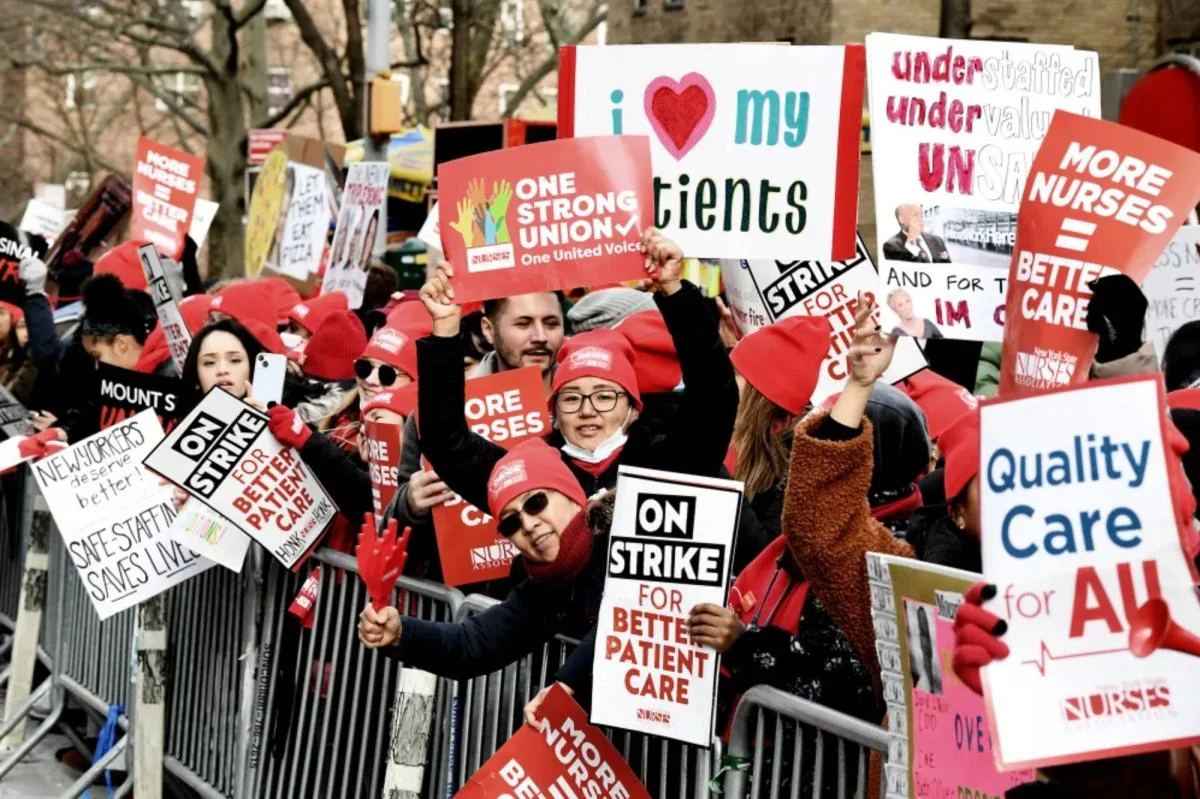
Nearly 15,000 nurses walked off the job Monday morning at some of New York City’s largest hospitals, launching what the union called the biggest nurses’ strike in the city’s history amid a brutal flu season and unresolved demands for safer staffing and protection from workplace violence. Picket lines formed before dawn outside Mount Sinai Hospital, NewYork-Presbyterian, Montefiore Medical Center and others, as last‑ditch talks collapsed overnight, and hospital executives warned of an “indefinite” disruption they said could last days or longer.
Walkouts at New York’s premier hospitals
The strike began at 6 a.m. sharp, with nurses at Mount Sinai Hospital and its Morningside and West campuses, Montefiore Medical Center in the Bronx, and NewYork-Presbyterian Hospital all joining the action. The New York State Nurses Association (NYSNA) said the walkout involves nearly 15,000 workers, about 97 percent of those who authorized it last month, and targets contracts that expired Dec. 31.
Nurses chanted, rang bells, and waved signs reading “Safe Staffing Saves Lives” outside entrances as honking cars and supporters swelled the crowds. Union president Nancy Hagans called the action “deeply offensive” to hospital executives who “would rather fight their own nurses than settle a fair contract.” She said nurses were ready to negotiate but unwilling to accept unsafe conditions.
The hospitals, all private nonprofits, said they were prepared for an “indefinite” strike and had hired thousands of travel nurses at a cost of tens of millions. Mount Sinai alone secured more than 1,000 temps, while NewYork-Presbyterian spent over 60 million dollars on replacements.
Demands: staffing, safety and pay
Nurses say chronic understaffing leaves them overwhelmed, compromising patient care during a flu surge that has packed emergency rooms. The union wants enforceable minimum staffing ratios, fully funded health benefits, wage increases to keep pace with inflation and stronger protections against violence after recent incidents, including a Brooklyn Methodist hostage standoff.
Hospitals counter that the demands are “financially prohibitive” and would cost billions, arguing they have already boosted hiring and security. Montefiore called the union’s proposals “reckless,” while Mount Sinai said it was open to talks but would not yield to “unrealistic” terms. Each hospital is negotiating separately, despite the coordinated strike.
This is the second major action in three years; a 2023 strike at Mount Sinai and Montefiore won staffing gains after three days.
Hospitals scramble amid flu crisis
The timing could not be worse, with flu hospitalizations at record levels and hospitals already stretched. Executives cancelled elective surgeries, discharged stable patients, and transferred newborns from neonatal units over the weekend. Gov. Kathy Hochul declared a “disaster imminent” and issued an executive order waiving licensing rules to let out‑of‑state nurses work in New York. The state Health Department directed non‑striking hospitals to accept transfers, even over patients’ objections.
The Greater New York Hospital Association warned that ambulances might be diverted and urged non‑emergency patients to seek alternatives. Mayor Zohran Mamdani called for a deal that “respects our nurses while ensuring hospitals remain operational.”
Echoes of 2023, and broader trends
The strike recalls the 2023 action that idled 7,000 nurses at two sites for three days, yielding ratios and hiring commitments. Nurses say those gains have eroded amid turnover and rising violence, with assaults up 20 percent citywide. Union critics, including the World Socialist Web Site, accuse NYSNA of sabotaging rank‑and‑file demands, but Hagans insists hospitals must act.
Globally, nurses’ strikes reflect post‑pandemic burnout and staffing shortages, from the UK’s NHS walkouts to Australia’s ratio fights. In the U.S., California’s 2024 law mandates ratios, but New York relies on bargaining.
What happens next
No end date is set, but history suggests pressure could force talks. Hospitals say they can operate indefinitely with temps, though costs are soaring, and morale may suffer. Nurses vow to stay out until demands are met, risking public backlash amid the flu wave.
Sen. Bernie Sanders backed the strikers, shaming executives for fighting “instead of paying nurses fairly.” The action tests Mamdani’s new administration and Hochul’s labor stance, with ripple effects for healthcare across the Northeast. For now, picket lines grow as New Yorkers brace for disruption in a city where hospitals are lifelines.