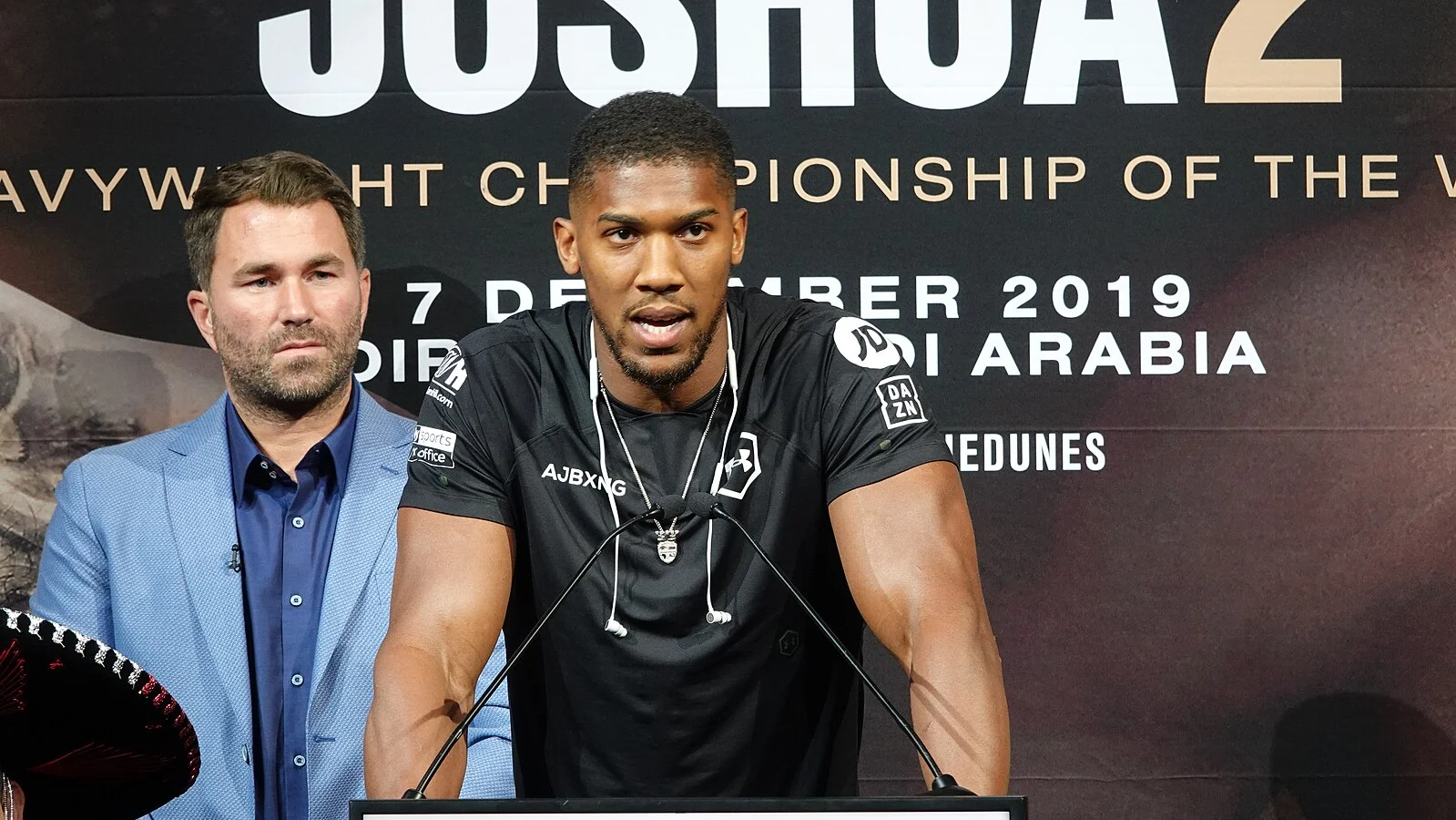
The driver behind the wheel when Anthony Joshua’s vehicle crashed on Nigeria’s Lagos–Ibadan Expressway, killing two of the British boxer’s close friends and colleagues, was charged Friday with four counts including causing death by dangerous driving and operating without a valid license, Nigerian authorities said.
Adeniyi Mobolaji Kayode, 46, appeared at Sagamu Magistrate Court in Ogun State the same day and was granted bail of five million naira (roughly $3,500), though he remains in custody until he can meet the conditions. The case, adjourned to January 20, has renewed scrutiny of road safety standards and enforcement on one of West Africa’s busiest and deadliest highways.
The charges and court appearance
Ogun State Police Command announced Friday that Kayode had been arraigned in Sagamu Magistrate Court on four counts: causing death by dangerous driving, reckless and negligent driving, driving without due care and attention causing bodily harm and damage, and driving without a valid national driver’s license. Police spokesman Oluseyi Babaseyi told news agencies that the defendant was granted bail set at five million naira with two sureties equivalent to around £2,578 or $3,480—but will remain remanded in custody until he fulfils the bail conditions.
The case has been adjourned to January 20 for further proceedings. Kayode, who had been hospitalized with minor injuries immediately after the Monday crash, was taken into police custody on Thursday once doctors cleared him for discharge.
Nigerian law treats causing death by dangerous driving as a serious offense, carrying potential prison sentences and heavy fines, especially when combined with additional violations such as driving unlicensed or recklessly. Prosecutors will be expected to prove both that Kayode’s driving fell far below the standard of a competent and careful driver, and that this directly caused the deaths of the two passengers.
The crash: what happened on the Lagos–Ibadan Expressway
The collision occurred on the afternoon of December 29, 2025, on the Lagos–Ibadan Expressway near Sagamu in Ogun State, roughly 30 miles from Lagos. Kayode was driving a Lexus SUV carrying Joshua, who was seated in the rear, and two members of the boxer’s training team, Sina Ghami and Latif “Latz” Ayodele, when the vehicle struck a stationary truck parked by the side of the road.
Both Ghami and Ayodele were pronounced dead at the scene. Joshua and Kayode sustained what officials described as minor injuries and were taken to a hospital in Lagos for treatment. The 36‑year‑old former two‑time heavyweight champion was discharged on Wednesday after being deemed clinically stable, though his promoter, Matchroom Boxing, said he would remain in Nigeria for a period to recuperate and assist with official inquiries.
Preliminary findings by the Traffic Compliance and Enforcement Agency in Ogun State indicated that the Lexus was travelling at excessive speed and may have suffered a burst tyre before the impact. Investigators are continuing to examine the vehicle and road conditions, with formal forensic reports expected to be presented in court when the trial resumes.
Who were the victims?
Sina Ghami and Latif Ayodele were described by colleagues and boxing insiders as integral members of Joshua’s support circle. Both were involved in the British‑Nigerian boxer’s physical preparation and training routines, having worked closely with him in the lead‑up to recent high‑profile fights.
Friends and other trainers paid tribute on social media, remembering how professional Joshua was, how well he got along with everyone, and how close they had become over the years they worked together. The boxer himself hasn’t said anything publicly yet, other than sending condolences through his management. They said he was “deeply shaken” by the loss and asked for privacy for the families of the dead.
Nigerian President Bola Tinubu extended his sympathies to Joshua and the bereaved families, calling the crash a “tragic accident” and pledging a renewed focus on highway safety.
Nigeria’s road‑safety crisis
The Lagos–Ibadan Expressway is one of the busiest roads in Nigeria. It connects Lagos, the country’s commercial capital, with Ibadan and is a major route for both freight and passenger traffic in the southwest. It is also known for having a lot of accidents. In 2024, Nigeria’s Federal Road Safety Commission (FRSC) reported 5,421 deaths in 9,570 road accidents across the country. This is a terrible number that can be blamed on speeding, poor vehicle maintenance, bad road infrastructure, and lax enforcement of traffic laws.
Road safety experts and government reports say that some of the most common causes are:
- Cars parked on narrow shoulders or carriageways without enough warning signs, making it hard for fast-moving traffic to see them.
- Overloaded trucks with worn tyres and faulty brakes operating on poorly maintained roads.
- A culture of unlicensed or undertrained drivers behind the wheel of private and commercial vehicles.
- Weak penalties and inconsistent prosecution that fail to deter dangerous driving.
The Joshua crash has made road safety advocates and opposition politicians even more vocal in their calls for stricter enforcement, driver retraining programs, and urgent upgrades to major highways that many say have gotten worse as traffic has increased.
Legal and safety implications
The court appearance on Friday is the start of what could be a long and closely watched trial. Legal experts say that adding a charge for driving without a valid license makes the prosecution’s case stronger because it shows that Kayode shouldn’t have been driving at all, let alone at high speed on a busy expressway.
Defense lawyers will probably look into the condition of the parked truck, such as whether it was parked legally, had hazard lights or markings, and whether the crash was caused by bad road design or a lack of enforcement against illegal parking. They may also argue that mechanical failure, such as the reported burst tyre, was an unforeseeable event that reduced the driver’s control.
For Joshua, the legal proceedings place him in the uncomfortable position of being a witness in a criminal case involving his own injuries and the deaths of close colleagues. His decision to remain in Nigeria during his recovery, rather than return immediately to the United Kingdom, is seen by some observers as a sign of respect for the legal process and for the families of Ghami and Ayodele.
A personal and professional blow
The crash has interrupted what had been a period of resurgence for Joshua, who recently secured a high‑profile knockout victory and was planning his next training camp. While his injuries are not career‑threatening, the emotional toll of losing two trusted members of his team and being involved in a fatal accident is expected to weigh heavily.
Matchroom Boxing said in a statement that Joshua was “receiving support from family, friends and mental‑health professionals” and would take time to process the trauma before making decisions about his competitive schedule. The promoter also pledged to support the families of the deceased and to cooperate fully with Nigerian authorities.
Boxing fans and colleagues from around the world have sent messages of sympathy, with several high‑profile fighters and trainers posting tributes to Ghami and Ayodele and urging greater attention to road safety when athletes and their teams travel in countries with less stringent traffic enforcement.
What happens next
The case will resume on January 20, when prosecutors are expected to present detailed evidence, including accident‑scene reports, vehicle inspections, witness statements and medical records. If convicted on the most serious charge, causing death by dangerous driving, Kayode could face a custodial sentence, though exact penalties will depend on the court’s assessment of culpability, intent, and mitigating factors.
The trial will probably keep the Lagos–Ibadan Expressway and the bigger problem of road safety in Nigeria in the news. Thousands of people die in crashes that could have been avoided every year. In the coming months, political will and public pressure will determine whether this high-profile case leads to lasting policy changes, better road markings, stricter licensing standards, stricter enforcement, or fades into the background once the headlines move on.
January 20 will be another hard day for Anthony Joshua. The tragedy that started with one crash on a busy highway has spread to touch issues of justice, safety, and loss that go far beyond the boxing ring.