Libyan prosecutors have opened an investigation into the killing of Seif al‑Islam Gaddafi, the most prominent son of Libya’s former ruler Muammar Gaddafi, after gunmen stormed his home in the western city of Zintan and shot him dead, according to his lawyer, aides, and security officials. The 53‑year‑old, once seen as his father’s heir and later as a would‑be political comeback figure, was killed on Tuesday afternoon by a four‑man commando unit that disabled security cameras before entering the property, his French lawyer and political adviser said.
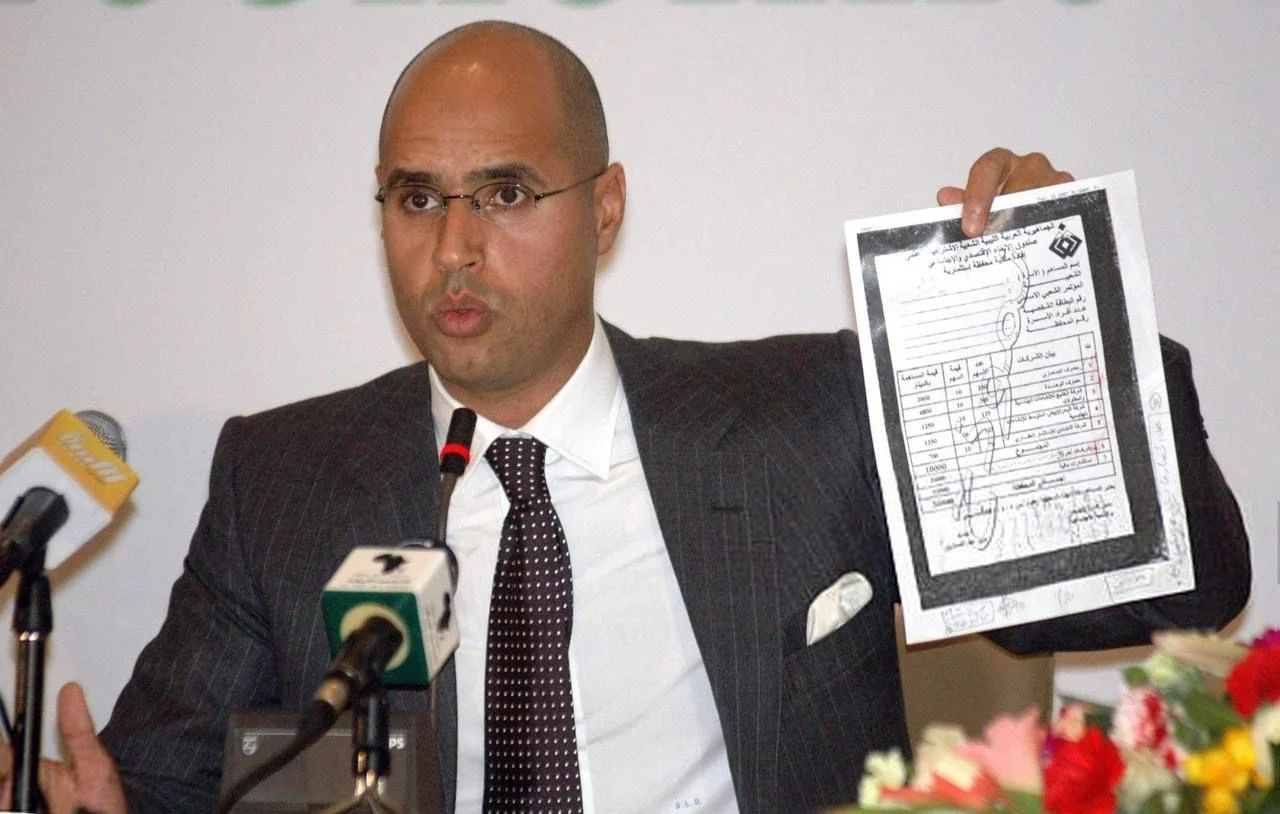
What we know about the killing
Details emerging from Libya and Seif al‑Islam’s entourage paint a stark picture:
- His French lawyer Marcel Ceccaldi told AFP that Seif al‑Islam “was killed today at 2 p.m. [1200 GMT] in Zintan in his home by a four‑man commando,” saying the assailants disabled the house’s security cameras before entering.
- His Libyan political adviser, Abdullah Othman Abdurrahim, gave a similar account to local channel Al‑Ahrar TV, saying four unidentified gunmen stormed the residence and shot him dead, an account also cited by Nigerian outlet Punch.
- Sources close to the family, Seif al‑Islam’s Libyan lawyer Khaled el‑Zaydi and local media separately confirmed his death to Reuters and other agencies, though none could immediately provide a clear motive.
The killing took place in Zintan, a mountain town some 130–140 kilometers southwest of Tripoli where Seif al‑Islam had been based for much of the past decade. He was captured by Zintani fighters in 2011 as his father’s regime collapsed, held there for years despite Tripoli’s demands for custody, and later continued to reside in the area after his release.
Libya’s prosecutor‑general’s office said on Wednesday it had opened an inquiry, calling Seif al‑Islam “the victim” and stating that he had “succumbed to injuries caused by gunfire.” Investigators said they planned to question witnesses, review camera footage, and identify those who ordered and carried out the attack.
Some early local reports suggested Seif al‑Islam had been killed in clashes with the powerful 444th Brigade, a Tripoli‑based militia, but the group publicly denied involvement. Major international outlets have so far treated those clash reports with caution, sticking to accounts from the family and lawyers that describe a targeted raid by unknown assailants.
From heir apparent to would‑be comeback
Born in 1972, Seif al‑Islam was widely regarded as Muammar Gaddafi’s most influential son and presumed successor before Libya’s 2011 uprising. Western governments often saw him as the “modernizing” face of the regime: an English‑speaking interlocutor who appeared in suits, spoke of economic reform, and promoted the Gaddafi International Foundation for Charity and Development.
But that image was shattered when, during the Arab Spring, he emerged as one of the regime’s most strident defenders. In televised speeches in early 2011, he warned protesters that Libya would “fight to the last man and bullet” and was accused of helping orchestrate a brutal crackdown on dissent.
By February 2011, he was on a United Nations sanctions list and subject to a travel ban. The International Criminal Court (ICC) issued a warrant for his arrest on charges of crimes against humanity, accusing him of murder and persecution of demonstrators during the uprising. After Muammar Gaddafi was killed by rebels in October 2011, Seif al‑Islam was captured in the desert near Obari and detained by a Zintan militia.
In 2015, a court in Tripoli sentenced him to death in absentia alongside other former officials, though that verdict was widely criticized by rights groups and never enforced. Zintan authorities refused to hand him over to the central government, and Libya later persuaded the ICC to let it try him itself, though the process stalled in the country’s fractured justice system.
Despite this baggage, Seif al‑Islam attempted a political comeback. In 2021 he registered as a candidate for Libya’s repeatedly delayed presidential elections, presenting himself in interviews as a misunderstood reformer ready to “restore Libya’s lost unity” and wealth. The vote never took place, but his bid underscored how nostalgia for the Gaddafi era, and yearning for a strongman after years of chaos, had brought some former regime figures back into the conversation.
Libya’s fractured landscape and possible motives
Seif al‑Islam’s death comes against the backdrop of a Libya still split between rival authorities and armed groups more than a decade after its civil war.
The country remains divided between an internationally recognised government in Tripoli and a rival administration in the east backed by General Khalifa Haftar, with a patchwork of militias, tribal forces and foreign fighters controlling territory and economic assets.
In that environment, analysts see several potential—though for now unproven—motives for the killing:
- Local score‑settling or militia rivalry: Zintan’s militias have long carved out autonomy and clashed with other armed groups around Tripoli. Seif al‑Islam’s presence and residual influence in the town may have made him a bargaining chip or liability in shifting local alliances.
- Opposition from revolutionaries in 2011: For many Libyans who fought against Muammar Gaddafi, Seif al Islam was a symbol of how brutal the old regime was. His survival and occasional political moves made families of victims and activists angry because they saw his continued freedom as proof that he was not being punished.
- Regional or international meddling: Given his ICC case and knowledge of pre‑2011 deals, some conspiracy theories have long cast Seif al‑Islam as a man who knew too much about sensitive ties between the old regime and foreign states. There is, however, no hard evidence so far linking his death to outside actors.
For now, Libyan prosecutors are sticking to cautious language, describing a criminal investigation without ascribing motive. The lack of a swift, unified government statement, Tripoli authorities have yet to issue a detailed account, reflects both political sensitivities and the state’s limited reach.
How Libyans are reacting
Initial reactions inside Libya have been mixed, reflecting the country’s deep divisions.
Some Libyans who suffered under Muammar Gaddafi’s four‑decade rule expressed quiet satisfaction or indifference, seeing Seif al‑Islam’s death as the closing of a chapter that should never have been reopened. Others, particularly in parts of the south and center where Gaddafi‑era networks remain strong, voiced grief on social media, framing him as a patriot cut down before he could “rebuild” the nation.
Pan‑African outlets such as APA News noted that for a segment of Libyans weary of corruption and militia rule, Seif al‑Islam had come to symbolize a lost sense of order and national pride, however selective those memories. His killing, they suggested, may deepen feelings of marginalization among Gaddafi loyalists and complicate future reconciliation efforts.
On the other hand, human rights groups have said that even though Seif al Islam was accused of serious crimes, his death at the hands of unknown gunmen is not a replacement for being held accountable in court. They say that another high-profile killing without clear justice could make it harder for Libya to break the cycle of using bullets instead of trials to settle political scores.
Implications for Libya’s fragile future
Seif al‑Islam’s assassination removes one of the more recognizable faces from Libya’s crowded political chessboard, but it does not by itself resolve the underlying power struggle.
On one level, his death could ease concerns among some factions who saw his possible return to national politics as a destabilizing wildcard, someone who could rally Gaddafi‑nostalgic tribes and officers and complicate already fraught negotiations over elections and power‑sharing.
On another, it highlights just how precarious security remains, even for high‑profile figures. If a man with Seif al‑Islam’s connections and long‑standing ties to local militias can be killed in his own home, ordinary Libyans may feel even less protected.
Diplomats and UN officials have yet to issue detailed comments, but past statements suggest they will use the killing to press Libya’s rival authorities once again to:
- Consolidate security forces under unified civilian control.
- Curb the autonomy of militias and prosecute politically motivated killings.
- Move toward credible elections with broad buy‑in, rather than allowing strongmen and armed groups to dictate outcomes.
For many outside Libya, Seif al‑Islam’s name was synonymous with two eras: the final, bloody months of his father’s rule and the country’s halting effort to emerge from that shadow. His death in a dusty town outside Tripoli, at the hands of still‑unknown gunmen, is a reminder that those eras are not neatly separated, and that in Libya, the past is still being fought over with guns as much as with ballots.
Whether prosecutors can credibly identify and bring to justice those who killed him will be an early test of how much state remains behind the headlines of a country still struggling to become whole.