
Bangkok — In an unexpected twist for Thailand’s political landscape, the country’s Constitutional Court has voted to remove Prime Minister Paetongtarn Shinawatra, citing “ethical violations” resulting from a leaked phone call with former Cambodian leader Hun Sen, in a ruling that came down on Friday, dethroning Thailand’s youngest prime minister, and adding to decades of judicial interference, political machinations, and fluid coalition governments.
A scandal that brought down a government
The controversy began on June 15 when the public learned of a phone call between Paetongtarn Shinawatra and the President of the Cambodian Senate Hun Sen. In that conversation, Paetongtarn, evidently in an effort to dampen rising tensions over deadly border violence, addressed the senior Cambodian official in a very cordial manner while even referring to him as “uncle” and mocking a senior commander in the Thai army. Her remarks were attacked by many critics as improper and an indication of loyalty to a foreign official while national security was under threat.
The leak occurred at a moment of heightened anxiety. Conflicts in May had resulted in the death of a Cambodian soldier and displaced over a quarter million people on either side of the border (resultinag in five days of active conflict). Political instability in Thailand subsequently hit quickly- on July 1, 2023, Paetongtarn was suspended from her position by court order while the court agreed to hear the case, and Pheu Thai’s main coalition partner, Bhumjaithai, withdrew their support of the government, bringing the current government to the brink of collapse.
Court’s reasoning and political consequences
In a 6-3 decision, the judges found that Paetongtarn transcended constitutional ethics when she “put [her] personal interest ahead of the Thai nation,” which hurt the public trust and the country’s stature during a period of geopolitical strain. The court reproached her for her informal deference in her greeting to Hun Sen by saying that Paetongtarn “kowtowed” to the former strongman of neighboring Cambodia, at a time when the country needed unity and resolution.
At age 39, Paetongtarn becomes the fifth leader that has been removed, by either court or military decision, since 2006 with backing from the Shinawatra family, which is particularly noteworthy considering how Paetongtarn’s removal reflects the continuing impasse between the populist-leaning electorate of the country and the royalist-conservative power brokers in the judiciary and military. With a precursor to the 2024 election already occurring in the form of her removal, this leaves Pheu Thai, now without a viable leader with a future role for coalition negotiations, threatened in its overall coalition group.
A power vacuum and uncertain future
With Paetongtarn gone, Deputy Prime Minister Phumtham Wechachai (although reportedly did not want this position) is now acting to run things until parliament can appoint a new head of government, which may take weeks for the ruling coalition to do, as they try to maintain a majority. The Pheu Thai Party often led over the years by members of the Shinawatra family and allies – may be challenged, as they have very limited candidates and now will try to stay together.
On the other hand, former Prime Minister Prayuth Chan-ocha is attempting to put himself back in the running and possible Bhumjaithai defectors are trying to form a split from their former party. The result of these attempts might dictate foreign policy, economic reforms, and domestic stability for the future.
Paetongtarn’s reaction and call for solidarity
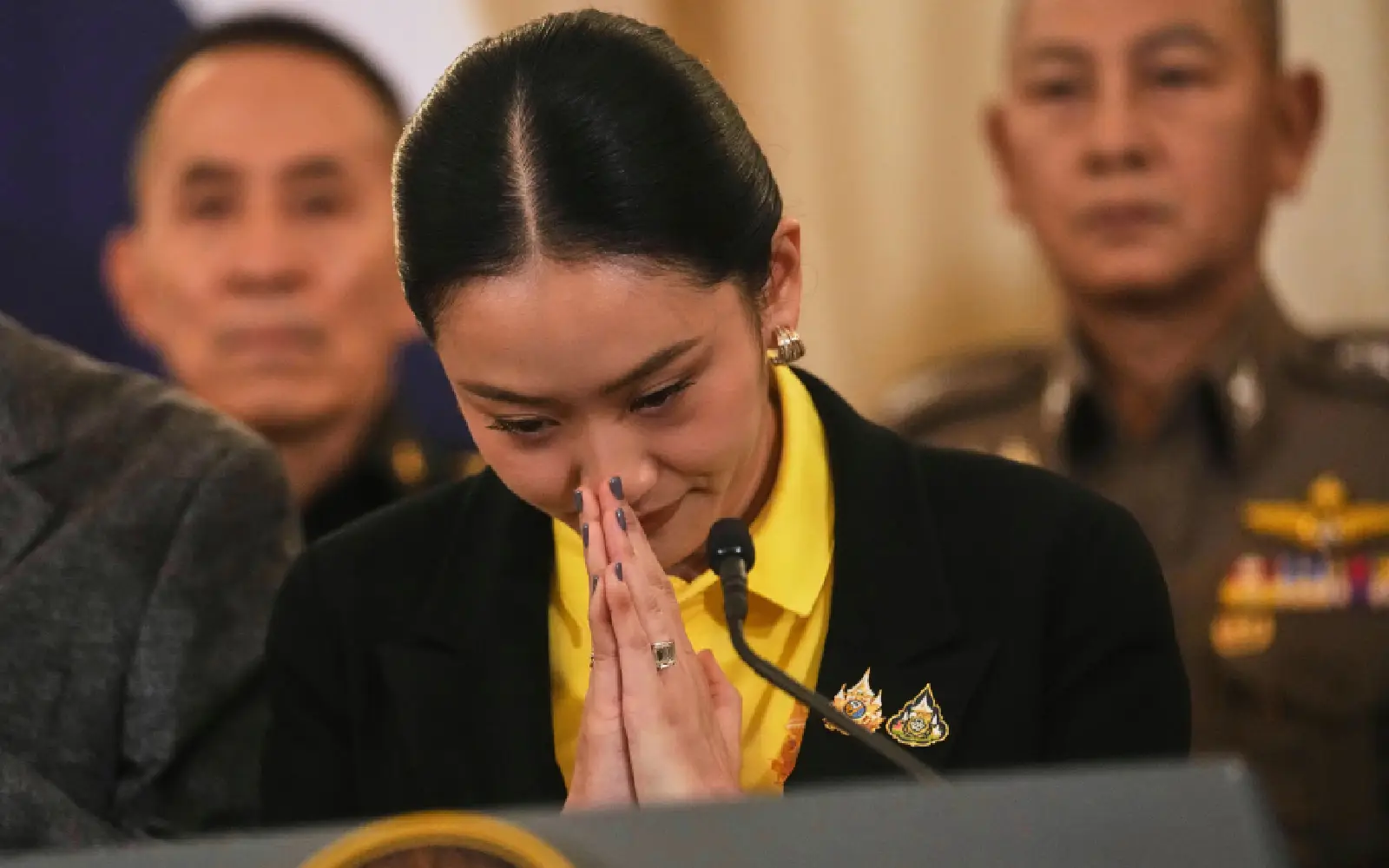
Paetongtarn shared her remorse for her comments in a press statement following the verdict he argued her comments were “to prevent military conflict and to protect all civilians as well as all military personnel,” adding that, “This decision ought to be the turning point. I asked we could all come together to stabilize our country and avoid going backwards.”
The court ruling, she suggested, demonstrates the tensions between Thailand’s elected representatives and the conservatives in the countries power structure. The case also continues to spark a discussion about the political role of the courts which has since 2008 dissolved over 100 parties and regularly intervenes in moments of national division.
A dynasty disrupted—but not dethroned?
Paetongtarn’s exit from the leadership race is the most recent blow to Thailand’s most prominent and divisive political family. The leader who took the family through the good years—the 2000s—Thaksin Shinawatra, is still an important force in Thailand’s politics, even after a coup deposed him, an inabsentia conviction that resounds today, and after being an exile until very recently. Analysts speculate that he will play an important role in Pheu Thai’s negotiations moving forward, to keep influence.
With all of that in mind, the next few weeks will tell if Thailand is able to find a new leader to help steady a divided nation, all while the ghost of the call, and the realities of power, hangs over the treacherous waters of Thai politics.





