
Lagos — Nigeria has announced an immediate six-month export ban on raw shea nuts in what can be construed as a high-stakes initiative to stimulate the country’s processing industry, generate employment, and position Nigeria as a major global contributor to value-added shea products.
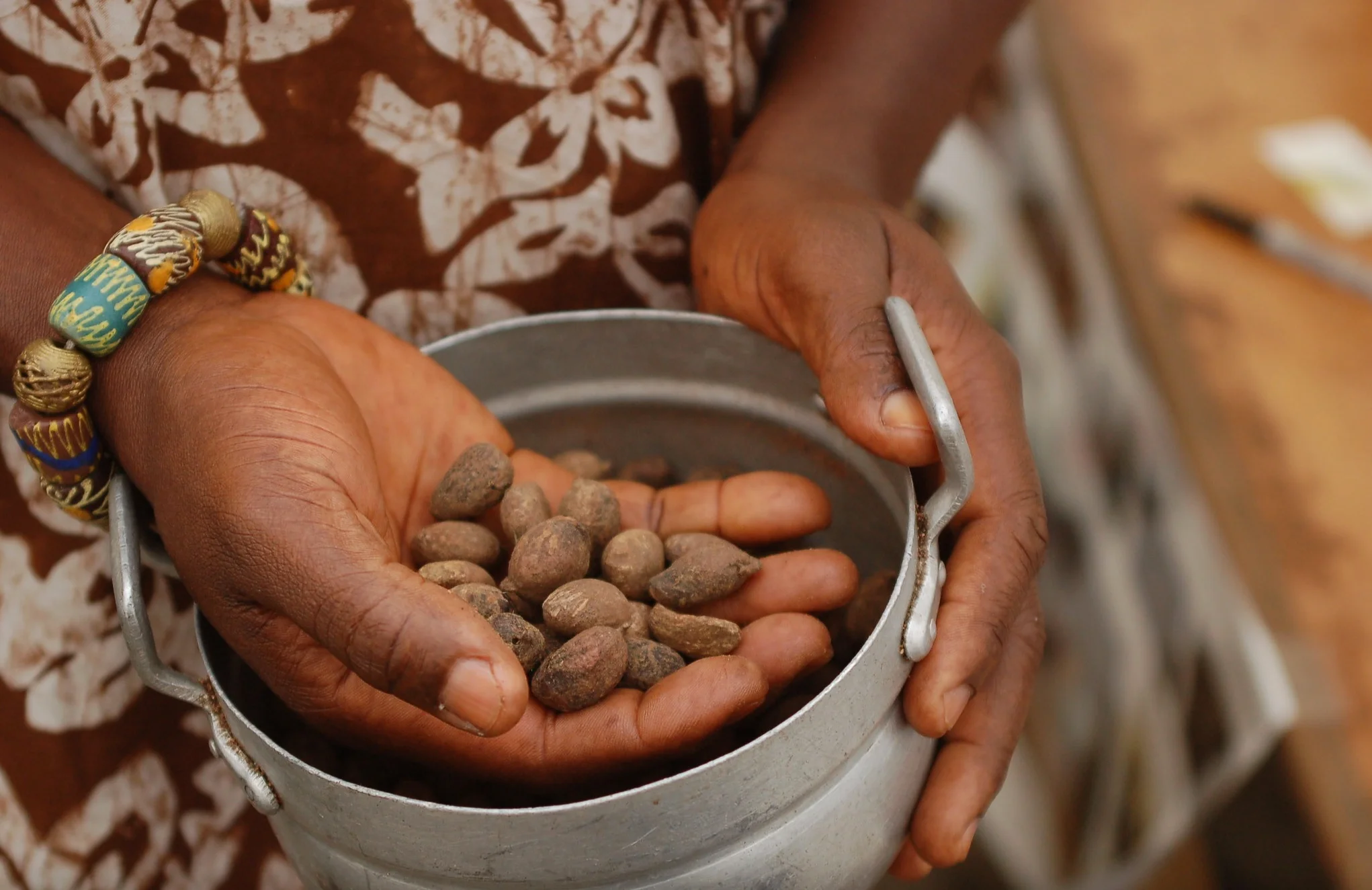
The ban approaches a considerable change in industrial strategy for Africa’s largest shea nut producer, and potentially resolvable issues related to unproductive economy, informal trade, and rural unemployment.
Targeting value addition and local jobs
The ban, imposed by President Bola Ahmed Tinubu and announced by Vice President Kashim Shettima, is seen as a “pro-value addition” initiative rather than a move against trade. Nigerian authorities want to be guaranteed a steady domestic supply of shea nuts for its processors, allowing Nigerian factories to run at full speed, and providing the women (who are the majority of the shea sector) in Nigeria to get the most out of every harvest.
Vice President Shettima stated, “We are not closing doors, we are opening opportunities. This is about industrialization, rural transformation, gender empowerment and expanding Nigeria’s presence on a global scale.” He pointed out that while Nigeria produces nearly 40% of the world’s shea nuts, it currently captures only 1% of the $6.5 billion global market for shea products. This is now a market imbalance the Nigerian government aims to address.
Economic outcome and the global shea market
Nigeria’s current annual production is approximately 350,000 metric tons, grown in 30 states. Officials say the sector’s real value is lost to informal cross-border trade, accumulating to more than 90,000 tons each year. Processors are only operating at 35%-50% installed capacity due to shortfall of transformed product lost to raw exports, as reported by Agriculture Minister Abubakar Kyari.
The expected upside of the ban is sizeable. Analysts predict the volume of local processing could generate $300 million of new revenues for Nigeria within a short timeframe and up to $3 billion by 2027, combined with the ban, associated investment, and available refining infrastructure upgrades. According to a report by U.S. News, “The ban will move Nigeria from a raw shea nut exporter to a global supplier of refined shea butter, oil, and other byproducts”.
Empowering women and rural communities
Women comprise up to 90% of shea nut pickers and processors in Nigeria, which means that protecting the shea industry will have significant implications for gender empowerment and income for local communities. “When we are protecting the shea industry, we are protecting the livelihoods, dignity and opportunity of millions of women,” said Shettima at a stakeholder meeting in Abuja. Advocates for a shea industry policy argue that protecting this sector in Nigeria would directly support poverty alleviation, rural job creation and a gender-responsive industrial transformation.
Challenges, regional trends, and global response
Nigeria’s action mirrors that of its West African neighbors. Many of which have taken similar actions recently, including Ghana, Burkina Faso, Mali, Togo, and Ivory Coast, by restricting shea nut exports in support of their domestic industries. The ban is treated as temporary, a period of six months and re-evaluation in that the officials have stated the ban will be dependent on support for investment in processing, coordination of the supply chain, and increased market access.
They are also discussing with Brazil to secure preferential markets for Nigerian shea products alluding to the government’s eagerness to grow a pipeline of essential global supply chains. In hindsight, some experts say, according to the Associated Press, that “an export ban alone does little to ensure that domestic production is fully available for local processors,” and emphasize that policy has to be supported by significant investment and regulation.
Industry reaction and the path forward
Much of the industry response has been positive, and many processors and women’s cooperative leaders believe that this measure will allow Nigerian factories to finally have the opportunity to compete on the world stage. At a newly opened shea butter processing operation in Niger State—established just weeks before the ban—the operators expect to reap the benefits of more predictable and regular supply for their raw materials, as well as increased capacity for job creation.
Nonetheless, success will depend on the government’s capabilities to facilitate capital, upgrade to enable access to technology, and gain access to international markets. The government has made commitments to tracking results closely and relieve bottlenecks in real-time, with a stated goal of moving Nigeria from a seller of raw commodities to a market leader in value-added agricultural exports.