
(PARIS – Oct 2025) France’s long-running political crisis escalated this week, as Prime Minister Sébastien Lecornu announced his resignation less than a month after taking office, deepening a sense of uncertainty in the country. The resignation, described as “shocking” and, in some quarters, as “inevitable” by officials and observers, comes amid more severe parliamentary deadlock, a divided political landscape, and mounting calls for either snap elections, or even for President Emmanuel Macron to resign his position.
A Cabinet Doomed by Division
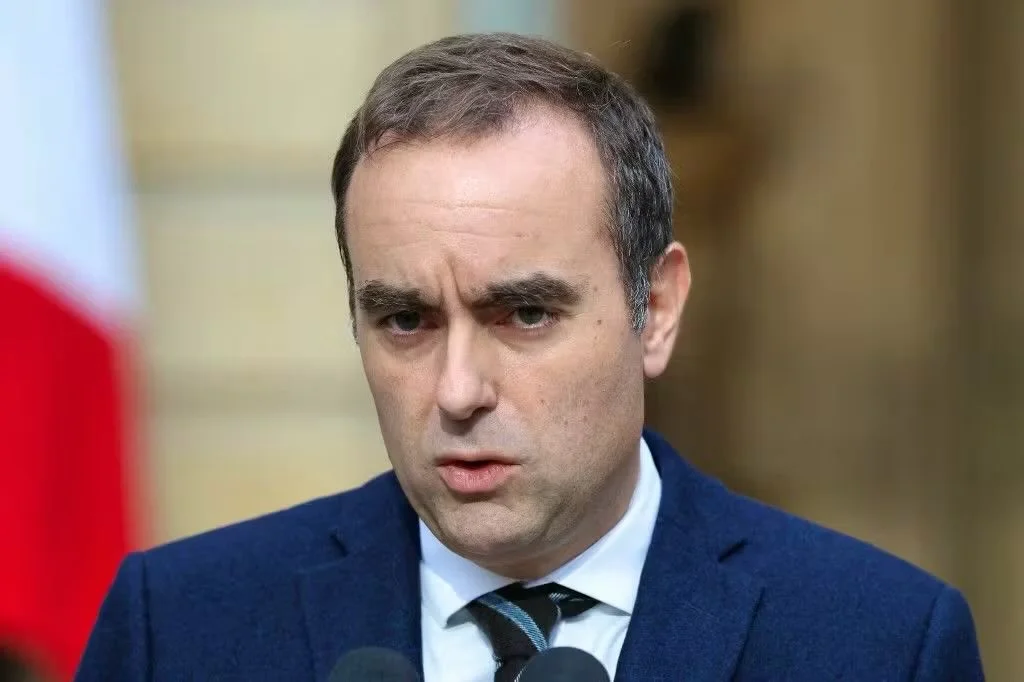
On October 6, 2025, Sébastien Lecornu, who had most recently served as Minister of the Armed Forces and was a close ally of Macron, resigned just hours after the line-up for his new cabinet had been publicly revealed. Early that morning, the Elysée Palace announced Lecornu’s resignation following an emergency meeting between Lecornu and President Macron where sources say they met for less than one hour.
Lecornu stepped into the role just 26 days before after François Bayrou stepped down prematurely for similar reasons. In his resignation speech, delivered outside Hôtel de Matignon the turf of the French Prime Minister, Lecornu cited “partisan appetites” and “egos” of rival political parties as the key barriers to efficient governance. He noted, “I was prepared for compromise — but all the political factions insisted the government enact their entire agendas. A bit of humility and a greater sense of the common good would have served everyone well.”
Hours before resigning, Lecornu pledged his government would represent an end to prior governments, as he pulled together a coalition line-up meant to bridge divides and appease oppositional groups. Instead, the cabinet shared similarities with Bayrou’s cabinet, and accusations of using “the same faces” led to immediate complaints from every side of the political spectrum. Parties of all political ideologies claimed they would reject the line-up, state testimony that foreshadowed the unraveling of Lecornu’s cabinet.
Political Paralysis & the Roots of the Crisis
The current governmental stalemate facing France is directly tied to snap parliamentary elections called in 2024, which fractured the National Assembly and left no party with any discernable majority. Macron’s own centrist coalition lost ground to both the far-right National Rally led by Marine Le Pen and Jordan Bardella, and the far-left France Unbowed led by Jean-Luc Mélenchon.
The outcome of the parliamentary election means successive French governments since the elections have diminished to weaker coalitions. Lecornu was the fifth Prime Minister in just under two years, and the length of his tenure resulted in staring down a political landscape that had furiously polarized prior. In this context, opposition parties began portraying Lecornu’s resignation as symptomatic of a deeper instability. Soon after his dramatic exit, opposition parties began calling for either new parliamentary elections or, more dramatically, for Macron to resign.
Le Pen stated, “The only reasonable idea is to go back to the polls. The loop has gone on long enough; the French people have lost patience with this government.” Bardella echoed the necessity of dissolution of parliament, outright attributing the current crisis to Macron.
Economic Fallout and Public Sentiment
The unexpected resignation sent shockwaves throughout financial markets. The CAC-40 index, which covers the largest companies in Paris, fell almost 2 percent, amid worries that the standstill over the budget and political crises would destabilize an already shaky economy. France has a mountain of debt and deficit issues, a critical vote on the budget impending, and international organizations monitoring the situation.
Along with the rise of economic discontent regarding austerity measures, public anger has also grown toward what many have referred to as an elite and unaccountable government. Outside Parliament, citizens state their frustration towards a revolving door of ministers, none of whom have committed to significant change.
Macron’s Dilemma: Unresolved Leadership
President Macron now faces difficult and disagreeable decisions: he can call snap elections, which would hand power to opposition parties, or appoint another prime minister in hopes of retaining some begrudged coalition unity. But since five unsuccessful prime ministers within two years of an unstable government, the options are very limited. Macron maintains that he will not resign but will stay in the presidency until 2027.
Various analysts have proposed outside-of-the-centrist field solutions, or possible even an opposition leader. But, as Lecornu states in his farewell address, “For some there are many red lines, there are few green lines. Compromise seems to be out of fashion.”
Voices from the Political Spectrum
The French left, represented by Mélenchon and Mathilde Panot from France Unbowed, joined the chorus of right-wing voices demanding action. Panot even tweeted, “In less than a year, three prime ministers have fallen. Macron must leave.” While the response from conservatives was similar; David Lisnard declared after Lecornu’s departure that “this is unsustainable for all of France’s institutions.”
Even Lecornu’s supposed allies in the coalition (centre-right Republicans and the smaller opposition parties) seemed unwilling, or incapable of rescuing him. Françoixavier Bell, an associate from the Republicans, stated, “We fear nothing from new elections: we want a government of stability, no more endless negotiations.”
Recent French Political History: The Shortest Office
Never, in recent French political history, has there been such rapid shake-ups of high office. 26 days later and having spent under 24 hours with a complete cabinet, Lecornu’s term is now the shortest in recent memory. The Fifth Republic was established in 1958 to counteract instability and was built for a government resistant to gridlock–nevertheless, over the last two years, it has been pushed to its limits.
Political scholars have noticed an increasingly fragmented electorate over the years that has gravitated toward radical or populist parties, leaving centrist politicians like Macron incapable of consensus. While snap elections were previously suggested as the solution, it now feels as if a snap election could lead to more polarization than compromise.
Next Steps: What Happens Next
As of this piece, Macron has not announced Lecornu’s successor, and speculation continues about what comes next. The president is reportedly weighing options such as brokering another coalition to sustain the government or daring the opposition to form a government. All the meanwhile, the opposition parties are building support for an immediate election, believing the mood of the public is aligned with changing the government.
The left and right are both beginning to organize towards what could be a historic election, possibly producing France’s first far-right prime minister or a first historical far-left coalition. Political scientists have also cautioned that a realignment would push France into a radically different direction, from a domestic and European perspective.
Uncertainty for France’s Democracy
The resignation of Sébastien Lecornu after less than a month of service is moving beyond personal significant disappointment to being concerning for France’s political system in a heightened state of stress. There are greater economic pressures, opposition parties are less inhibited, and ordinary French people are tired of years of humming along in stalemate. France seems to be at a tipping point.
As the government seeks to fill the office of prime minister once again, the question remains the same: can consensus and stability be established in French politics again or has consensus making transformed into an era of instability and conflict. In the coming weeks, we will discover whether France’s institutional arrangements can adapt or if this crisis is indeed a foreshadowing of greater disruption to come.