
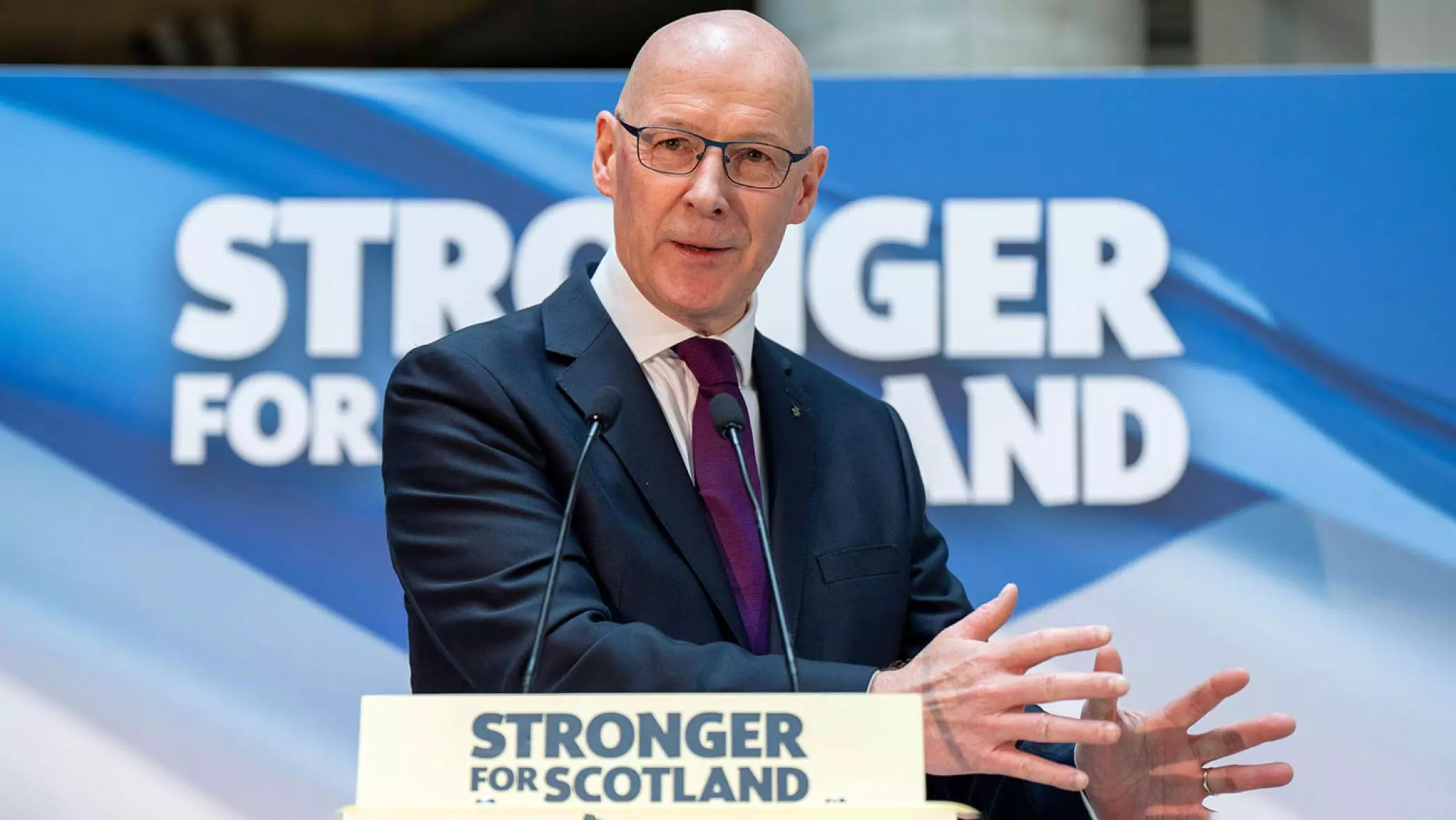
Scotland’s march toward independence has shifted gear, with the Scottish National Party (SNP) commencing a new, international campaign for Scottish independence. After years of constitutional turmoil, Scotland now faces a different kind of situation since the SNP leader and First Minister John Swinney announced the latest stage of party strategy in early September 2025. He highlighted Scotland’s right to self-determination, which the SNP has positioned as very much relevant to the parallel discourse both nationally and internationally.
Consequentially this challenge seems to usher in a different set of considerations for the independence movement, actively seeking to recruit like-minded individuals support at home as well as abroad, all the while negotiating the current post-Brexit political realities and UK elections.
A shift in strategy: The SNP’s new global appeal
The SNP’s new campaign is focused on elevating the discussion regarding independence by reaching out to diaspora, the international media, and governments who are sympathetic to Scotland’s cause. In a statement covered by the BBC, John Swinney said in Edinburgh that “the people who live in Scotland alone are the only people who should be making the decision as to the future of Scotland as a country,” affirming a long-held principle of self-determination. The SNP has combined this domestic push and strategy, while “engaging” with international audiences, thereby declaring that the case for independence enter the international discussion, and framing independence as a modern-day democratic imperative.
This international strategy becomes an exploit not only at the expense of long-standing European support for self-determination; it draws heavily on the legacy of 2014, as the moment independence became a global issue. The aim of the campaign is to build “soft power” alliances, capitalize on Scotland’s contribution to areas like climate change, and attempt to garner venues to have Scotland’s case brought to any global forum representing Scotland, from Brussels to Washington.
The road to a second referendum
At the center of the Scottish National Party’s (SNP) campaign is the urgent need for calling a second referendum. This was exemplified by Swinney’s statement demanding that if the SNP gained a majority of Members in the Scottish Parliament (Holyrood) in the next election, the UK government must agree to a legally recognized independence vote. This is a rehash of 2011, when the SNP gained a majority, and the UK government permitted the 2014 referendum.
Although UK Prime Minister Sir Keir Starmer‘s dismissal of Swinney’s emphasis on the constitutional paper as “distraction politics” may have some public support, the SNP’s new constitutional paper “Your Right to Decide,” confirms the Scottish government’s position that constitutional sovereignty ultimately lies with the Scottish people, not Westminster. Additionally, the materials for the campaign intends to point out that by 2030, over one million Scots eligible to vote would have been too young to vote in the 2014 referendum, thus supporting the case that a new vote is not just warranted, but essential for democracy.
Political realities and global messaging
The international aspect of the campaign developed alongside growing separatist movements in parts of Europe, as well as reinvigorated global interest around self-determination, sovereignty, and issues of national identity. The next Scottish Parliament elections are coming up soon, and the SNP’s messaging has already shaped political discourse as parties from every angle prepare for what could be a game-changing election. Several parties advocating independence are calling for a mandate across party lines, not just an SNP victory, but a larger mandate to ask for a referendum as soon as possible according to the BBC.
The strategy has also attracted blame from their political competitors. For unionists, the renewed focus on independence is an unwelcome distraction from pressing concerns like health and the economy. However, SNP insists that economic renewal, social justice, and engagement with the world cannot be divorced from self-determined and equitable government.
Reactions across the world
As the minutes of the recent Scottish national party conference show that the internationalization of the independence movement is likely to resonate with diaspora Scots and pro-independence sympathizers in Europe, it bears noting that the sentiments of alienation felt by many Scots post Brexit has meant there is not only alienation from Westminster, but also from Brussels. By internationalizing the independence movement – and reframing the debate over independence from a global perspective, in effect – the SNP hopes to accord legitimacy not only at home, but also in the eyes of international institutions that may consider recognizing a newly independent Scotland in the future.
According to the BBC, “John Swinney has urged the UK government to allow a Scottish independence referendum, if the SNP wins a majority in next year’s Holyrood (Scottish) election.” The SNP’s new document, “Your Right to Decide”, which stakes a claim on the issue of self-determination, emphasizes this strategy as the party prepares for the next party conference and the tactics of the modern independence push in Scotland.
Scotland’s road ahead is still very much in dispute, but the SNP’s international campaign represents a significant escalation of the independence movement, one that is intended to generate support well beyond the confines of the United Kingdom.