
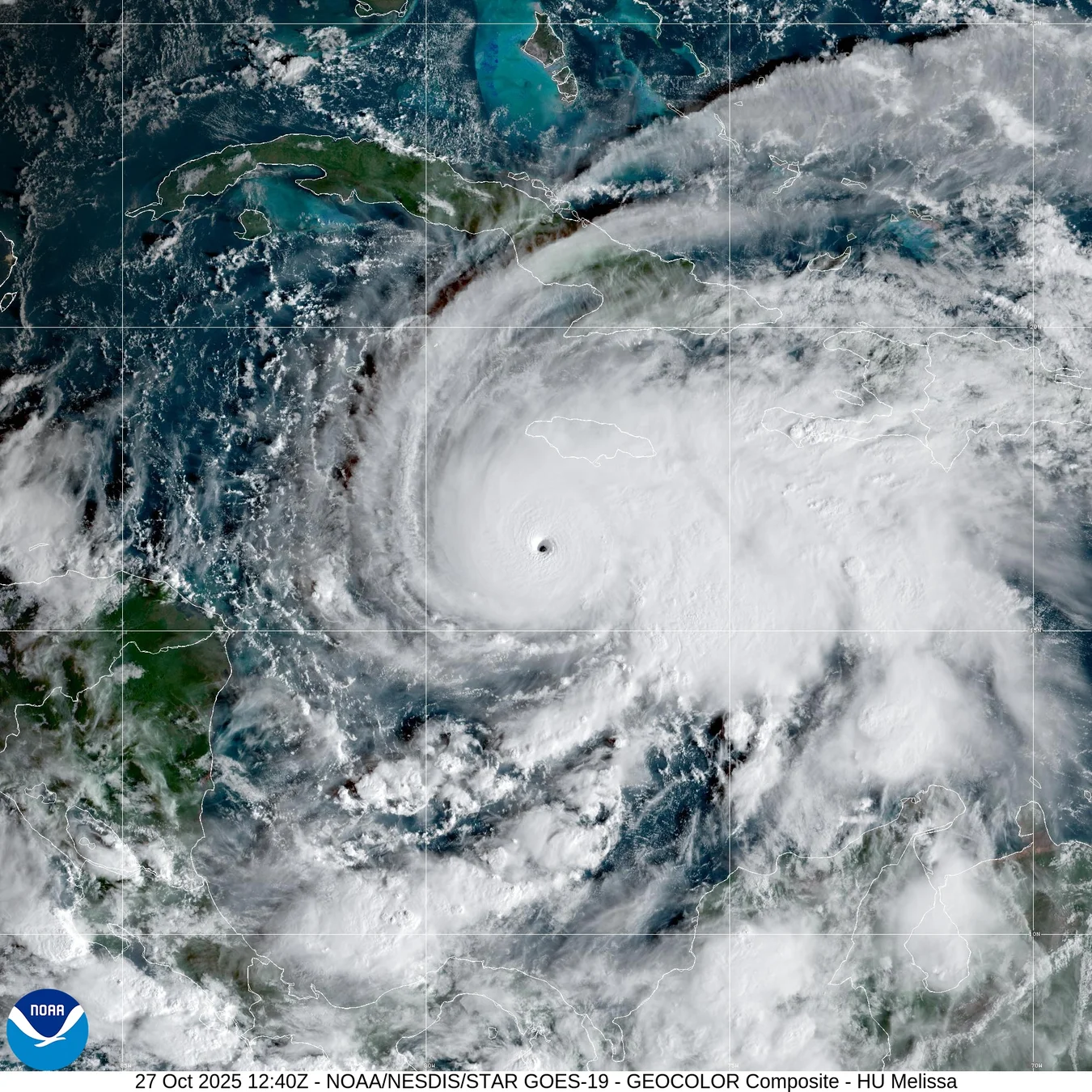
Kingston, Jamaica, October 29, 2025 — In the aftermath of Hurricane Melissa, the strongest storm to impact Jamaica, according to the island’s recorded history, a nation grapples with a painful reality. “It looks like a scene from the Apocalypse,” one official said, as emergency responders and families faced the widespread devastation created by a Category 5 storm that battered Jamaica with sustained winds of 185 mph.
The Night the Island Changed
Melissa made landfall on Jamaica’s southwestern coast late Tuesday as a Category 5 hurricane before tapering down as it zipped east across the island. Following the hours later were of howling winds, torrential rains, and the loud crack of utility poles and trees. Many families lost communication while roads, homes, and businesses collapsed in towns from Montego Bay to St. Elizabeth parish.
No more than dawn, and more than three-quarters of the population–2 million residents strong–found themselves without power. Several areas remained covered in flood with waters rising to the rooftops of two-story houses in the worst-hit areas, and government officials labeled the inundation “widespread and catastrophic.”
Government Response: “Disaster Zone” Declared
Prime Minister Andrew Holness swiftly declared Jamaica a disaster zone. With communication iffy and the power grid obliterated, first response time and attention went to rescuing and assisting any survivors and hospitals, many of whom suffered catastrophic damage or lost power altogether during the storm. The hospital in St. Elizabeth, one of Jamaica’s main agricultural centers, suffered extensive losses, destroying entire wings due to being entirely flooded.
It is estimated that at least 1.5 million people have been directly affected by the hurricane by government estimates. Based on order of evacuation, almost 28,000 residents evacuated before the storm, and 15,000 people are now residing in emergency shelters.
Impact on Daily Life and Infrastructure
The impacts of the hurricane have been clearest in the changes to Jamaica’s day-to-day life. “The normal sounds of a Jamaican life are absent,” reported the BBC, referring to shops that were no longer open and the near-total absence of the power grid in the affected communities. In Montego Bay, floodwaters caused the city to be split in half, preventing access to entire neighborhoods, while agricultural areas, such as St. Elizabeth, have been left flooded, ruining crops, and creating long-term challenges around food security and economic recovery.
While it remains difficult to communicate in many rural and mountain communities, local leaders indicate the full extent of the disaster’s damage to homes, schools, and livelihoods will not be known for days or even weeks.
The Human Toll: Fatalities and Ongoing Risks
As of Wednesday morning, there were three confirmed deaths from the hurricane in Jamaica, and the number will likely rise as conditions allow for further clarity. There are 7 deaths confirmed in the wider Caribbean, including 3 in Haiti, and 1 in the Dominican Republic. Jamaican health officials have warned that the death toll, injuries related to the storm, and other health emergencies are likely to increase based on reports they receive from isolated communities.
Officials also warned of additional risks from the flooding, including crocodiles that are flushed inland, contaminated drinking sources, and the increased risk of water-borne illnesses, such as leptospirosis, and dengue fever.
“Monstrous Melissa” Experts Point to Climate Risks
Meteorologists referred to Hurricane Melissa as “monstrous” and noted that it was historically unusual; specifically, some indicated the rates of rapid intensification to hurricane status were likely driven by record-warm Caribbean waters, a pattern increasingly believed to have links to climate change. Local officials reported that even concrete structures were not impervious to destruction, with rooftops being ripped off structures and trees being snapped in half.
Relief and Recovery: An Uphill Challenge
The international relief operations got underway quickly. The government established a new disaster recovery website to request donations and volunteers to help with housing reconstruction, clean water, and emergency medical assistance. Major partner organizations such as the Red Cross, World Central Kitchen, Mercy Chefs, and the American Friends of Jamaica deployed personnel to serve hot meals, restore communications, and assist with search and rescue efforts.
Thousands of vacationers who had been stranded at hotels and airports, were sharing their stories of anxiety, and their gratitude for finding shelter while they waited for a flight out, or an answer from their tour operator. As tourism is the backbone of Jamaica’s economy, it will be among the hardest hit sectors in the days to come.
Stories of Resilience and Fear
Residents of rural Jamaica describe a sleepless night of fear and determination. “Water is coming through my roof. I am not okay,” said one woman in an interview with the BBC. Horrific levels of flooding were described in central parishes. “You lose connection,” MP Kimone Francis said, describing the ordeal to the BBC Newsday. “You can’t reach the people you would normally speak to.”
Within calamity, however, we see examples of neighborly support – neighbors checking on the elderly, volunteers clearing roads, families sharing food as food supplies are running low.
Long-Term Recovery and Hope
Prime Minister Holness and disaster response leaders now indicate the focus will shift to restoring electricity, clearing roads and ensure convoys to supply food, service accessible hospitals, and prepare for weeks possibly months of no complete infrastructure. They encourage the international community and private citizens to contribute generously to relief organizations, as the scale of:
- Shelter needs
- Health services
- Food and water distribution
- School physical reconstruction
- Economic recovery
comes into focus.
Jamaica Begins to Heal
As the storm clouds lift, Jamaica is tested at its core national spirit. Mourning those lost and those livelihoods destroyed. Jamaica’s resilient spirit, so well-known in its music, culture and spirit of community now shifts toward repair. Experts agree that repairs will take weeks, months, possibly years and Jamaicans are pledging not to allow Hurricane Melissa to dictate their future.