
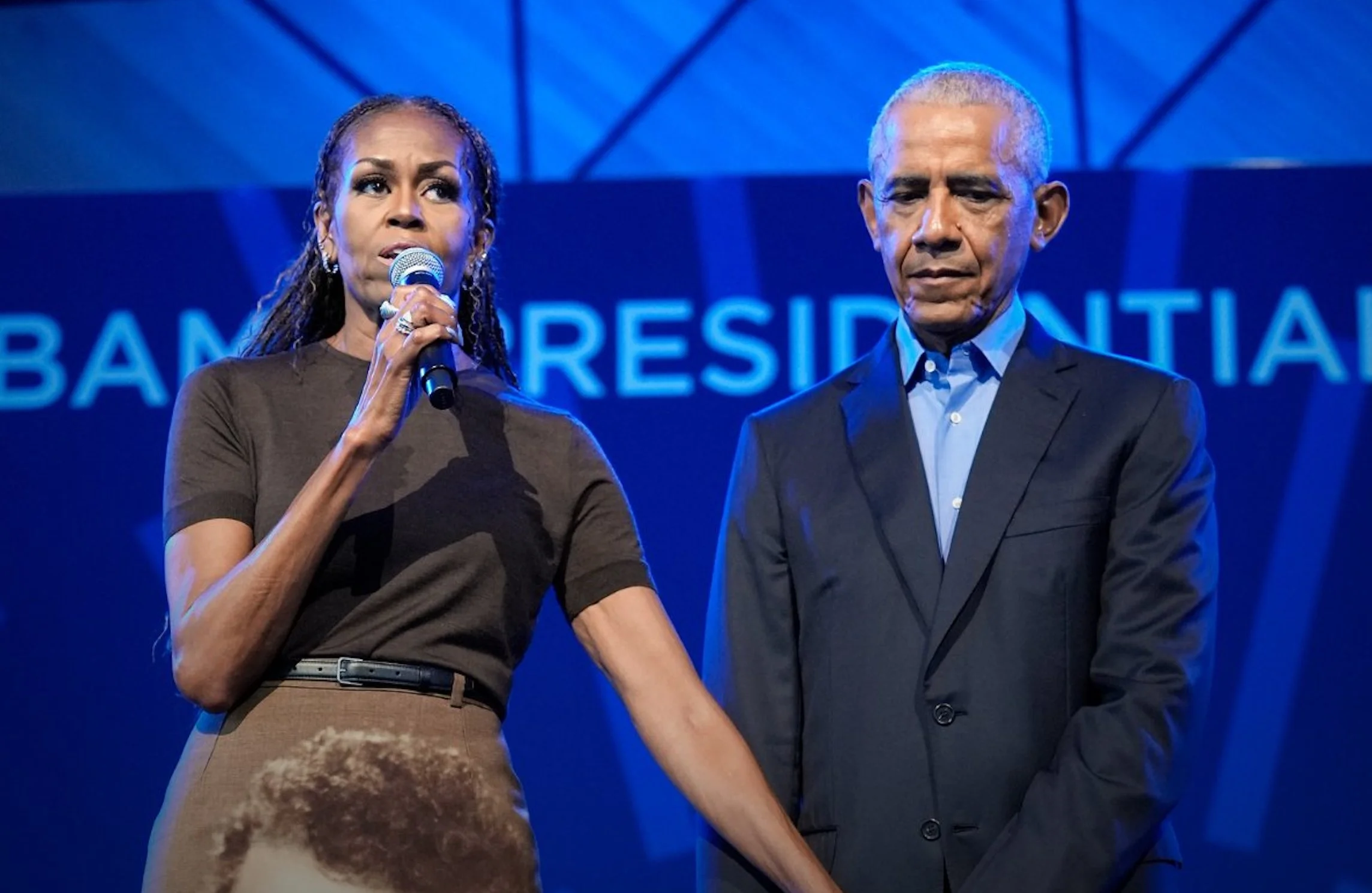
After more than a decade of planning, legal battles, community negotiations and nearly $850 million in construction, the Obama Presidential Center officially debuted Thursday on Chicago’s South Side, the most ambitious presidential library in American history, set in the neighborhood that shaped a president and now designed to transform it.
A Decade From Dream to Dedication
When Barack Obama first floated the idea of a presidential library during the final months of his second term, the concept was straightforward: a place to preserve his papers and legacy, as every modern president before him had done.
What emerged over the following decade was something far more complex, more contested and ultimately more ambitious — a 19.3-acre civic campus in Chicago’s historic Jackson Park that its creators describe not as a library or a museum in any traditional sense, but as “a vibrant hub for the community” and a declaration of civic faith in the South Side neighborhood where Michelle Obama was raised and where Barack Obama first learned to organize.
The dedication ceremony on Thursday morning at 11 a.m. Central Time, streamed live at obama.org and across the Obama Foundation’s social platforms, marks the formal opening of that ambition. The campus opens to the general public on June 19, Juneteenth, a date the Obama Foundation confirmed was chosen deliberately to connect the institution’s launch to the national holiday commemorating the end of American chattel slavery.
The Ceremony: A Concert, a Commitment, and a Community
The dedication ceremony at John Lewis Plaza, named for the late civil rights icon and Georgia congressman, will function as one of the most star-saturated public civic events in recent American memory.
The Obama Foundation confirmed an eclectic but historically resonant lineup of performers: Bruce Springsteen, Stevie Wonder, Jennifer Hudson, John Legend, The Roots, Common, Marc Anthony, Eddie Vedder, Christina Aguilera, Tems, U2’s Bono and The Edge, and actress-producer Marsai Martin. The span of the lineup, from Springsteen’s arena rock to Tems’ Afrobeats, from Common’s Chicago hip-hop to Marc Anthony’s salsa, mirrors the Obama presidency’s own aesthetic pluralism and the diversity of the South Side community the Center is designed to serve.
The ceremony itself is invite-only for dignitaries, community leaders and major donors who attended a private pre-opening reception Tuesday, where the former president told nearly 500 guests: “It is incredibly significant for us to give back to this community, and this could not have been accomplished without the commitment, professionalism, hard work, problem-solving, talent, artistry, and skill of everyone present today.”
For the broader public, the Obama Foundation is hosting a free watch party beginning at 9 a.m. on the Midway Plaisance near the campus, with the ceremony streaming on large screens. The opening weekend runs through June 21, with museum tickets already sold out but the broader campus free and accessible.
The Campus: What Visitors Will Find
The Obama Presidential Center is not a single building but a neighborhood-scale campus, anchored by three principal structures designed by New York-based architects Tod Williams and Billie Tsien, known for their emotionally resonant, materiality-forward approach to civic buildings.
The Museum, which opens June 19, is the campus’s centerpiece: four floors of exhibits that, according to the Obama Foundation, explore “the promise of democracy and the work of the Obama Presidency” through the lens of the people, events and policies that shaped it. Entry is by timed ticket, priced in line with other Chicago museum park institutions, with designated free days for Illinois residents.
Alongside the Museum, the campus contains a new branch of the Chicago Public, the first new branch in years in the South Side, offering the community a freely accessible civic resource with extended hours and programming designed around youth literacy and adult education. A dedicated reading room for the Obama Presidential Archives, managed in partnership with the National Archives, will house presidential papers for researchers.
The remaining campus buildings include what the Foundation calls “Home Court,” an athletics and recreation space anchored by a full-size basketball court, a nod to the president’s famously competitive game, alongside a recording studio, classrooms, a community garden and extensive public outdoor spaces open daily from 6 a.m. to 9 p.m., free of charge.
The Architecture: Rooted in Place
Architects Tod Williams and Billie Tsien, whose prior work includes the Barnes Foundation in Philadelphia and the Folk Art Museum in New York, were selected by the Obama Foundation partly for their stated commitment to buildings that grow from their sites rather than imposing upon them.
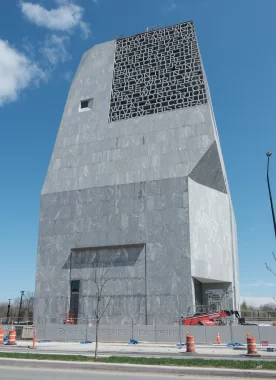
Instagram reporting from the Foundation’s official account describes the three principal buildings as responding directly to the South Side’s “historic Jackson Park,” using materials and forms meant to feel permanent and civic rather than corporate or monument-like. The buildings are oriented around John Lewis Plaza, the central gathering space, with sightlines into the park and toward Lake Michigan that allow the campus to feel embedded in the existing landscape rather than dropped onto it.
Michelle Obama, who toured the completed museum for the first time on Friday before the formal dedication, offered an emotional assessment: “Walking into that space and witnessing the level of professionalism, artistry, love, care that gone into what will be a center that truly transforms the lives of the people — especially the youth — who grew up in this community that I cherish.”
A Decade of Controversy: From Kenwood to Jackson Park
The road to Thursday’s opening was not smooth. The Obama Foundation’s original plan placed the center in Washington Park, before pivoting to Jackson Park, a decision that triggered a years-long legal challenge from preservation and parkland groups who argued the campus constituted an impermissible privatization of public parkland.
Federal courts ultimately allowed the project to proceed after the Foundation negotiated a 99-year lease arrangement with the Chicago Park District and agreed to a series of community benefit commitments, including the library branch, affordable housing protections in adjacent neighborhoods and anti-displacement measures designed to prevent gentrification-driven eviction of longtime South Side residents.
Those commitments, never fully settled to everyone’s satisfaction, shaped the Centre’s final form in important ways: the decision to keep most of the campus free, to prioritize youth programming and to include a public library rather than a private archive reflects the pressure exerted by community groups over years of negotiations.
What the Center Means for the South Side
AP and Facebook’s AP News feed describe the roughly $850 million project as covering “both the political and personal realms of the nation’s first Black president,” but community leaders quoted in local Chicago coverage say the significance runs deeper than museum exhibits.
For the South Side, one of Chicago’s most historically disinvested and economically under-served areas, the center brings jobs, visitor spending, infrastructure improvements and, perhaps most importantly, a civic statement that this community is worth a major national institution.
The opening on Juneteenth amplifies that message: a presidential center for America’s first Black president, opening to the public on the holiday that commemorates emancipation, in the neighborhood that shaped his sense of justice and his political identity.
Barack Obama captured this convergence in a December Instagram post in which he reflected on why the center was built where it was: “Chicago is where Michelle was raised, where I got my start as an organizer, and where we built a family together. When the Center opens, it will be our way to give back to a city that has given us so much.”
How to Watch, Visit and Experience the Center
For those unable to attend in person, the full dedication ceremony streams at 11 a.m. CT Thursday on obama.org and via the Obama Foundation’s YouTube, TikTok and Facebook channels. ABC 7 Chicago, CBS 2 Chicago and Fox 32 are all carrying portions of the ceremony live.
The campus at 6001 S. Stony Island Ave. opens to the public June 19 and will run free open-house programming Friday through Sunday, June 21, from 10 a.m. to 5 p.m. each day. Museum tickets for the opening weekend are sold out, but timed-entry tickets for subsequent dates are available at obama.org and priced in line with Chicago’s other museum-park institutions.
The campus itself — including John Lewis Plaza, Home Court, the community garden, and outdoor spaces — is free, open daily and, in the words of the Foundation’s planning documents, designed to be exactly what its South Side neighbors have waited a decade to see: not a monument to a man, but a living, open institution for a community.





