
U.S. Director of National Intelligence Tulsi Gabbard has confirmed that Iran’s government “appears to be intact but largely degraded” after nearly three weeks of U.S.–Israeli strikes, even as she pointedly refused to discuss any potential back‑channel talks with President Donald Trump over ending the war. Her carefully calibrated testimony on Capitol Hill has deepened a rift between the intelligence community’s measured assessments and the White House’s more triumphalist rhetoric about a regime on the brink of collapse.
“Intact but largely degraded”
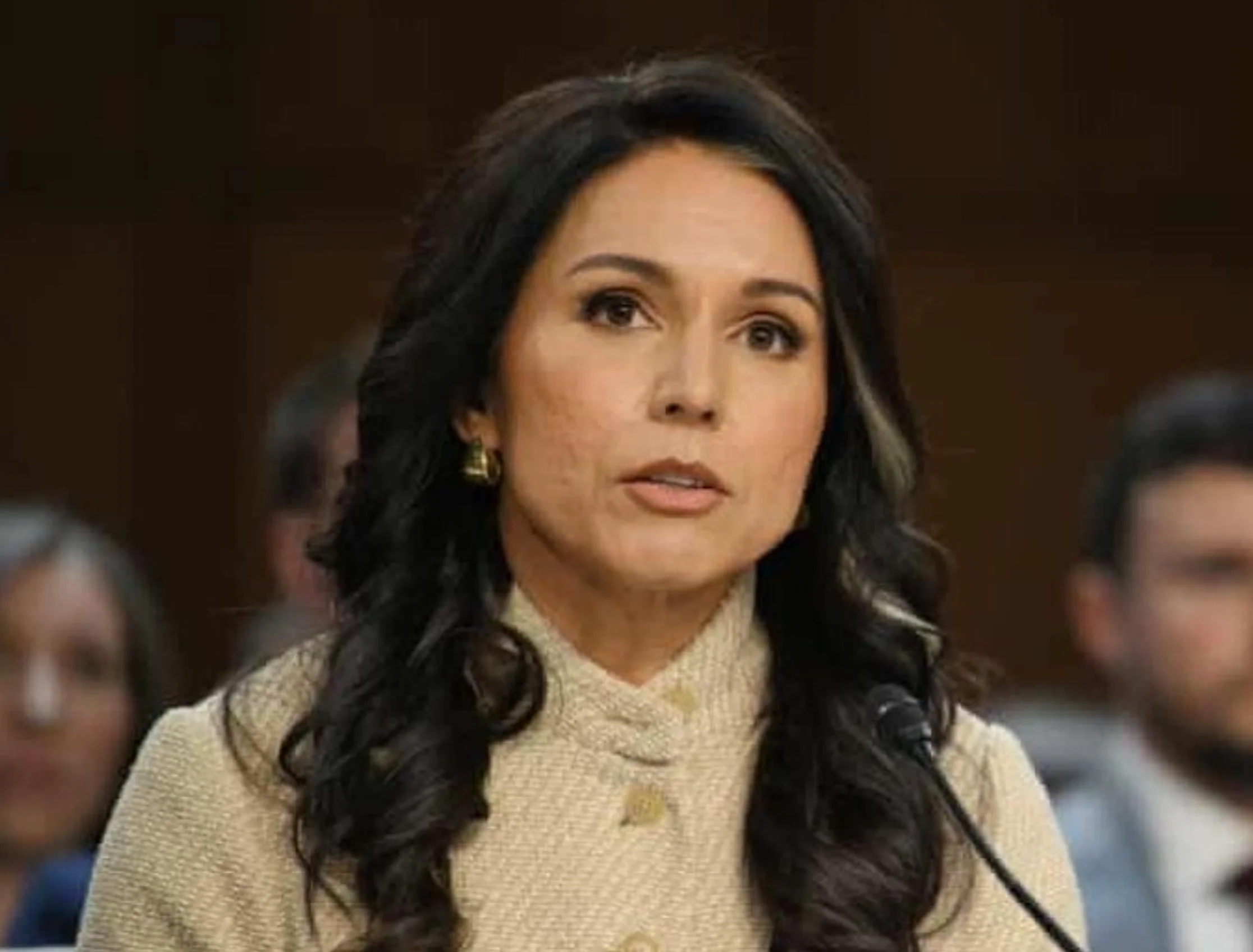
Speaking before the Senate Intelligence Committee’s annual worldwide‑threats hearing, Gabbard summarized the intelligence community’s latest view of Iran’s leadership after weeks of air and missile strikes.
“The regime in Iran appears to be intact but largely degraded by Operation Epic Fury,” she said, referring to the joint U.S.–Israeli air campaign that has killed senior commanders and cratered military infrastructure since late February.
Even so, she warned, Iran and its regional proxies “remain capable of and continue to attack U.S. and allied interests in the Middle East,” and if a hostile government survives, it is likely to embark on a years‑long effort to rebuild missile and drone forces.
Her description stands in contrast to President Trump’s assertion two days earlier that the Iranian regime had been “literally obliterated,” with its air force, navy and air‑defense network supposedly wiped out.
Nuclear rationale undercut
Gabbard’s testimony also chipped away at another central plank of the administration’s case for war: the claim that Iran was on the verge of acquiring a nuclear weapon.
In written remarks submitted to the committee, she stated that “Operation Midnight Hammer”, the U.S.–Israeli strike on Iran’s enrichment sites in June 2025, had “obliterated” the country’s nuclear program.
“There has been no effort since then to rebuild their enrichment capability,” she wrote, noting that entrances to underground facilities had been buried and sealed with concrete.
Those lines appeared to directly contradict Trump’s public claim that Iran was “two weeks away” from the bomb when he authorized fresh strikes in February. Asked whether the intelligence community had ever assessed an imminent nuclear threat, Gabbard replied that determining imminence was “the president’s responsibility,” and that her office merely provided objective information.
Her refusal to endorse Trump’s framing drew sharp criticism from Democrats, who argued that Congress, and the public, had been misled about the necessity of war.
Refusal to discuss possible negotiations
French‑language outlets picked up on another element of Gabbard’s performance: her repeated refusal to say whether the administration is exploring a diplomatic exit.
Questioned about reports of back‑channel messages between Washington and Tehran via Gulf intermediaries, Gabbard would say only that the intelligence community “continues to provide the president and his team with intelligence related to this operation… before, and on an ongoing basis.”
Pressed again on whether she had advised Trump about the likely fallout from continued bombing, including Iranian missile attacks on Gulf states and the effective closure of the Strait of Hormuz, she declined to comment on “internal conversations” and insisted it was not her role to “negotiate or recommend policy.”
Her evasions prompted visible frustration from some senators, who argued that understanding what the president knew, and when, was essential as they weigh additional war funding and emergency energy measures.
Political crossfire after a high‑profile resignation
Gabbard’s appearance came just days after the high‑profile resignation of Joe Kent, the head of the National Counterterrorism Center and a close ally, who quit in protest over the war.
In a blistering letter posted online, Kent wrote that he “cannot in good conscience support the ongoing war in Iran,” insisting that “Iran posed no imminent threat to our nation” and suggesting the U.S. had been drawn in by pressure from Israel and its lobby.
His departure intensified scrutiny of Gabbard, who built her political profile as a critic of “regime‑change wars” before accepting the top intelligence post. Lawmakers from both parties used the hearing to probe whether she had pushed back internally against Trump’s march to war, or effectively deferred to the White House.
When asked directly whether she agreed with Kent’s assessment that Iran did not pose an imminent threat, Gabbard sidestepped, reiterating that the president is “accountable for deciding what constitutes an imminent threat” and that she would not disclose private advice.
A widening gap between intel and rhetoric
The combined effect of Gabbard’s statements is to widen the known gap between professional intelligence assessments and political messaging.
On the one hand, she has:
- certified that Iran’s nuclear enrichment capacity remains destroyed, with no observed rebuild effort
- acknowledged that the regime, while damaged, still functions and can strike U.S. and allied targets
- avoided endorsing claims of an imminent existential threat
On the other, she has refused to contradict Trump outright, repeatedly stressing that decisions about threat thresholds and diplomacy are “policy questions” beyond her remit.
For doves, her testimony confirms that the war rests on shaky factual ground and that Washington is fighting a still‑standing adversary in a conflict whose original nuclear justification has eroded. For hawks, her emphasis on Iran’s remaining missile and proxy capabilities supports arguments for continued pressure and skepticism about any premature ceasefire.
What Gabbard will not say publicly, for now, is whether the intelligence community is being asked to support a diplomatic track as well as a military one. Her insistence on that silence ensures that, even as she affirms Iran’s government is still in place, the question of whether Washington is preparing to talk to it remains deliberately, and politically, unanswered.