
As of September 28, 2025, New York City’s political landscape changed dramatically when Mayor Eric Adams announced he would suspend his candidacy for re-election, just shy of five weeks before voters cast their ballots. NYC Mayor Eric Adams Drops Out of 2025 Election signifies the end of Adams’s tumultuous term in office and marks the next chapter in the city’s political environment.
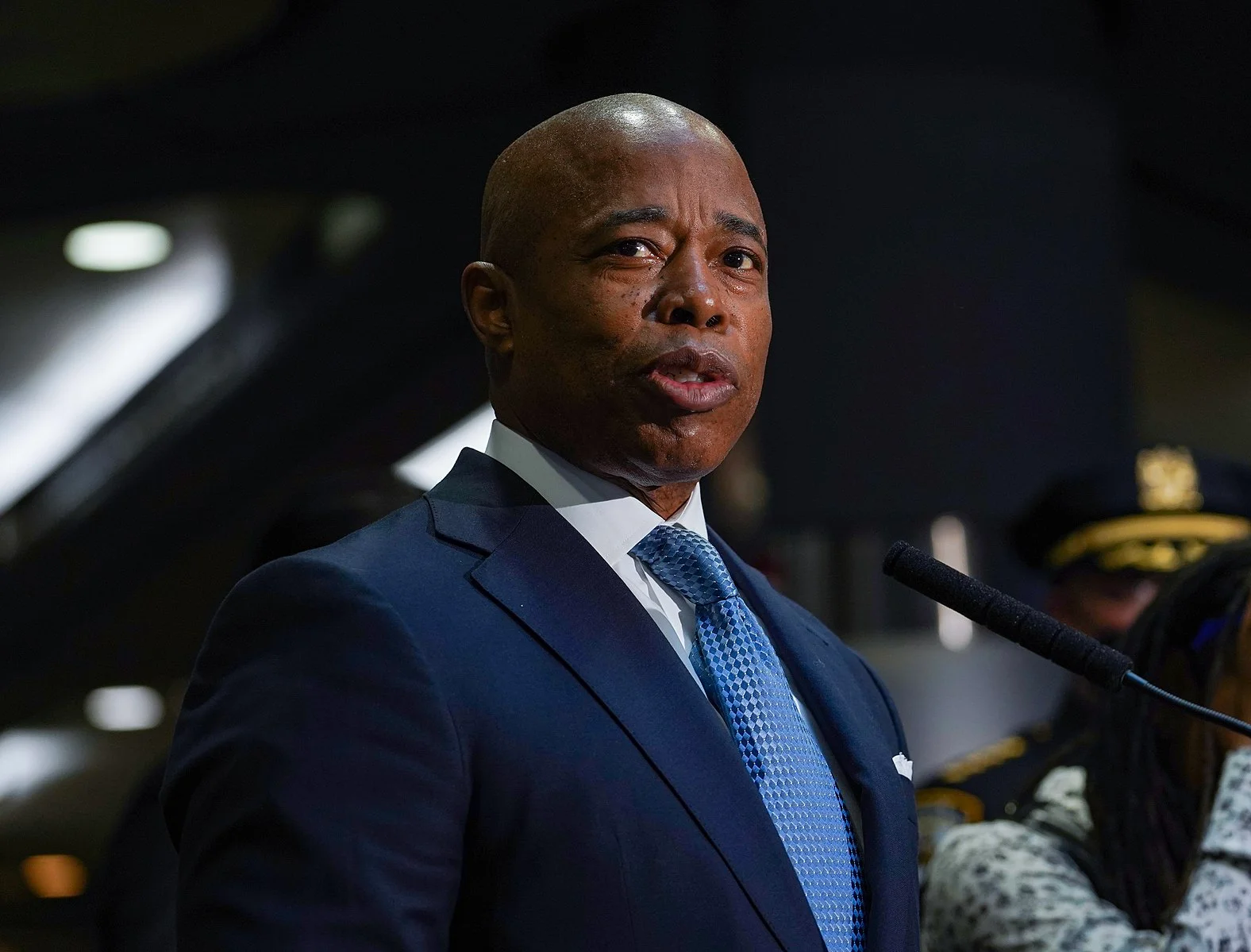
His exit deepens a pool of challengers, raises the stakes for his competitors, and creates greater opportunities for new voices and divisions in the upcoming contest.
Adams’s Announcement: Why He Ended His Bid
Eric Adams’s campaign had been on shaky ground for weeks. The mayor cited financial limitations and the continued negative press coverage as the primary reasons for his departure in a nine-minute-long video posted on social media. Polls conducted in recent weeks had placed him in the single digits, trailing substantially behind Democratic nominee Zohran Mamdani and a former governor, Andrew Cuomo as well as the Republican candidate Curtis Sliwa. Adams’s effort to run as a progressive, third-party candidate lacked the necessary support or funding to be relevant in his re-election effort.
Adams directly referenced the city’s Campaign Finance Board decision to deny him millions of dollars in public matching funds. “Even with everything we have accomplished, I can’t continue with the campaign for re-election,” Adams acknowledged, insisting that the challenges faced by the campaign had become insurmountable.
Turbulence and Controversy: The End of an Era
Adams’s administration and campaign were beset by controversies. In September 2024, Adams was indicted federally for wire fraud, illegal foreign contributions to his campaign and conspiracy to bribe individuals connected to Turkish nationals – allegations that he denied and that ultimately were dismissed by the Trump administration. He faced steep headwinds due to continuing questions about campaign finance and ethics, which soured his standing with voters and power players alike.
Setting aside the unrelenting legal backdrop, Adams’s courting of President Trump and reports that alleged discussions about ambassadorship to Saudi Arabia led to conjecture about his future that Adams claimed hurt his fundraising and future prospects within the administration. Ultimately, this combination of distraction from proceedings, financial realities, and declining public support rendered his exit from the race inevitable.
The Political Fallout: Who Benefits?
Adams departure has settled the mayoral race into two primary candidates, the young and progressive Democratic Socialist, Zohran Mamdani and Andrew Cuomo, the former governor running as an independent. Each of the candidates quickly reacted, reshaping their plans for the race ahead.
Mamdani, who defeated Cuomo during the Democratic primary in June, stated, “It’s a race between us and the failed politics that we have seen, either Andrew Cuomo or Eric Adams. The politics where Donald Trump and billionaire donors are guiding the actions of failed leaders. We are going to show them, they cannot choose the outcome of this election.”
Cuomo’s campaign, buoyed by Adams, now is working to consolidate support from moderate Democrats, Black and Orthodox Jews, and business leaders who oppose Mamdani’s progressive agenda.
Curtis Sliwa, the Republican nominee, is still in play but has consistently polled behind both remaining candidates. In recent discussions, there was speculation that both Adams and Sliwa were asked to drop out and combine their campaign resources to challenge Mamdani, but only Adams followed the request.
Voter and Community Reactions
Adams’s exit made waves in key constituencies. Previously, labor unions, Black voters, Orthodox Jews, and business interest had been splitting their votes between Adams and Cuomo, but now many are expected to push toward Cuomo’s centrist and establishment-focused campaign.
Adams’s name will still remain on the ballot, it’s too late to remove it, but election officials warn that votes for Adams will be voided his removal could sacrifice key margins—although the movement will ultimately benefit Cuomo.
Community leaders are now pushing for more transparency and accountability from the city in the aftermath of Adams’s scandals. Labor advocate Marisol Ramos noted, “This is an opportunity for New York to march forward with honesty and real issues to focus on, and we hope whoever wins leads the city with integrity.”
Additionally, outside the trial courts, Adams’s ties to President Trump, as well as claims for his appointing of an ambassadorship in Saudi Arabia raised speculation about his future in politics, which Adams referred to as destructive for both raising money and generating enthusiasm for the campaign, obviously some candidates could try to style themselves as the next progressive/ anti establishment politician. The resulting mix of dizzying courtroom drama, strained finances, and lack of public enthusiasm makes it reasonable or sensible to assume that his withdrawal will take place.
Adams’s Legacy: A Complex Record
The ascension of Eric Adams from NYPD officer to Brooklyn Borough President to New York’s second Black mayor was highlighted by his platform for police reform, and support for working-class neighborhoods. Adams established big goals for public safety, affordable housing, and economic revival in a post-pandemic city, early in his term as Mayor.
However, after an incoming storm of ongoing gun violence, affordable housing crises, and questionable backdoor deals with real estate developers, he struggled over the weight of those issues on both his administration and public support. Ethical issues and a failure of management and leadership to deliver on campaign promises led to discontent among a populace that had initially had wide acceptance of his leadership.
As Adams indicated in his farewell “vine,” “It’s been a great honor to be your mayor. I recognize we have had some success… But I realize that I can’t continue my campaign.” He had also previously stated that he would continue to advocate for the city, even after his mayoral term concluded.
What Lies Ahead for NYC?
Adams’s decision to drop out of the 2025 election alters the future of that election. Since the field is consolidated, candidates are now in for a much shorter runway to campaign, coordinating with the electoral powers that will carry them into the fall of 2025, as New York residents prepare to select their future leader. The outcome will shape the city, in terms of housing, public safety, immigration, and the future of the economy to recover and grow.
For voters, the question is no longer can Adams restore confidence in his leadership of the city. It is now about whether Mamdani’s progressive agenda could withstand the electoral political power of Cuomo’s New York coalition, or whether Sliwa could manage a bounce, or another dark-horse candidate emerge from the race to change the outcome.
The withdrawal of New York City Mayor Eric Adams from the 2025 election marks a pivotal moment in the life of America’s largest city. In the midst of personal and political chaos, Adams’s exit sets the stage for a contentious competition between conflicting visions of the city’s future. In the weeks ahead, both candidates and the electorate, as well as the legacy of a mayor who rose to the apex of the city, will be challenged.